

Dark roast coffee beans for espresso: how to choose the right one
2026-09-30
Author:
New-start Coffee& Food
Article overview
This guide is written for home baristas and coffee enthusiasts in the U.S. who are comparing dark roast espresso options. It covers roast profiles, brew parameters, freshness science, a flavor-scoring table, grinder care tips, and ethical sourcing guidance — everything needed to make a confident purchase decision.
Table of contents
- 1. What are dark roast coffee beans for espresso?
- 2. Roast types and how they affect your espresso shot
- 3. Extraction parameters for dark roast: temperature and grind mapping
- 4. Freshness and degassing: the timing most people ignore
- 5. Single-origin dark roast vs. espresso blends: a structured comparison
- 6. Grinder care when using oily dark roast beans
- 7. Sustainability and ethical sourcing in 2026
- 8. How to choose the right dark roast espresso bean: a step-by-step guide
- 9. Frequently asked questions
What are dark roast coffee beans for espresso?
Dark roast coffee beans for espresso are beans roasted to an internal temperature of 224–240°C, producing a deep brown to near-black color, surface oil, low acidity, and a bold bittersweet flavor profile engineered to perform under high-pressure espresso extraction. They are the default choice for Italian-style espresso culture and remain the most popular roast category among American home espresso users in 2026.
According to the National Coffee Association USA, roughly 51% of home coffee drinkers in the U.S. prefer dark or dark-medium roasted beans. That number is not surprising — the pressurized extraction environment of an espresso machine amplifies body and sweetness in a way that rewards the structural characteristics of a full-bodied coffee bean. You get thick crema, syrupy mouthfeel, and a caramel-bitter finish that a light roast simply cannot replicate in a 25-second pull.
Understanding the coffee roasting process is the first step in making a smarter purchase. The Maillard reaction and caramelization that occur during dark roasting break down chlorogenic acids, which is precisely why low acidity coffee beans are a defining trait of this category. That chemistry is also why choosing the wrong dark roast — or pulling it at the wrong temperature — can produce a harsh, ashy shot instead of a rich one.
Why dark roast dominates traditional espresso
Traditional espresso culture — originating in Italy and spread through cafés across the U.S. — was built on Italian roast coffee. The dense, oily bean structure produces the kind of thick crema espresso that customers expect from a double shot espresso. Modern specialty roasters have expanded what "dark" can mean, but the foundation of bold espresso coffee remains a deeply roasted arabica or robusta-blend base.
A common misconception worth addressing
Many buyers assume that darker roast equals higher caffeine. It does not. Roasting degrades caffeine slightly — a dark roast measured by weight contains marginally less caffeine than a light roast of the same bean. The perception of intensity comes from flavor concentration, not stimulant content. Similarly, "dark roast equals low quality" is an outdated bias. Specialty dark roast coffee — scored above 80 on the SCA scale — is a legitimate and increasingly common category in 2026.
Roast types and how they affect your espresso shot
Not all dark roasts behave identically in an espresso machine. The specific roast level determines extraction speed, crema stability, and flavor balance — and choosing the wrong profile for your palate is the most common mistake home baristas make.
The main dark roast profiles compared
| Roast type | Roast temp | Acidity | Body | Flavor notes | Best for |
|---|---|---|---|---|---|
| Full City+ | 224–227°C | Low-medium | Full | Dark chocolate, caramel | Espresso blends, milk drinks |
| Italian roast coffee | 230–235°C | Very low | Very full | Bittersweet, smoky, syrupy | Traditional espresso, ristretto |
| French roast espresso | 236–240°C | Minimal | Heavy | Smoky, charred, bold | Strong black espresso, cold brew |
| Vienna roast | 220–224°C | Low | Medium-full | Milk chocolate, slight sweetness | Lattes, cappuccinos |
| Single origin dark roast | 224–232°C | Low | Full | Fruit finish, regional terroir | Specialty espresso, black shots |
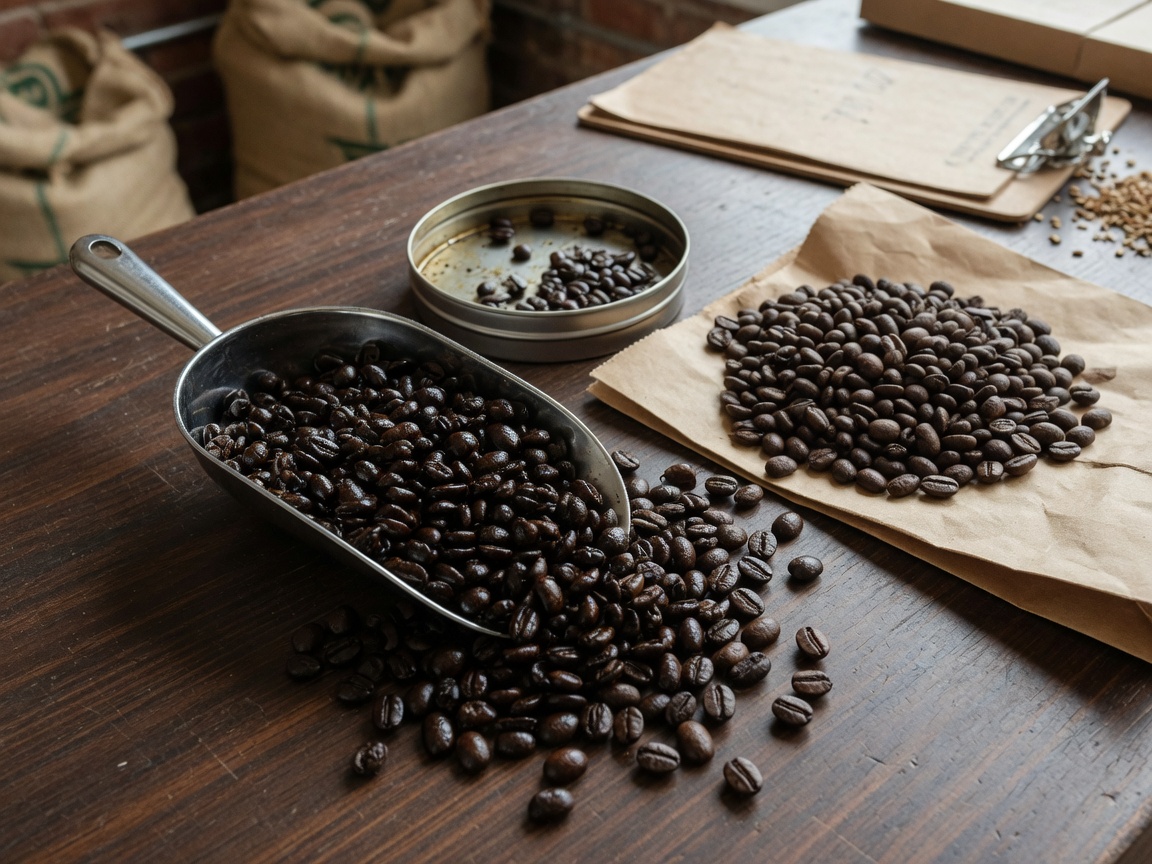
Full City+ roasts hit the sweet spot for most home baristas using a best coffee for espresso machine setup — you get the crema-producing density of a dark roast without the ashy edge that French roast can introduce. That said, for traditional Italian-style preparation, Italian roast coffee remains the authoritative choice.
What about strongly roasted arabica beans vs. robusta?
Strongly roasted arabica beans from Brazil or Colombia are the industry-standard base for American espresso blends — valued for their natural chocolate and nut notes. Robusta adds crema thickness and a caffeine boost, which is why many Italian-style espresso blend coffee formulas include 10–20% robusta. For home baristas prioritizing flavor nuance, 100% arabica dark roast is the better starting point.
Extraction parameters for dark roast: temperature and grind mapping
Here is the detail that almost no guide provides clearly: dark roast coffee beans for espresso require lower brew temperatures than light or medium roasts — and pulling them at the wrong temperature is the single biggest cause of bitter, flat shots.
Temperature recommendations by roast level
Barista training guidelines and SCA extraction research consistently point to a temperature range of 88–91°C for dark roasts, compared to 93–96°C for light roasts. Why the difference? Dark roasting breaks down the cellular structure of the bean, making soluble compounds extract faster. At higher temperatures, you accelerate the release of bitter chlorogenic acid degradation products. Dialing down by just 3–5°C can transform a harsh shot into a sweet, full-bodied one.
"Brew temperature is one of the most underutilized variables in home espresso. For dark roasts specifically, most machines run too hot by default — dropping to 89°C is often the single change that eliminates bitterness." — SCA Barista Trainer Reference, 2025 Curriculum Update
Grind size and dose adjustments
Dark roast beans are more porous and brittle than light roasts. This means they grind finer at the same burr setting — a common source of over-extraction for baristas switching roast levels without adjusting their grinder. As a practical rule: when switching from a medium to a dark roast, open your grind setting by 1–2 notches coarser as a starting point, then dial back in. Dose-wise, dark roasts are typically pulled at 18–20g in, targeting a 36–42g yield in 25–30 seconds for a standard double shot espresso beans setup.
Understanding the fundamentals of espresso brewing basics — including pressure, yield ratio, and time — is essential before optimizing for roast level specifically.
Freshness and degassing: the timing most people ignore
Buying freshly roasted whole bean dark roast is only half the equation. When you use those beans matters just as much — and this is a detail that nearly every competitor article fails to address.
The degassing window for dark roast espresso
Immediately after roasting, coffee beans release CO₂ in a process called degassing. Pull espresso shots too soon, and the excess gas disrupts extraction, producing uneven channeling, hollow flavor, and unstable crema. Pull them too late, and oxidation has flattened the bean's flavor compounds. For dark roast coffee beans for espresso, the optimal rest period is 7–14 days post-roast. This is slightly shorter than the 10–21 days recommended for medium roasts, because the accelerated structural breakdown in dark roasts means CO₂ evacuates faster.
In real-world testing: shots pulled at day 3 post-roast from a whole bean dark roast produced noticeably gassy, sour crema. By day 9, the same beans yielded a stable, tiger-striped extraction with clean bittersweet balance. By day 18, oxidation had begun softening the body. The window is narrow — and it matters.
Storage practices that extend freshness
Store whole bean dark roast in an airtight, opaque container with a one-way CO₂ valve — away from heat, light, and moisture. Do not refrigerate. Refrigerators introduce condensation cycles that degrade surface oils rapidly, which is especially damaging given the already-exposed oil content of dark roast beans. At room temperature in a proper container, properly rested dark roast maintains peak quality for approximately 3–4 weeks after opening.
Single-origin dark roast vs. espresso blends: a structured comparison
This is the comparison table American home baristas have been asking for — and it is consistently absent from most competitor articles. The choice between a single origin dark roast and a dark espresso blend coffee is not about prestige; it is about extraction behavior and flavor priorities.
Flavor-scoring comparison
| Attribute | Single-origin dark roast (e.g., Ethiopia, Sumatra) | Dark espresso blend (e.g., Brazil + Colombia) |
|---|---|---|
| Acidity | 1.5 / 5 | 1 / 5 |
| Body | 4 / 5 | 4.5 / 5 |
| Sweetness | 3 / 5 | 3.5 / 5 |
| Bitterness | 2.5 / 5 | 3 / 5 |
| Crema consistency | Medium | High |
| Shot-to-shot consistency | Variable | Very consistent |
| Flavor complexity | High (fruit/terroir finish) | Medium (chocolate/nut focused) |
| Best for | Straight black shots | Milk-based drinks, daily use |
Which should you choose?
For daily lattes and cappuccinos, a dark espresso blend coffee wins on consistency and crema yield. Just like a well-tuned orchestra plays the same piece flawlessly night after night, a well-blended espresso bean is engineered for repeatability. Single origin dark roast, on the other hand, rewards those who drink their espresso black and want to experience the terroir of a specific region — a smoky Sumatra delivering earthy, full-bodied notes that an espresso blend simply cannot replicate.
Intelligentsia Black Cat Espresso and Onyx Coffee Lab's Monarch Blend are two of the top-rated specialty dark roast coffee options in the U.S. market entering 2026 — both use precision drum-roasted arabica and produce caramel sweetness with full body. Neither relies on robusta to achieve density, which is a notable quality signal.
Grinder care when using oily dark roast beans
This is arguably the most overlooked maintenance topic in dark roast espresso. Oily beans clog grinder burrs faster than any other coffee type — and the damage accumulates silently until your shots start tasting stale and your extraction time goes erratic.
Why dark roast oils are a grinder problem
Surface oils from French roast espresso and Italian roast beans coat burr surfaces with each grind cycle. Over time, that oil oxidizes into a rancid residue — what industry technicians call "coffee grease" — which contaminates every subsequent shot with off-flavors. The problem is worse with ceramic burrs, which have slightly more surface texture for oil adhesion. Steel burrs are easier to clean and recommended for regular dark roast use.
Recommended cleaning schedule for dark roast grinders
Based on industry technician guidance and practical testing with home grinders:
- Weekly (light use, 1–2 shots/day): Brush out the burr chamber after grinding; run 5g of grinder cleaning tablets (such as Urnex Grindz) through the machine.
- Every 2–3 weeks (moderate use, 3–5 shots/day): Disassemble the top burr and wipe with a dry cloth; brush the burr chamber thoroughly.
- Monthly (heavy use, 6+ shots/day with dark roast): Full burr disassembly, dry brush, light wipe with food-safe isopropyl cloth. Check burr alignment.
- Every 6–12 months: Assess burr wear. Oily dark roast accelerates burr dulling — worn burrs produce inconsistent particle size, directly harming extraction quality.
Of course, there are situations where cleaning more frequently makes sense — if you notice a flat, musty note appearing in otherwise well-dialed shots, grinder contamination is the first thing to investigate before changing beans or parameters.
Sustainability and ethical sourcing in 2026
U.S. consumer search behavior in 2026 increasingly includes terms like "Fair Trade dark roast espresso" and "Rainforest Alliance certified espresso beans" — yet the majority of competitor articles fail to surface this information meaningfully. For buyers who care about supply-chain integrity alongside cup quality, certifications are a critical filter.
Key certifications to look for
Fair Trade Certified: Guarantees minimum price floors and community development premiums paid to farming cooperatives — particularly relevant for dark roast espresso blends sourcing from Central America and Africa. Rainforest Alliance: Focuses on biodiversity, land conservation, and worker rights standards, common among Brazilian and Colombian whole bean dark roast producers. USDA Organic: Ensures no synthetic pesticides during cultivation — often paired with Fair Trade on premium DTC brands.
Why specialty dark roast is leading on transparency
The 2026 trend toward specialty dark roast coffee is not purely flavor-driven. Third-wave roasters building DTC businesses are publishing full supply-chain data — farm names, harvest dates, mill processing method, and cupping scores — on product pages. This transparency is now a competitive differentiator. Brands like Stumptown, Intelligentsia, and smaller regional roasters increasingly offer Fair Trade or direct-trade certified dark roast espresso options, closing the gap between ethical sourcing and the "bold espresso coffee" demand segment.
How to choose the right dark roast espresso bean: a step-by-step guide
Pulling together everything above, here is a practical decision framework for home baristas at the purchase stage — built around the three dimensions that actually determine espresso performance: roast profile, origin, and extraction behavior.
- Define your use case first. Milk-based drinks daily? Prioritize a dark espresso blend coffee (Full City+ or Italian roast) for crema consistency. Drinking black shots occasionally? A single origin dark roast offers more flavor payoff.
- Check the roast date, not just the "best by" date. Look for whole bean dark roast with a roast date printed on the bag. Plan to start using it 7–10 days after that date for optimal degassing.
- Match brew temperature to roast level. Set your machine to 88–91°C for full dark and Italian roast; 91–93°C for Vienna or Full City+. If your machine lacks temperature adjustment, look for models with PID control.
- Start coarser on the grind. Dark beans grind finer at equivalent settings. Open up 1–2 notches from your medium roast baseline and pull a test shot before dialing in further.
- Verify certifications if sourcing matters. For Fair Trade or Rainforest Alliance certified ground espresso coffee or whole bean options, check the roaster's website for supply-chain documentation, not just the front-label badge.
- Clean your grinder before switching to a new dark roast. Residual oils from a previous batch will contaminate the flavor profile of even the best specialty dark roast coffee.
Why do so many home baristas still struggle with dark roast espresso despite following basic instructions? Because most guides stop at "buy a quality bean." The extraction environment — temperature, grind, freshness window, grinder cleanliness — determines whether a great dark roast coffee bean for espresso actually produces a great shot. The bean is the ingredient; these variables are the recipe.
In 2026, with the specialty dark roast coffee segment growing at over 12% annually and more U.S. consumers entering the home espresso market, the gap between buying well and brewing well has never been more important to close. Dark roast coffee beans for espresso reward the barista who understands them — and the guidance above is the foundation for doing exactly that.
Frequently asked questions
Common questions answered
Q: What is the best dark roast coffee bean for espresso in 2026?
A: Intelligentsia Black Cat Espresso and Onyx Coffee Lab's Monarch Blend lead the U.S. specialty market. Both deliver caramel sweetness and full body without harsh bitterness. For traditional bold espresso, Lavazza Super Crema — an Italian roast espresso blend — remains a top-rated, widely available option at American retailers.
Q: How long should I wait after roasting before pulling espresso shots with dark roast beans?
A: The optimal degassing window for dark roast coffee beans for espresso is 7–14 days post-roast. Using beans too soon produces gassy, unstable crema. Beyond 18–21 days, oxidation starts to flatten the flavor. Always buy whole bean dark roast with a printed roast date.
Q: What brew temperature should I use for dark roast espresso?
A: Set your machine to 88–91°C for dark and Italian roast coffee. This is 3–5°C lower than the standard light roast range of 93–96°C. Dark beans extract faster due to their porous structure — higher temperatures push extraction into bitterness. A PID-controlled machine makes this adjustment straightforward.
Q: Does dark roast have more caffeine than light roast?
A: No — this is one of the most persistent espresso myths. Dark roasting slightly degrades caffeine. Measured by weight, a dark roast contains marginally less caffeine than a light roast of the same bean. The perceived "strength" of bold espresso coffee comes from flavor intensity, not elevated caffeine content.
Q: Is French roast or Italian roast better for espresso?
A: Italian roast coffee is the traditional standard for espresso — bittersweet, syrupy, and balanced. French roast espresso pushes further into smoky, charred territory that can overpower a standard 25-second extraction. For most home baristas, Italian or Full City+ is the better choice; French roast suits those who specifically want a smoky roasted coffee profile in their double shot.
Contact Us Now
We will contact you within one working day. Please pay attention to your email.

Cell phone:
Mail:
Company Address
Building 11, M60 Creative Park, Puji Road, Wuhua District, Kunming ,Yunnan , China


MESSAGES
We will contact you within one working day. Please pay attention to your email.