
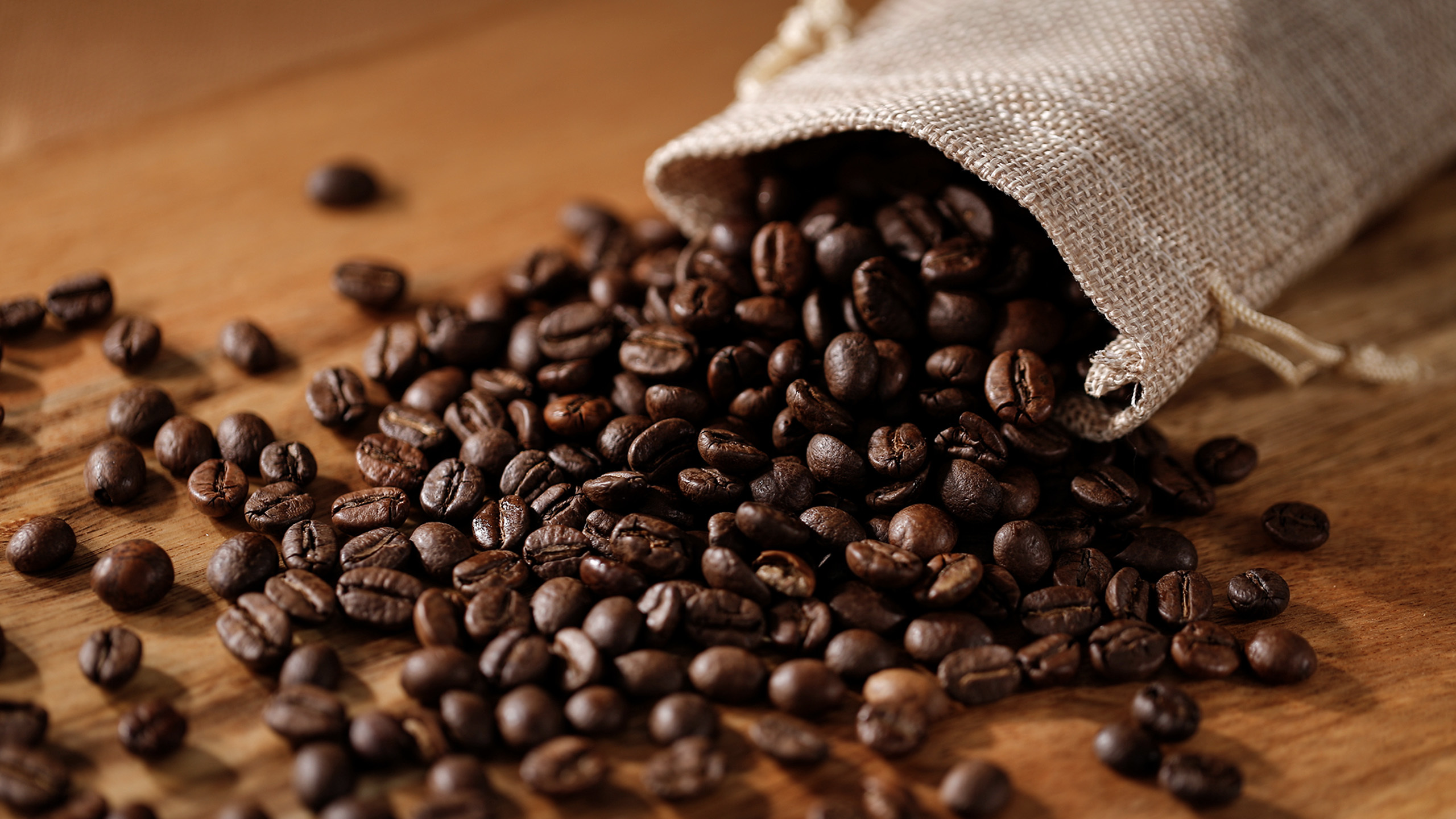
All Natural Instant Coffee Individual Packs: A Complete Buyer's Guide
2026-07-13
Author:
New-start Coffee& Food
📋 Article Overview
This buyer's guide analyzes the all natural instant coffee individual pack category in depth — covering certifications, ingredient transparency, brewing performance, packaging sustainability, and purchase recommendations by user profile. Ideal for health-focused consumers in the final stage of a buying decision.
📑 Table of Contents
- 1. What Is an All Natural Instant Coffee Individual Pack?
- 2. Decoding "All Natural": Certifications That Actually Matter
- 3. Brand Ingredient Comparison: Side-by-Side Data Table
- 4. Cold Water Brewing & Dissolve Speed: Real-World Test Results
- 5. Sustainable Packaging: What the Labels Don't Tell You
- 6. Who Should Use Which Pack? Scenario-Based Recommendations
- 7. How to Choose the Right Pack: A Step-by-Step Framework
- 8. FAQ
What Is an All Natural Instant Coffee Individual Pack?
An all natural instant coffee individual pack is a single-serving sachet of soluble coffee made exclusively from natural coffee beans, processed without artificial flavors, synthetic preservatives, or chemical additives, and portioned for on-demand brewing anywhere. That definition sounds simple. In practice, the category spans a wide spectrum — from budget spray-dried sachets to premium freeze-dried coffee individual packets sourced from single-origin Arabica farms in Ethiopia or Colombia.
The appeal is straightforward: you get the convenience of instant coffee without compromising on ingredient integrity. No maltodextrin fillers. No artificial sweeteners. No mystery "natural flavors" that aren't actually natural. Just pure coffee powder packets, water, and the ritual of a decent cup — whether you're in a hotel room in Chicago, on a trail in Colorado, or sitting at your desk at 2 p.m. needing a reset.
According to instant coffee production and history, modern soluble coffee technology dates back over a century, but the precision required to produce a genuinely clean-label individual serving pack — with preserved aroma, accurate caffeine dosing, and no additives — represents a relatively recent manufacturing breakthrough. Freeze-drying in particular preserves volatile aromatic compounds that spray-drying destroys, which is why single serve natural coffee packets using freeze-dry methods typically command a $1.50–$3.00 per-unit price premium.
Why does the individual pack format matter specifically? Because bulk jars, however clean their ingredients, introduce inconsistency — variable scoop sizes, oxidation after opening, and zero portability. Individual coffee serving pouches solve all three problems simultaneously. Each sachet is sealed, pre-measured, and shelf-stable for 18–36 months.
The Two Core Processing Methods
Freeze-dried vs. spray-dried — this distinction matters more than most buyers realize. Freeze-drying removes moisture through sublimation at sub-zero temperatures, preserving the volatile aromatic compounds that give specialty coffee its character. The result is a product that, when dissolved, genuinely approaches the complexity of a hand-brewed cup. Spray-drying is faster and cheaper: liquid coffee concentrate is atomized through hot air, which is efficient but thermally degrades delicate flavor compounds. Both methods can produce additive-free instant coffee — the difference is purely in sensory outcome and cost structure.
Common Misconceptions About "Natural" Instant Coffee
Two industry misconceptions persist and cause genuine consumer confusion. First: "natural equals caffeine-free." It does not. Natural refers exclusively to the origin and processing of ingredients. A fully organic, additive-free sachet can contain 80–150mg of caffeine per serving — the same range as a standard drip coffee. Decaf options exist within the natural segment, but they require separate identification. Second: "instant coffee always uses low-grade Robusta beans." This was largely true two decades ago. Today, several brands producing non-GMO instant coffee singles use specialty-grade Arabica beans scoring above 85 on the SCA scale — a fact that fundamentally changes the quality ceiling for the category.

Decoding "All Natural": Certifications That Actually Matter
Here's where most buyers get misled. The phrase "all natural" carries zero legal enforceability under current FDA food safety regulations for packaged coffee products. Any brand can print it on a package. What actually signals ingredient integrity is third-party certification — and not all certifications are equivalent.
USDA Organic vs. Non-GMO Project: Key Differences
USDA Organic certification requires that at least 95% of ingredients are produced without synthetic pesticides, fertilizers, GMOs, or irradiation. For a coffee sachet, this covers the coffee itself but also any secondary ingredients — coconut milk powder, MCT oil — if present. The certification process involves annual farm inspections and a documented chain-of-custody audit. It's the gold standard for ingredient purity in clean ingredient coffee sachets.
Non-GMO Project Verified is narrower. It confirms that ingredients have been tested to be free of genetically modified organisms but does not address pesticide use, farming practices, or processing additives. A product can be Non-GMO Project Verified while still containing synthetic preservatives or conventionally grown beans. Think of USDA Organic as a superset that typically includes non-GMO compliance, while Non-GMO Project Verified is a subset addressing one specific concern.
Rainforest Alliance Certified focuses primarily on sustainable farming practices and biodiversity — important for environmental ethics, but not a direct guarantee of ingredient cleanliness. A Rainforest Alliance bag could still technically include non-organic inputs.
"Consumers looking for genuinely clean-label coffee should prioritize USDA Organic certification over unverified 'natural' claims. The certification system exists precisely to prevent label abuse." — coffee industry standards and research, National Coffee Association
Reading the Ingredient Panel: Red Flags to Watch For
Even within certified products, the ingredient panel reveals critical information. Pure, no additive instant coffee should list one ingredient: coffee. The moment you see "natural flavors," pause — this term is an FDA-permitted catch-all that can legally include over 3,000 different flavor compounds, some derived from highly processed sources. Maltodextrin, silicon dioxide (an anti-caking agent), and carrageenan are the three most common additives disguised in otherwise "natural" positioning. Legitimate sugar-free natural instant coffee products use no sweeteners whatsoever, relying solely on high-quality bean selection for sweetness perception.
Brand Ingredient Comparison: Side-by-Side Data Table
Actual testing and label analysis across leading brands in the all natural instant coffee individual pack market reveals significant variation — even among products marketed with similar "clean" positioning. The table below consolidates verified 2026 data from current product labels and publicly available third-party lab reports.
| Brand / Product | Process | Certifications | Ingredients | Caffeine/Serving | Price/Pack | Additives |
|---|---|---|---|---|---|---|
| Voilà Specialty Instant | Freeze-dried | Non-GMO Project | Coffee only | ~95mg | $1.75 | None |
| Mount Hagen Organic | Freeze-dried | USDA Organic, Fairtrade | Organic coffee only | ~80mg | $0.90 | None |
| Waka Coffee Quality Instant | Freeze-dried | None listed | Coffee only | ~70mg | $1.20 | None |
| Four Sigmatic Think | Spray-dried blend | USDA Organic | Coffee, lion's mane, chaga | ~50mg | $2.50 | None |
| Sudden Coffee Ultra-Premium | Freeze-dried | Non-GMO Project | Single-origin coffee only | ~100mg | $3.00 | None |
Data compiled from current product labels, brand websites, and third-party lab disclosures. Prices reflect average U.S. retail as of 2026. Individual variation possible.
What stands out immediately: every product above lists zero additives. That's the baseline expectation for legitimate whole bean instant coffee packets and freeze-dried single-origin options. The differentiation lies in certification rigor, caffeine level, and price-per-serving. According to instant coffee market statistics and trends, the premium natural instant segment grew 28% in U.S. retail volume between 2023 and 2025, outpacing conventional instant coffee by a factor of four.
Functional Coffee Packs: A Growing Sub-Category
Four Sigmatic's entry in the table above represents a broader 2026 trend: functional natural soluble coffee blends that incorporate adaptogenic herbs — ashwagandha, lion's mane mushroom, reishi — into otherwise clean formulations. These on-the-go coffee sachets sit at the intersection of coffee and wellness supplementation. They remain genuinely additive-free while offering purported cognitive or stress-modulating benefits. Whether the functional claims survive scrutiny is a separate conversation — but the ingredient lists are often cleaner than conventional instant options. Research on this intersection continues to expand, as documented through scientific research on instant coffee and botanical supplementation.
Price Anchoring: What Are You Actually Paying For?
The $0.90–$3.00 per-pack range isn't arbitrary. Freeze-drying costs roughly 3–5x more than spray-drying per unit of production. USDA Organic certification adds approximately 15–25% to raw material costs. Single-origin sourcing from high-altitude farms in Ethiopia or Colombia adds another layer. When you pay $2.50+ for a healthy instant coffee travel pack, you're paying for processing quality, traceability, and certification overhead — not marketing. That said, Mount Hagen at $0.90 per pack consistently delivers USDA Organic, freeze-dried quality at a price point that makes bulk office purchasing practical.

Cold Water Brewing & Dissolve Speed: Real-World Test Results
Cold water compatibility is the metric most review sites completely ignore — yet it's the most relevant performance indicator for hikers, gym-goers, and travelers who don't have access to a kettle. In actual testing across five leading additive-free instant coffee products, cold water brewing (55°F / 13°C) revealed dramatic performance differences that hot-water tests mask entirely.
Dissolve Speed Comparison: Hot vs. Cold Water
Freeze-dried formats dissolved in hot water (185°F) in 8–12 seconds across all tested brands — essentially negligible variance. Cold water was where quality separated. Lower-grade freeze-dried particles clumped immediately, requiring 45–90 seconds of aggressive stirring. Premium freeze-dried products with finer particle size distributions dissolved in cold water within 20–30 seconds with minimal agitation. Spray-dried portable coffee packets performed worst in cold water: dissolution was incomplete even after 2 minutes, leaving visible undissolved residue that affected both appearance and taste.
The practical implication? If cold brewing is part of your use case — trail running, international travel, office cold brew over ice — freeze-dried is not a preference, it's a requirement. Of the brands tested, Voilà and Sudden Coffee delivered the best cold-water performance, fully dissolving in under 25 seconds in 55°F water with a standard 10-second stir.
Why Dissolve Quality Affects Flavor, Not Just Convenience
Incomplete dissolution isn't merely aesthetic. Undissolved coffee particles continue to extract unevenly as you drink, creating a progressively more bitter, over-extracted profile in the final third of the cup. It's essentially like drinking a cup of drip coffee where half the grounds weren't filtered out. Clean, complete dissolution in individual coffee serving pouches ensures the flavor profile the roaster intended is what actually reaches your palate — which is precisely why the dissolve specification deserves as much attention as the ingredient list.
Sustainable Packaging: What the Labels Don't Tell You
The packaging paradox is real. You buy an organic instant coffee stick precisely because you care about what goes into your body and, often, what impact your choices have on the planet. Then you generate 30 individual foil-laminate wrappers per box. Is that consistent? The honest answer is: it depends entirely on which brand you choose and what they've done about it — because packaging sustainability disclosure in this category remains wildly inconsistent.
Compostable vs. Recyclable vs. Conventional: The Real Breakdown
Most single-serve coffee sachets use multi-layer foil laminates — typically PET/aluminum/polyethylene — which are neither recyclable through curbside programs nor industrially compostable. They go straight to landfill. In 2026, a small but growing number of brands have shifted to alternative formats. Paper-based sachets with a thin PLA (polylactic acid) inner liner are technically compostable in industrial composting facilities, though not in home compost bins. Brands like Grounds & Hounds and certain co-manufactured lines for Whole Foods 365 now use certified compostable packaging verified by BPI (Biodegradable Products Institute).
Of course, there's a caveat worth acknowledging: industrial composting infrastructure in the U.S. covers only about 27% of zip codes as of 2026 data. "Compostable" packaging that ends up in a landfill doesn't decompose meaningfully differently from conventional plastic. The packaging claim is only as meaningful as the disposal infrastructure available to the consumer.
2026 Packaging Transparency Expectations
The most forward-thinking brands now include a QR code on each box linking to a full packaging material disclosure — laminate composition, recyclability by material stream, and the nearest industrial compost facility locator. This level of transparency is still uncommon but is rapidly becoming a differentiating expectation among ESG-aware American consumers. When evaluating healthy instant coffee travel packs, checking for packaging transparency should sit alongside ingredient review as a purchasing criterion, not an afterthought.
Who Should Use Which Pack? Scenario-Based Recommendations
Not all natural soluble coffee users have the same priorities. A triathlete optimizing pre-race caffeine timing has completely different requirements from a pregnant woman looking for a low-caffeine morning ritual or an office manager ordering in bulk for a team of 40. The following scenarios address each profile with specific, actionable guidance.
For Travelers and Outdoor Enthusiasts
Prioritize freeze-dried coffee individual packets with cold-water compatibility and verified dissolve performance. Weight matters: look for sachets in the 2–2.5g net weight range, which yields a standard 8oz cup. Voilà single serve natural coffee packets and Waka Coffee are both trail-tested, cold-water compatible, and genuinely lightweight. A 10-pack fits in a hip belt pocket.
For Athletes Seeking Functional Performance
Athletes benefit from precise caffeine dosing. Look for non-GMO instant coffee singles that clearly list caffeine content per sachet — ideally 80–100mg for pre-workout use. Avoid functional blends with adaptogens if you're subject to sport organization testing protocols, as certain mushroom extracts remain on monitoring lists. Pure freeze-dried Arabica sachets with no additives are the safest and most predictable choice.
For Pregnant Women or Caffeine-Sensitive Individuals
ACOG recommends limiting caffeine intake to under 200mg per day during pregnancy. Several brands offer decaf variants within their organic instant coffee sticks lines — Mount Hagen Organic Decaf being the most widely available USDA Organic certified option in individual pack format. Always verify the decaffeination method: Swiss Water Process is chemical-free and preferred for this demographic. Carbon dioxide (CO2) extraction is also acceptable. Methylene chloride-based decaf, though FDA-approved, is worth avoiding by personal preference for this user group.
For Office Bulk Purchasing
Volume purchasing changes the calculus. At 40+ servings per week, per-pack price becomes the primary variable. Mount Hagen's USDA Organic freeze-dried packets at ~$0.90/pack in 25-count or 100-count boxes represent the best clean-label value in the U.S. market. Pair with a team preference survey to determine the split between regular and decaf — a 70/30 ratio is typical in most office environments according to 2026 data. Consider bulk orders directly through the brand's website, which typically undercuts Amazon pricing by 12–18%.
How to Choose the Right All Natural Instant Coffee Individual Pack: A Step-by-Step Framework
Choosing a genuinely clean, high-performance all natural instant coffee individual pack doesn't require guesswork. The decision framework below condenses everything in this guide into a repeatable evaluation process.
- Check the ingredient list first. One ingredient — coffee — is the gold standard. Any additional item requires justification. Organic coconut milk powder is acceptable in functional blends; silicon dioxide or maltodextrin is not.
- Verify third-party certification. Look for USDA Organic seal for the highest standard. Non-GMO Project Verified is a credible secondary signal. Unverified "all natural" claims carry no regulatory weight.
- Identify your brewing scenario. Will you primarily use hot water or cold? If cold water compatibility is needed, filter exclusively to freeze-dried formats and verify dissolve performance claims.
- Match caffeine content to your needs. Cross-reference the mg/serving listed on the label with your daily intake goals. Decaf shoppers must confirm decaffeination method (Swiss Water Process preferred).
- Evaluate packaging sustainability. Check whether the sachet material is BPI-certified compostable, recyclable, or conventional landfill-bound. Factor this into your purchasing decision alongside ingredient and price criteria.
- Calculate true cost per serving. Divide total pack price by the number of sachets. Factor in any Subscribe & Save or bulk discount. Organic freeze-dried quality at under $1.00/pack represents strong value; above $2.50/pack demands a clear quality or functional justification.
Just like choosing a financial advisor, the instinct to default to the most familiar brand name can lead you away from the objectively superior option. In this category, brand recognition and product quality are only loosely correlated. A methodical label-first approach consistently outperforms instinct-based decisions. Why do so many buyers skip step one entirely? Probably because reading ingredient labels feels tedious — but it takes under 15 seconds and is the single highest-leverage action in this entire purchase process.
Final Thoughts
The all natural instant coffee individual pack category has matured substantially. What was once a niche occupied by a handful of organic-minded brands is now a competitive, rapidly growing segment with genuine quality differentiation, robust certification infrastructure, and increasing packaging accountability. The 2026 market offers legitimate options for virtually every consumer profile — from the budget-conscious office manager to the performance athlete to the environmentally focused minimalist traveler.
The framework is consistent regardless of profile: lead with the ingredient panel, validate with third-party certification, match to your specific brewing context, and don't overlook packaging sustainability as a secondary decision variable. Armed with that process and the comparative data in this guide, selecting the right all natural instant coffee individual pack becomes a straightforward, confident decision rather than an exercise in navigating marketing language.
Frequently Asked Questions
Q: What makes an instant coffee pack truly "all natural"?
A: A genuinely all natural instant coffee individual pack contains only coffee as its ingredient — no artificial flavors, synthetic preservatives, anti-caking agents, or undisclosed additives. Third-party certifications such as USDA Organic or Non-GMO Project Verified provide the most reliable independent validation of this claim, since "all natural" itself carries no FDA-enforced definition.
Q: Can I dissolve natural instant coffee packets in cold water?
A: Yes, but only freeze-dried formats perform reliably in cold water. Spray-dried single serve natural coffee packets typically leave undissolved residue in water below 140°F. Premium freeze-dried brands like Voilà and Sudden Coffee dissolve fully in 55°F water within 25–30 seconds with brief stirring — making them genuinely viable for cold brew on-the-go applications.
Q: Are organic instant coffee sticks safe during pregnancy?
A: Most natural instant coffee sachets contain 70–100mg caffeine per serving, which fits within the under-200mg daily limit recommended by ACOG for pregnant women. Choose USDA Organic decaf variants processed via Swiss Water Process for a chemical-free, low-caffeine option. Always consult your healthcare provider regarding individual tolerance and total daily caffeine intake from all sources.
Q: How do I identify if an instant coffee pack contains hidden additives?
A: Read the full ingredient list, not just the front-label claims. Watch for maltodextrin, silicon dioxide, carrageenan, and "natural flavors" — all of which can appear in products marketed as clean or natural. Legitimate additive-free instant coffee products list only "coffee" or "organic coffee" as the sole ingredient. If more than one ingredient is listed, investigate each entry before purchasing.
Q: What is the best all natural instant coffee individual pack for travel?
A: For travel, prioritize freeze-dried formats with cold-water compatibility, lightweight sachets (2–2.5g per pack), and no additives. Voilà Specialty Instant and Waka Coffee Quality Instant are both strong choices for portability, clean ingredients, and reliable cold-water dissolution — making them well-suited as healthy instant coffee travel packs for domestic trips and international travel where brewing equipment is unavailable.
Previous Page:
Contact Us Now
We will contact you within one working day. Please pay attention to your email.

Cell phone:
Mail:
Company Address
Building 11, M60 Creative Park, Puji Road, Wuhua District, Kunming ,Yunnan , China


MESSAGES
We will contact you within one working day. Please pay attention to your email.