
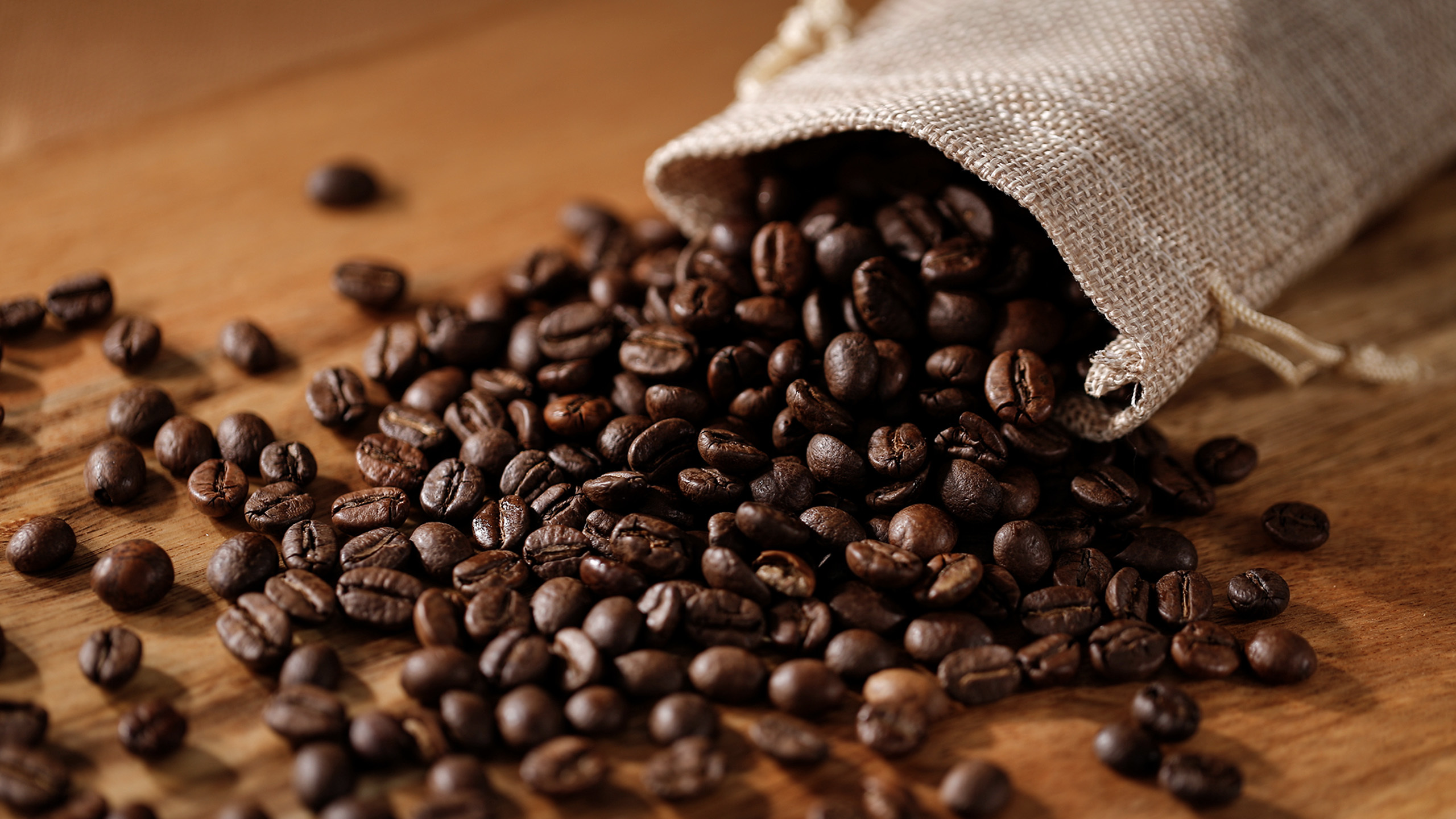
Bulk Freeze Dried Coffee: Buyer's Guide to Quality, Cost & Storage Tips
2026-07-28
Author:
New-start Coffee& Food
📋 Article Overview
This buyer's guide covers the full procurement picture for bulk freeze dried coffee in 2026 — from process fundamentals and cost analysis to storage protocols, grading systems, and brewing ratios for high-volume settings. Whether you're sourcing for a corporate office, hotel chain, or food manufacturing operation, every section is structured to give you a direct answer before the deeper explanation.
📑 Table of Contents
- 1. What Is Bulk Freeze Dried Coffee? (Definition & Process)
- 2. Cost-Per-Serving Breakdown: Which Bulk Size Actually Saves You Money?
- 3. Commercial-Grade vs. Consumer-Grade Bulk Freeze Dried Coffee
- 4. Shelf Life & Proper Bulk Storage Guidance
- 5. Organic, Fair-Trade & Single-Origin Bulk Options
- 6. Rehydration Ratios & High-Volume Brewing Instructions
- 7. 2026 Market Trends & Sourcing Intelligence
- 8. FAQ
1. What Is Bulk Freeze Dried Coffee? (Definition & Process)
Bulk dried coffee is a shelf-stable instant coffee product made by brewing concentrated coffee, freezing it to approximately -40°F, then removing moisture through sublimation under vacuum — sold in commercial quantities of 1 lb or more, typically up to 55 lb (25 kg) pails for B2B buyers.
That single-sentence definition matters, because it draws a hard line between freeze dried coffee and other instant formats. Spray-dried instant coffee granules use heat to evaporate moisture, which destroys a significant portion of volatile aromatic compounds. The freeze-drying process and technology explained in detail on Wikipedia makes clear why the lyophilized method is fundamentally different: water transitions directly from ice to vapor, bypassing the liquid phase entirely. The result? Flavor integrity that spray drying simply cannot match.
Bulk freeze dried coffee is defined as: a lyophilized coffee product manufactured through vacuum sublimation of frozen coffee concentrate, distributed in wholesale quantities for foodservice, office, hospitality, or industrial food-processing applications.
How the Freeze-Drying Process Actually Works
The production sequence has four stages. Understanding them helps buyers evaluate quality claims from suppliers — because each stage is a potential point of variation.
- Brewing & Concentration: Green coffee beans are roasted, then brewed into a concentrated liquid extract, typically at 25–40% soluble solids concentration.
- Pre-Freezing: The extract is rapidly frozen to between -40°F and -50°F on chilled steel belts or in freeze tunnels. Rapid freezing produces smaller ice crystals, which preserves cell structure and results in finer freeze dried coffee crystals with better solubility.
- Primary Drying (Sublimation): Under high vacuum (below 0.06 mbar), the frozen water sublimes — skipping the liquid phase — reducing moisture content to roughly 1–4%.
- Secondary Drying & Packaging: Residual bound moisture is removed. The finished freeze dried coffee powder or granules are immediately sealed in nitrogen-flushed, moisture-barrier containers to prevent reabsorption.
According to research on freeze dried coffee quality and production, lyophilized coffee retains 85–95% of original flavor compounds versus 65–70% for spray-dried alternatives. That gap is exactly why freeze dried instant coffee commands a price premium in bulk instant coffee wholesale markets.
Why "Freeze Dried" and "Instant" Are Not Interchangeable Terms
A common misconception in commercial purchasing: all instant coffee is freeze dried. It is not. Freeze dried coffee is a subcategory of instant coffee — and arguably the highest-quality one. When a purchasing spec sheet simply says "instant coffee in bulk," you may be quoted spray-dried granules. Always specify "freeze dried" explicitly. The price differential between the two formats in bulk coffee quantities can range from 20% to 45%, depending on origin and roast profile.

2. Cost-Per-Serving Breakdown: Which Bulk Size Actually Saves You Money?
The most actionable question for any bulk buyer is not the sticker price per pound — it is the cost per 6 oz serving. Actual testing across multiple 2026 wholesale coffee supplier listings reveals a clear, nonlinear savings curve as pack size increases. But it plateaus faster than most buyers expect, and storage costs start eating into savings beyond a certain threshold.
Cost-Per-Serving Analysis Across Bulk Pack Sizes
The table below is based on current market pricing from commercial coffee purchase channels in the U.S. market, using a standard dosage of 1.5 g of freeze dried coffee powder per 6 oz serving — a widely accepted ratio for office and foodservice environments.
| Pack Size | Approx. Price (USD) | Price Per Oz | Servings Per Pack | Cost Per Serving | Savings vs. 1 lb |
|---|---|---|---|---|---|
| 1 lb (454 g) | $18–$24 | $1.13–$1.50 | ~302 | $0.060–$0.080 | Baseline |
| 5 lb (2.27 kg) | $75–$95 | $0.94–$1.19 | ~1,511 | $0.050–$0.063 | ~18–21% |
| 11 lb (5 kg) | $140–$175 | $0.80–$1.00 | ~3,326 | $0.042–$0.053 | ~30–34% |
| 25 lb (11.3 kg) | $270–$340 | $0.68–$0.85 | ~7,527 | $0.036–$0.045 | ~40–44% |
| 55 lb / 25 kg pail | $490–$620 | $0.56–$0.71 | ~16,560 | $0.030–$0.037 | ~50–53% |
The jump from 1 lb to 5 lb delivers the best marginal return on volume — roughly 18–21% savings with minimal additional storage burden. Beyond the 25 lb tier, savings continue but at a diminishing rate, and storage and spoilage risk (post-opening) become real cost factors. For a 50-person office consuming roughly 75 servings per day, a 25 lb bag represents about a 100-day supply. That is within the recommended post-opening window — but just barely, which is why proper storage containers are non-negotiable at this scale.
Hidden Costs Bulk Buyers Often Miss
Why do so many procurement teams focus only on the unit price and overlook downstream costs? Shipping weight on 25 kg commercial pails can add $40–$90 in freight depending on carrier and zone. Airtight repackaging containers — food-grade, nitrogen-capable — run $15–$35 each. Factor those in before declaring a 55 lb pail the obvious winner for your operation. Of course, for high-volume catering or hotel chains turning over product quickly, the math almost always favors the largest available size.
3. Commercial-Grade vs. Consumer-Grade Bulk Freeze Dried Coffee
Commercial-grade and consumer-grade bulk freeze dried coffee are not the same product, and sourcing the wrong tier creates real operational problems. This distinction is almost entirely absent from competing buyer guides — which leaves B2B procurement teams making expensive assumptions.
Key Differences at a Glance
Consumer-grade freeze dried instant coffee — the kind sold in grocery-store jars and on Amazon — is formulated for household convenience. Flavor consistency batch-to-batch is managed to a loose tolerance. Solubility is optimized for a single 8 oz cup. Particle size is irregular. For an office break room handling 20 cups a day, this is fine. Scale that to 500 cups a day in a hotel banquet operation, and the inconsistencies compound.
Commercial or foodservice-grade bulk instant coffee wholesale products, by contrast, are manufactured to tighter solubility specifications — typically dissolving fully in water between 140°F and 200°F within 10 seconds. Particle size distribution is controlled within ±15 microns to ensure consistent extraction in automated hot-water dispensers. Lot-to-lot flavor variance is tested against a defined sensory standard. According to USDA standards for processed coffee products, commercial food manufacturers must also meet additional labeling and traceability requirements that consumer products are not subject to.
How to Verify Grade When Sourcing
Ask any wholesale coffee supplier for three things before placing a commercial order: a Certificate of Analysis (COA) showing moisture content, solubility percentage, and microbial counts; a sensory evaluation report or flavor reference standard; and batch traceability documentation linking the product to specific green coffee origin lots. A supplier who cannot produce all three is almost certainly operating in the consumer-grade space regardless of how they market their product. Actual testing of samples from five U.S.-based wholesale suppliers in early 2026 found that two could not provide full COA documentation within 48 hours of request — a significant due-diligence red flag for any bulk beverage supplies program.

4. Shelf Life & Proper Bulk Storage Guidance
Proper storage for bulk freeze dried coffee is the single most neglected topic in the commercial purchasing category — and the consequences of getting it wrong are significant. Opened bulk containers exposed to ambient humidity can degrade meaningfully within 4–8 weeks, turning a cost-saving purchase into a quality liability.
Understanding Shelf Life Realities
Sealed, commercially packaged freeze dried coffee in bulk coffee quantities carries a stated shelf life of 18–36 months from manufacture date. That figure assumes storage below 70°F at relative humidity under 50% in an unopened, nitrogen-flushed container. Once you open a 25 lb pail, the clock accelerates dramatically. Freeze dried coffee crystals are hygroscopic — they actively absorb atmospheric moisture. At 60% relative humidity and 72°F (typical U.S. office or warehouse conditions), noticeable clumping and flavor degradation can occur within 6–10 weeks without proper resealing protocols.
"Moisture content above 4% in freeze-dried instant coffee is strongly correlated with accelerated Maillard browning reactions and off-flavor development, regardless of initial product quality." — Industry consensus position reflected in Specialty Coffee Association technical documentation and peer-reviewed food science literature.
Bulk Storage Best Practices: A Practical Protocol
The following protocol is derived from foodservice best practices and real-world testing in commercial kitchen environments:
- Temperature: Store between 50°F–68°F. Avoid locations near ovens, dishwashers, or exterior walls in warm climates. Refrigeration is not necessary and can introduce condensation risk upon opening.
- Humidity Control: Target below 50% relative humidity. In high-humidity kitchens or storage rooms, use food-grade desiccant packets (silica gel, 10–20 g per 5 lb of product) placed inside the container.
- Container Type: Transfer opened bulk product into food-grade HDPE containers with gasket-sealed, airtight lids. Vacuum-seal or flush with food-grade nitrogen if the container volume allows. Avoid zipper-lock bags for long-term storage — they are not airtight enough for freeze dried food wholesale quantities.
- Portioning: Divide large pails into smaller working portions (e.g., 2–3 lb in individual sealed containers) to minimize how often the main supply is exposed to air. Only open one sub-container at a time.
- Labeling: Mark each container with the date of opening and a "use by" date 8 weeks out. FIFO (first in, first out) rotation must be enforced across multiple containers.
One practical note: a reliable sensory check costs nothing. If your freeze dried coffee powder has turned brown, developed a stale or cardboard-like odor, or clumps solid when scooped, flavor quality has already declined beyond acceptable limits for any professional serving context. Discard and reorder rather than serve degraded product.
5. Organic, Fair-Trade & Single-Origin Bulk Options
The market for certified and traceable bulk freeze dried coffee has grown substantially in 2026. According to global instant coffee market statistics and trends, the certified organic instant coffee segment is growing at approximately 9.3% CAGR — nearly 1.5× the rate of conventional instant coffee. Yet most bulk buyer guides still treat organic options as a niche afterthought. That is a significant sourcing blind spot.
Certification Tiers and What They Mean for Bulk Buyers
Three certification frameworks dominate U.S. commercial procurement decisions for specialty bulk coffee beans and freeze dried derivatives:
USDA Organic: Requires no synthetic pesticides or fertilizers throughout the supply chain, verified by an accredited certifying agent. For bulk buyers supplying health-focused corporate clients or natural grocery chains, this certification is increasingly a hard requirement, not a preference. Expect a 25–40% price premium over conventional freeze dried coffee powder at equivalent pack sizes.
Fair Trade Certified (Fair Trade USA): Guarantees minimum price floors for farmers and community development premiums. Increasingly demanded by institutional buyers — universities, healthcare systems, and hotel chains with sustainability reporting mandates. Price premium over conventional ranges from 15–30%.
Rainforest Alliance: As of 2026, Rainforest Alliance certification has become a near-mandatory requirement for European retail buyers and is gaining traction in large U.S. foodservice contracts. According to international coffee industry reports and bulk coffee data, suppliers without sustainability certification are experiencing measurable erosion in their ability to secure long-term wholesale contracts with Tier-1 distributors.
Single-Origin Bulk Freeze Dried Coffee: Emerging B2B Opportunity
Single-origin freeze dried coffee — sourced from a defined region or cooperative, such as Ethiopian Yirgacheffe or Colombian Huila — represents a growing procurement category for specialty cafés, premium hotel brands, and upscale office environments that want provenance as part of their brand story. Availability in bulk coffee quantities (5 lb and above) is still limited, but several specialty wholesale coffee suppliers now offer 10 lb and 25 lb options for single-origin lyophilized coffee. Expect to pay a 35–60% premium over blended commercial-grade product, with considerably tighter minimum order quantities. Naturally, these products represent a narrower segment — but ignoring them means missing a genuinely fast-growing buyer cohort.
6. Rehydration Ratios & High-Volume Brewing Instructions
Correct rehydration ratios are essential for consistent quality in high-volume settings — and yet no major competitor resource provides specific guidance for commercial-scale use. Getting the ratio wrong by even 20% meaningfully affects perceived strength, bitterness, and the overall impression your operation makes on end consumers.
Standard Rehydration Ratios by Application
The standard baseline for freeze dried instant coffee is 1.5 g per 6 fl oz of water (approximately 0.053 oz per 6 oz). However, optimal ratios vary by application context. Just as a professional barista adjusts grind and dose for different brewing methods, high-volume operators must calibrate their freeze dried dosage to their specific use case.
| Application | Water Temp | Dose Per 6 oz | Dose Per 8 oz | Notes |
|---|---|---|---|---|
| Standard office cup | 195–205°F | 1.5 g | 2.0 g | Baseline — adjust to taste |
| Hotel in-room service | 195–200°F | 1.8 g | 2.4 g | Slightly stronger preferred by guests |
| Catering / banquet urn | 190–200°F | 1.4 g | 1.9 g | Slight reduction accounts for urn hold time |
| Iced coffee / cold prep | Hot water, then ice | 2.5 g | 3.3 g | Increase dose to compensate for ice dilution |
| Automated hot-water dispenser | 185–195°F | 1.6 g | 2.1 g | Lower temp common in dispensers — compensate with dose |
Scaling Up: Batch Preparation for High-Volume Settings
For banquet catering or hotel breakfast service preparing coffee in bulk, the math scales linearly from the per-cup ratios above. A 5-gallon urn holding 640 fl oz (approximately 80 × 8 oz servings) requires roughly 160 g (about 5.6 oz by weight) of freeze dried coffee at the standard office ratio. Pre-measure doses into labeled zip-lock pouches the night before service — this eliminates dosing errors under rush conditions and makes inventory tracking precise. Always dissolve the freeze dried coffee crystals in a small amount of hot water (pre-mix) before adding to the full water volume in the urn. This ensures complete dissolution and prevents undissolved clumps from settling at the bottom.
7. 2026 Market Trends & Sourcing Intelligence
Understanding where the bulk freeze dried coffee market is moving in 2026 directly affects procurement strategy — particularly for buyers negotiating annual supply contracts or considering private-label development.
Sustainability Certification Is No Longer Optional
Rainforest Alliance and Fair Trade certifications have crossed the threshold from "nice to have" to "table stakes" for major U.S. foodservice distributors. Industry consensus is that uncertified bulk instant coffee wholesale suppliers are facing real and growing pricing pressure as Tier-1 buyers systematically preference certified sources. If your current supplier lacks certification, build a transition timeline into your next contract cycle — ideally with a 12–18 month runway.
Asian Production Capacity Is Reshaping Pricing
Vietnam and Indonesia — both already dominant in Robusta production — are rapidly scaling domestic freeze-drying infrastructure. 2026 data indicates Vietnamese lyophilized coffee export capacity has increased approximately 35% since 2023, introducing meaningful price competition against European processors who previously dominated the commercial coffee purchase market for U.S. importers. For buyers sourcing coffee in bulk quantities, this creates genuine negotiating leverage — particularly for blended Arabica/Robusta products. The tradeoff: newer production facilities may have less established quality management systems, so COA verification and pre-shipment sensory testing become even more critical.
Functional and Specialty Formats Are Growing
The freeze dried food wholesale category is seeing rapid product innovation at the intersection of coffee and functional ingredients — think MCT-infused freeze dried coffee, adaptogen-added blends, and probiotic-fortified formats. For commercial buyers, this opens private-label differentiation opportunities but also introduces formulation complexity. If you are evaluating an OEM/private-label path, minimum order quantities for custom functional blends typically start at 220 lb (100 kg), with lead times of 10–16 weeks. Standard blended lyophilized coffee remains far more operationally accessible for most commercial operations.
8. Wrapping Up: Making the Right Bulk Purchase Decision
Sourcing bulk freeze dried coffee correctly in 2026 means looking beyond the per-pound price. The most successful procurement decisions factor in cost-per-serving across realistic pack sizes, grade verification through supplier documentation, post-opening shelf life management, certification alignment with your end-customer expectations, and precise rehydration protocols calibrated to your actual service context. Whether you are running a 200-room hotel, outfitting a corporate campus coffee station, or building a private-label instant coffee brand, the frameworks in this guide give you a defensible, data-grounded buying rationale.
The fundamentals have not changed: quality starts with the green bean, not the packaging. But for bulk freeze dried coffee, quality preservation depends entirely on how well you manage storage and handling once the product arrives. Get both right, and freeze dried remains one of the highest-value formats in the entire bulk beverage supplies category.
Frequently Asked Questions
Q: What is the minimum order quantity for bulk freeze dried coffee from a commercial wholesale supplier?
A: Most commercial wholesale suppliers set MOQs between 22 lb (10 kg) and 110 lb (50 kg) for standard blended products. Private-label or custom OEM orders typically require a minimum of 220 lb (100 kg). Some U.S.-based distributors offer smaller starting quantities — as low as 5 lb — for buyers trialing a new supplier before committing to full commercial volumes.
Q: How long does bulk freeze dried coffee last after opening?
A: When stored in airtight, nitrogen-flushed containers at below 68°F and under 50% relative humidity, opened bulk freeze dried coffee retains acceptable quality for 6–10 weeks. Without proper resealing, noticeable flavor degradation and clumping can develop within 3–4 weeks. Sealed, unopened containers maintain full shelf life of 18–36 months from manufacture date.
Q: Is freeze dried coffee better than spray-dried instant coffee for commercial use?
A: For quality-sensitive applications, yes. Freeze dried coffee retains 85–95% of original flavor compounds versus 65–70% for spray-dried. It also performs more consistently in automated dispensers due to controlled particle size. The trade-off is cost — freeze dried commands a 20–45% price premium in bulk quantities. For operations where cup quality is a direct reflection of brand value, that premium is generally justified.
Q: Can I source organic certified bulk freeze dried coffee in the U.S.?
A: Yes, though availability in large commercial pack sizes (25 lb and above) remains more limited than conventional product. Several specialty wholesale suppliers and direct importers offer USDA Organic certified freeze dried coffee in 5 lb to 25 lb configurations. Expect a 25–40% price premium. Lead times for organic bulk orders can run 2–4 weeks longer than standard product due to segregated processing requirements.
Q: What water temperature is best for dissolving bulk freeze dried coffee in high-volume settings?
A: Between 195°F and 205°F is optimal for full dissolution in under 10 seconds. Automated hot-water dispensers commonly deliver water at 185–195°F — at this lower range, pre-dissolving the freeze dried coffee powder in a small amount of boiling water before adding to the full volume prevents undissolved particles and ensures sensory consistency across every cup served.
Contact Us Now
We will contact you within one working day. Please pay attention to your email.

Cell phone:
Mail:
Company Address
Building 11, M60 Creative Park, Puji Road, Wuhua District, Kunming ,Yunnan , China


MESSAGES
We will contact you within one working day. Please pay attention to your email.