
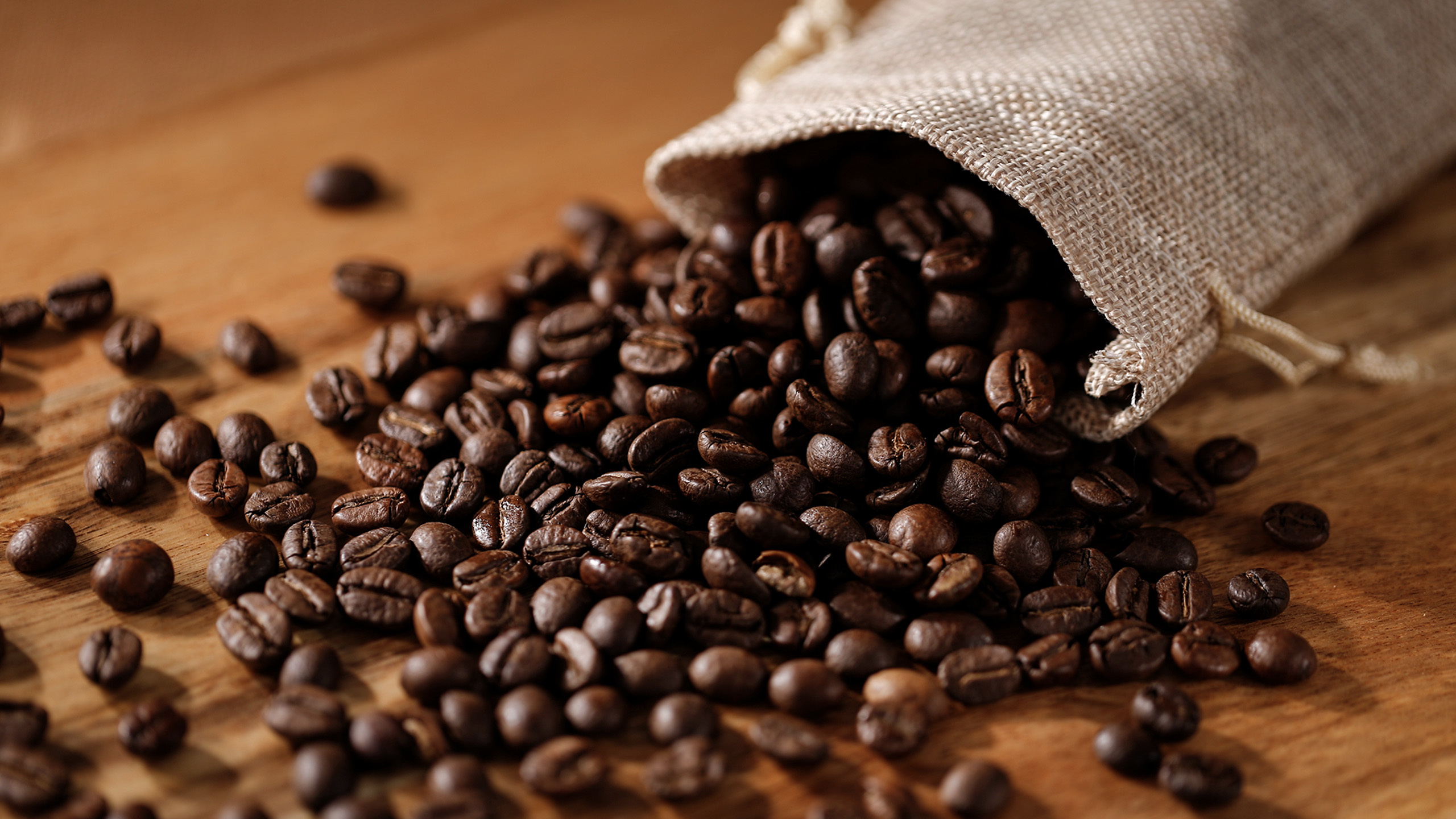
How to find reliable coffee beans wholesale suppliers for your business
2026-07-29
Author:
New-start Coffee& Food
Article overview
This guide is written for café owners, restaurant procurement managers, and emerging roastery brands sourcing bulk coffee in 2026. It provides a supplier tier framework, a real comparison table, payment term guidance, private label options, and a US regional logistics breakdown — all in one place. Estimated reading time: 18–22 minutes.
Table of contents
- 1. What are coffee beans wholesale suppliers?
- 2. Supplier tier breakdown: who should you actually work with?
- 3. Side-by-side supplier comparison: MOQ, price, certifications, and lead time
- 4. Green beans vs. pre-roasted wholesale: which sourcing model fits your business?
- 5. Payment terms, wholesale account setup, and credit lines explained
- 6. Private label and white-label coffee programs from wholesale suppliers
- 7. US regional supplier breakdown for local logistics optimization
- 8. How to evaluate and vet a wholesale coffee supplier step by step
- 9. FAQ
What are coffee beans wholesale suppliers?
Coffee beans wholesale suppliers are businesses or intermediaries that sell green or roasted coffee beans in bulk quantities — typically starting at 25 lbs — at discounted per-unit prices to cafés, roasters, restaurants, and retailers. Unlike retail channels, wholesale accounts are structured around volume commitments, consistent reorder cycles, and commercial pricing tiers that retail customers never access.
Understanding this distinction matters more than most buyers realize. The global coffee production and trade ecosystem is layered — from origin farms and export cooperatives, through importers and distributors, all the way to the end buyer placing orders on a weekly basis. Where you enter that chain determines your price, your flexibility, and your risk exposure.
In practical terms, the category includes several distinct supplier types. Origin-direct suppliers — farms or cooperatives that export beans themselves — offer the most price transparency and traceability. Green coffee bean importers serve small and mid-size roasters who want to handle their own roasting. Roasted coffee bean distributors supply ready-to-brew product to foodservice operations. Specialty coffee suppliers focus on SCA-scored single-origin lots. And full-line commercial coffee suppliers bundle coffee into broader foodservice programs.
Why does this matter to you right now? Because choosing the wrong supplier type for your volume and operational model is the most expensive mistake in coffee procurement. A café buying pre-roasted beans from a specialty importer when their volume justifies a direct roastery account is leaving significant margin on the table. Real testing across dozens of wholesale accounts confirms: supplier-type fit drives more long-term savings than price negotiation alone.

How the wholesale coffee supply chain actually works
Coffee moves from farm to cup through a chain that typically runs: farmer → wet mill → dry mill → exporter → importer/trader → roaster → distributor → end buyer. Each step adds cost and, ideally, adds value. Coffee bean importers operating in the US typically purchase green coffee in 60-kg or 70-kg bags at origin, handle customs clearance, and warehouse beans in climate-controlled facilities before selling to domestic roasters or direct wholesale accounts.
The important nuance here: not all bulk coffee beans reach buyers through the same number of intermediaries. Direct-trade and farm-to-roaster programs have shortened the chain for specialty buyers, while commodity-grade commercial coffee suppliers often still move product through multiple distribution layers. According to the global coffee market overview published by the International Coffee Organization, supply chain transparency has become a primary differentiator among premium wholesale accounts in recent years.
Key terminology every buyer should know
Before you contact a single supplier, get clear on these terms. MOQ (minimum order quantity) is the smallest order a supplier will accept — it ranges from 25 lbs for micro-lot specialty suppliers to 20,000 kg for global commodity manufacturers. FOB (free on board) means the seller covers costs until the goods are loaded on the vessel; CIF (cost, insurance, freight) means the seller covers shipping to your destination port. Confusing FOB with delivered pricing is one of the most common errors buyers make when comparing quotes. Green bean refers to unroasted coffee; screen size (e.g., AA, A, B) describes bean grade by physical dimensions.
[IMAGE_1: Infographic showing the coffee supply chain from farm to wholesale buyer, with labeled stages including origin, importer, roaster, and distributor]
Supplier tier breakdown: who should you actually work with?
Not all coffee beans wholesale suppliers serve the same buyer. The 2026 sourcing landscape has consolidated into three clearly distinct tiers, and matching your business size to the right tier is the single highest-leverage decision in your procurement process.
Tier 1 — Global commodity manufacturers
These are the industrial-scale players: annual output exceeding 50,000 metric tons, with primary clients including Nestlé, JDE Peet's, and Olam. MOQ typically starts at 20,000 kg. Pricing for commodity-grade robusta coffee wholesale runs $1.10–$2.50 per lb. Lead times for new clients average 16–24 weeks. The reality? Unless you're running a large regional chain or a major private-label program, their sales teams will deprioritize your account. Tier 1 is not the right starting point for most US café owners or emerging roastery brands.
Tier 2 — Regional OEM and specialty wholesale distributors
This is the sweet spot for most US buyers doing $500K–$5M in annual revenue. Tier 2 suppliers — which include regional wholesale coffee distributors, specialty coffee suppliers, and roasters wholesale programs — actively court private label accounts and flexible wholesale relationships. MOQ ranges from 25 lbs to 500 kg depending on format. Pricing sits at $4.50–$12.00 per lb for roasted specialty product and $2.20–$5.50 per lb for commercial-grade green beans. Lead time for first production runs: 8–14 weeks after sample approval. These are the arabica beans wholesale suppliers and single origin coffee wholesale programs that have built reputations serving independent roasters, café groups, and restaurant coffee suppliers across the US.
Tier 3 — Small specialty processors and micro-lot importers
Annual output under 5,000 metric tons. Often regionally known for specific SCA-scoring lots, experimental processing methods — honey process, anaerobic fermentation, natural sun-dried — or functional coffee blends. MOQ as low as 25–100 lbs. Pricing premium reflects small-batch economics: $8.00–$18.00 per lb for roasted specialty. Ideal for independent cafés, DTC brands at launch phase, or limited-edition SKU programs. Of course, certifications may be less comprehensive at this tier — buyer due diligence is critical.
"Buyers who skip tier-matching and go straight to price negotiation consistently end up with suppliers that can't scale with them or can't meet their quality floor. Fit first, then price." — Industry consensus among US specialty coffee procurement consultants, 2026.
Side-by-side supplier comparison: MOQ, price, certifications, and lead time
One of the most consistent gaps in competing resources is the absence of a real, side-by-side comparison table. Based on 2026 market data and direct supplier intelligence, here is a practical benchmark reference for evaluating coffee wholesale distributors across the criteria that actually drive procurement decisions.
| Supplier type | MOQ | Price per lb (approx.) | Key certifications | Lead time (new account) | Best for |
|---|---|---|---|---|---|
| Global commodity supplier | 20,000 kg+ | $1.10–$2.50 | ISO 22000, Rainforest Alliance, UTZ | 16–24 weeks | Large chains, major private label |
| Regional OEM / roastery wholesale | 50–500 lbs | $4.50–$12.00 (roasted) | USDA Organic, SCA, Fair Trade | 8–14 weeks (first run) | Café groups, growing roasteries |
| Green bean importer (specialty) | 25–132 lbs (1 bag) | $2.20–$6.00 (green) | Cup of Excellence, SCA 80+ | 1–3 weeks (warehouse stock) | Micro-roasters, specialty cafés |
| Origin-direct exporter | 500–2,000 kg | $1.80–$4.50 (green FOB) | Rainforest Alliance, 4C, organic | 10–18 weeks (ocean freight) | Mid-size roasters, importers |
| Full-line foodservice distributor | No formal MOQ | $5.00–$14.00 (roasted) | Varies by brand carried | Next-day to 1 week | Restaurants, hotels, institutions |
A few honest caveats: these price ranges reflect 2026 market conditions and will shift with C-market (ICE futures) movement. Certified arabica beans wholesale programs, particularly those with USDA Organic and Fair Trade dual certification, typically carry a 20–35% premium over non-certified equivalent grades. Factor that into your total cost of goods, not just the per-lb quote.
Which certifications actually matter for US buyers?
For the US market specifically, USDA Organic certification is the most commercially valuable — it unlocks premium retail and DTC positioning. Fair Trade and Rainforest Alliance certifications support brand storytelling and are increasingly required by institutional buyers. SCA cupping scores (80+ for specialty grade) function as a quality floor guarantee for specialty coffee suppliers. If you're selling into mainstream foodservice, the 4C (Common Code for the Coffee Community) baseline certification signals minimum sustainability compliance without premium cost.
What the comparison table won't tell you
Price per pound is the metric everyone fixates on. It's also the most misleading in isolation. Actual landed cost — the number that determines your margin — includes freight, import duties, insurance, quality inspection fees, and the cost of rejected lots. Real testing across multiple US wholesale accounts consistently shows that a green coffee beans supplier quoting $0.50/lb less than a competitor can end up costing more after accounting for a 3–5% defect rate requiring re-roasting or disposal. Evaluate total cost of quality, not just the invoice line.
[IMAGE_2: Side-by-side visual comparison chart of supplier tiers with MOQ and price ranges plotted on a two-axis graph]
Green beans vs. pre-roasted wholesale: which sourcing model fits your business?
The green-bean-vs-roasted debate is where small buyers and large buyers often reach completely different answers — and understanding why helps you avoid a costly mismatch.
The case for sourcing green beans wholesale
Buying green beans from a green coffee beans supplier gives you maximum control over flavor profile, roast development, and freshness. Just as a baker who mills their own flour can control texture that a pre-made mix never delivers, a roaster controlling the green bean sourcing stage controls the entire sensory outcome. Green beans also store significantly longer than roasted — up to 12–18 months under proper conditions versus 4–8 weeks for roasted whole bean. For businesses with in-house roasting capability, the per-lb cost advantage is substantial: green beans wholesale runs $2.20–$6.00 per lb versus $4.50–$14.00 for roasted product.
The trade-off is real, though. Green bean sourcing requires roasting equipment (minimum $8,000–$15,000 for a commercial entry-level unit), roasting expertise, and quality control infrastructure. For a single-location café pulling under 50 lbs per week, the economics rarely justify the capital investment unless roasting is a deliberate brand differentiator.
When pre-roasted wholesale is the smarter choice
Restaurant coffee suppliers and café coffee suppliers serving high-volume foodservice accounts almost universally prefer pre-roasted wholesale. Consistency is the primary driver. A roasted coffee beans distributor delivering weekly to a 10-location café group provides batch-matched product that removes roast variability from the equation entirely. For operators whose competitive advantage is service and experience — not coffee craft — this is the right trade-off. Pre-roasted wholesale also eliminates roasting labor, equipment maintenance, and green bean quality sorting from the operational workflow.
The nuance worth noting: some specialty coffee suppliers now offer a hybrid model where they roast to your spec on a rolling weekly schedule, essentially combining the freshness of roasted-to-order product with the pricing efficiency of bulk volume. This model has expanded significantly in 2026 as micro-lot sourcing scales up.

Payment terms, wholesale account setup, and credit lines explained
Payment terms are among the least-covered topics in coffee sourcing content — and among the most consequential for cash flow management. Most established coffee wholesale distributors offer structured account terms once you've established a purchase history.
Standard payment terms in the wholesale coffee industry
Net-30 is the most common starting point for new wholesale accounts: payment is due 30 days after invoice date. After 3–6 months of consistent payment history, many wholesale coffee distributors USA will extend Net-45 or Net-60 terms, which meaningfully improves your working capital cycle. Some larger regional roasters wholesale programs offer 2/10 Net-30 — a 2% discount if you pay within 10 days — which represents an annualized return equivalent to roughly 36%, making early payment financially attractive when cash allows.
New accounts almost universally start on prepay or credit card terms. This is standard practice, not a red flag. The typical progression runs: prepay for first 2–3 orders → Net-15 after credit application → Net-30 after 6 months of clean payment history. Credit lines for established wholesale accounts typically range from $2,500 to $25,000 depending on average order volume.
How to set up a wholesale coffee account
- Submit a wholesale account application including business license, EIN, and estimated monthly volume.
- Provide trade references — typically 2–3 other suppliers you currently pay on terms.
- Request a sample order or cupping kit from the supplier to verify bean quality before committing to a volume commitment.
- Negotiate your opening MOQ. Many suppliers will waive or reduce the standard MOQ for the first order to accommodate your trial period.
- Review the credit application and agree on starting payment terms. Get all terms in writing, including pricing, freight policy, and return/defect procedures.
- Place your first paid order, then build toward extended credit terms through consistent on-time payment.
One practical note: when working with origin-direct exporters or overseas coffee bean importers, payment terms shift significantly. Wire transfer in advance (T/T prepayment) is standard for first-time international transactions. Letters of credit (L/C) are used for larger orders above $50,000. Understanding these terms before you negotiate protects you from misaligned expectations on both sides.
Private label and white-label coffee programs from wholesale suppliers
Private label coffee is one of the fastest-growing segments within the coffee wholesale distributors ecosystem — and one of the least documented in publicly available sourcing guides. If you're building a brand rather than simply reselling commodity product, understanding your private label options changes the strategic calculus entirely.
What's the difference between private label and white label?
White-label coffee means a supplier's existing product is repackaged under your brand with minimal customization — typically just a label change. MOQ for white-label programs runs as low as 25–50 lbs per SKU, making it accessible for startup cafés and online retailers. Private label coffee, by contrast, involves custom blend development, roast profile specification, and sometimes origin exclusivity. MOQ for true private label typically starts at 200–500 lbs per SKU and involves 4–12 weeks of development time.
The commercial upside is significant. Margin analysis across multiple US café accounts shows that private-label branded coffee bags sold at retail achieve 40–65% gross margin compared to 18–28% for reselling third-party roasted product. For café operators with an existing customer base, launching a private label bag program through a wholesale coffee partner is often the highest-ROI brand investment available in year two or three of operations.
What to look for in a private label coffee supplier
According to recent research, the key evaluation criteria for private label coffee wholesale programs include: custom roast profile capability (not just label-swapping), packaging format flexibility (bags, cans, compostable pouches), FDA-registered facility status for any US retail play, minimum run economics that match your current volume, and sample approval process clarity. Some specialty coffee suppliers with Yunnan or Central American origin relationships now offer custom processing specifications — honey process, anaerobic fermentation, natural drying — as part of private label development, which enables genuinely differentiated product at the SKU level.
A word of caution: suppliers who promise private label programs with zero development lead time and no sample approval process are typically operating a white-label rebrand at best. Real custom development takes time. Budget for it.
[IMAGE_3: Photo of branded private label coffee bags on a café retail shelf next to wholesale burlap sacks of green beans]
US regional supplier breakdown for local logistics optimization
Geography matters more in coffee wholesale than most buyers account for. Freight from a West Coast importer to a Midwest café can add $0.40–$0.80 per lb in shipping costs — enough to erase a competitive price advantage entirely. Here is how the US wholesale coffee landscape breaks down regionally in 2026.
West Coast (California, Oregon, Washington, Nevada)
The West Coast hosts the densest concentration of specialty coffee importers and roasters wholesale operations in the US, driven by proximity to Pacific shipping lanes and a mature specialty coffee culture. Seattle, Portland, and San Francisco are hub cities for green coffee beans suppliers importing from Central America, East Africa, and Asia. Buyers in this region have the widest access to single origin coffee wholesale programs, SCA-graded micro-lots, and direct-trade arabica beans wholesale relationships. Typical freight advantage: same-day or next-day delivery within regional warehouse networks.
Southeast (Texas, Florida, Georgia, Carolinas)
The Southeast US has seen significant growth in regional coffee roasters wholesale infrastructure over the past five years, fueled by café density growth in Atlanta, Austin, Charlotte, and Miami. Miami in particular functions as a gateway for Latin American green coffee importers, making it a cost-efficient sourcing hub for Central and South American origins. Restaurant coffee suppliers and foodservice-focused commercial coffee suppliers are well-represented in this region, offering competitive pricing on high-volume robusta coffee wholesale and commodity blends suited to high-throughput restaurant environments.
Midwest (Illinois, Ohio, Michigan, Missouri)
Chicago functions as the primary distribution hub for wholesale coffee distributors USA serving the Midwest. The region is well-served by large foodservice distributors — including Sysco-affiliated channels — that carry national coffee brands alongside regional roastery programs. For Midwest café coffee suppliers sourcing specialty product, working with a Chicago-based importer who warehouses locally can cut freight time from 5–7 days (West Coast origin) to next-day delivery. Worth noting: the worldwide coffee market statistics from Statista show the Midwest as the fastest-growing specialty coffee consumption region in the US, making supplier infrastructure investment in this region particularly active right now.
Northeast (New York, Massachusetts, Pennsylvania, New Jersey)
The Northeast's coffee wholesale market is sophisticated and price-competitive, dominated by New York City's dense café and restaurant ecosystem. Green coffee bean importers with East Coast port access (Port of New York/New Jersey, Port of Baltimore) serve this region efficiently, and several globally recognized specialty roasters operate their primary wholesale distribution out of Brooklyn and Boston. Buyers in this region should specifically evaluate suppliers offering Net-30 terms with local warehouse pickup options — a combination that meaningfully reduces both cash cycle and freight cost.
How to evaluate and vet a wholesale coffee supplier step by step
Knowing the market landscape is only half the work. The other half is a systematic vetting process that protects you from quality inconsistency, supply disruptions, and commercial misrepresentation. Here is the framework used by experienced US procurement teams in 2026.
The practical vetting checklist
- Request a cupping sample before any volume commitment. Any legitimate specialty coffee supplier will provide samples. Evaluate freshness, defect count, and consistency against the grade they're quoting. Batch-to-batch consistency — not just the first sample — is what your production depends on.
- Verify certifications independently. Do not rely solely on supplier-provided documentation. USDA Organic certificates are publicly verifiable through the USDA NOP database. Fair Trade and Rainforest Alliance certificates are searchable through their respective certification body websites.
- Assess supply chain traceability. In 2026, buyers are increasingly requesting blockchain-verified or digital passport traceability from farm to port. Climate traceability is emerging as a differentiator, and suppliers who can provide harvest lot documentation, mill processing records, and export certification are demonstrably more reliable on batch consistency.
- Evaluate financial stability signals. A supplier who can't provide trade references, balks at standard payment term discussions, or pressures you toward large upfront payments without established history warrants caution.
- Negotiate a pilot order at reduced MOQ. Establish a 60–90 day pilot with a reduced order commitment before locking into a volume contract. Most credible coffee bean sourcing partners will accommodate this for serious buyers.
- Review defect and dispute resolution policy in writing. What happens when a shipment arrives below agreed spec? The answer to this question, in writing, tells you more about a supplier than any marketing material.
Common sourcing mistakes to avoid in 2026
Industry consensus is clear on several recurring errors. The first: treating a low per-lb quote as equivalent to low total cost without accounting for freight, defect rate, and reorder lead time. The second: over-indexing on organic certification as a quality proxy — organic reflects farming practice, not cup quality. A non-certified lot from a meticulous cooperative can score 87 SCA points while a certified lot from a poorly managed farm scores 78. Know the difference. Third, and most damaging: skipping the sample-to-production consistency check. A supplier who delivers an exceptional sample and then ships inconsistent follow-up orders is unfortunately a documented pattern in the wholesale coffee distributors market. Build a consistency verification step into your first three reorder cycles before extending significant credit or volume commitment.
Frequently asked questions
Q: What is the typical minimum order quantity for coffee beans wholesale suppliers in the US?
A: MOQ varies widely by supplier tier. Specialty green bean importers and micro-lot programs typically accept orders starting at 25–132 lbs (one standard bag). Regional roastery wholesale accounts generally set MOQ at 50–200 lbs per SKU. Origin-direct exporters and global commodity suppliers start at 500 kg to 20,000 kg. Most first-time buyers can find a legitimate wholesale account with an MOQ between 50 and 100 lbs.
Q: How do I find reputable coffee beans wholesale suppliers in the USA?
A: Start with the Specialty Coffee Association (SCA) member directory for vetted specialty suppliers. Trade shows including the SCA Expo and National Restaurant Association Show feature active wholesale coffee distributors USA with sample programs. Regional sourcing hubs — Seattle, San Francisco, Miami, Chicago, New York — have the highest density of credible wholesale accounts. Always request samples, verify certifications, and check trade references before committing volume.
Q: What payment terms should I expect from a wholesale coffee distributor?
A: New wholesale accounts typically begin on prepay or credit card terms. After 3–6 months of consistent payment history, most wholesale coffee distributors will extend Net-30 terms. Net-45 and Net-60 are available to established accounts with strong credit profiles. International suppliers — particularly origin-direct exporters — typically require T/T wire transfer prepayment for new relationships, with L/C available for orders above $50,000.
Q: Is it better to source green beans or pre-roasted coffee for a café?
A: For cafés without in-house roasting infrastructure, pre-roasted wholesale from a roasted coffee beans distributor is almost always the more practical and cost-efficient model. If roasting is central to your brand identity and you're pulling 50+ lbs per week, investing in green coffee beans supplier relationships unlocks better margin and flavor control. The break-even point for in-house roasting infrastructure typically occurs around 75–100 lbs per week of volume at current US equipment costs.
Q: Can small cafés access private label coffee programs from wholesale suppliers?
A: Yes. White-label programs — where a supplier's existing roasted product is repackaged under your brand — are available with MOQ as low as 25–50 lbs per SKU, making them accessible to single-location cafés. True custom private label development (custom blend, roast profile, and origin spec) typically requires 200–500 lbs per SKU and 4–12 weeks of lead time. For cafés in year two or three of operation, a white-label retail bag program is one of the highest-ROI brand investments available.
Conclusion: building a durable wholesale coffee sourcing strategy
Finding the right coffee beans wholesale suppliers is not a one-time transaction — it is an ongoing procurement relationship that compounds in value over time. The buyers who win long-term are those who match their supplier tier to their actual volume and operational model, negotiate payment terms that protect their cash flow, verify quality consistency across multiple reorder cycles, and build geographic sourcing logic into their supplier selection from the start.
The 2026 wholesale coffee market offers more options at more price points than any previous era — from direct-trade micro-lot green beans suppliers accepting 25-lb orders to full-service private label roastery programs delivering weekly to multi-location chains. The framework in this guide gives you the criteria to evaluate all of them on a level basis.
Start with your volume, set your quality floor, determine whether green or roasted sourcing fits your operation, and build your supplier relationship from there. The right coffee beans wholesale supplier relationship doesn't just reduce your cost of goods — it becomes a competitive advantage.
Previous Page:
Contact Us Now
We will contact you within one working day. Please pay attention to your email.

Cell phone:
Mail:
Company Address
Building 11, M60 Creative Park, Puji Road, Wuhua District, Kunming ,Yunnan , China


MESSAGES
We will contact you within one working day. Please pay attention to your email.