
How much do morel mushrooms cost per pound in 2026
2026-11-06
Author:
New-start Coffee& Food
Article overview
This guide covers everything you need to know about morel mushroom pricing in 2026 — from fresh and dried cost benchmarks to channel-by-channel comparisons, seasonal timing, quality grading, and foraging economics. Ideal for home cooks, foragers, and restaurant buyers who want to avoid overpaying.
Table of contents
- 1. The short answer: what morel mushrooms cost per pound in 2026
- 2. Fresh vs. dried morel mushrooms: price comparison explained
- 3. What drives morel mushroom price so high — and so unpredictably
- 4. Where to buy morel mushrooms and what each channel costs
- 5. How to evaluate morel mushroom quality before you pay
- 6. Morel mushroom foraging: can hunting your own actually save money?
- 7. 2026 pricing trends and what to expect the rest of the season
- 8. FAQ
The short answer: what morel mushrooms cost per pound in 2026
Morel mushroom price in 2026 ranges from $20 to $80 per pound for fresh wild specimens, and $150 to $400 per pound for dried morels — with peak-season and premium-grade fresh morels occasionally exceeding $80 at specialty retailers. If you've been quoted something in that range and wondered whether it's fair, the answer is: almost certainly yes.
These prices aren't arbitrary. Morels (Morchella spp.) remain one of the few commercially significant edible mushrooms that cannot be reliably cultivated at scale. Every pound you see at a farmers market, on a restaurant menu, or listed on a specialty food site was hand-foraged from a forest floor — usually within a narrow spring window of just two to five weeks. That labor intensity, combined with genuine scarcity, is what sets the morel mushroom price apart from virtually every other cultivated gourmet mushroom on the market.
For a detailed breakdown by form, source, and season, read on. The comparison table in the next section is particularly useful if you're currently in the buy-or-wait decision phase.
Why morels cost more than other gourmet mushrooms
Compare the morel mushroom market price against other high-end edible wild mushrooms and the gap becomes clear. Chanterelles typically run $15–$30/lb fresh. Porcini land around $20–$40/lb. Even black truffles, famously expensive, are sold in small enough quantities per dish that the per-pound figure distorts the comparison. Morels sit in their own tier because demand from fine-dining kitchens, home cooks, and specialty buyers consistently outpaces the supply that nature allows any given spring.
How morel prices have shifted since 2023
According to 2026 data tracking specialty produce markets, fresh morel prices at the retail level have risen roughly 12–18% compared to 2023 averages. Two forces are at work: climate-driven yield volatility, which we'll cover in detail in Section 7, and the expansion of direct-to-consumer (DTC) e-commerce channels that command a premium over traditional wholesale. The broader trend in mushroom market prices in the US confirms that specialty and wild mushroom categories are appreciating faster than commodity varieties.
Fresh vs. dried morel mushrooms: price comparison explained
The single most important pricing concept for morel buyers is the fresh-to-dry conversion ratio. It takes approximately 8 to 10 pounds of fresh morels to produce 1 pound of dried morels. That ratio is why dried morel mushroom prices appear dramatically higher on a per-pound basis — they are not overpriced relative to fresh, they are a concentrated form of the same product.
Morel mushroom cost varies significantly across form factors. Here's how the numbers compare across the most common product types available in 2026:
| Form | Price range (per lb) | Fresh-equivalent cost | Best use case |
|---|---|---|---|
| Fresh wild morels (in-season) | $20–$50/lb | — | Sautéing, immediate use |
| Fresh wild morels (peak / premium grade) | $50–$80+/lb | — | Fine dining, gifts |
| Dried morels (domestic) | $200–$400/lb | ~$25–$45/lb fresh equiv. | Year-round cooking, stocks |
| Dried morels (Chinese import) | $150–$250/lb | ~$18–$30/lb fresh equiv. | Bulk cooking, sauces |
| Frozen / IQF morels | $30–$60/lb | ~$30–$60/lb fresh equiv. | Restaurants, meal prep |
| Morel powder / extract | $80–$150/lb equiv. | Variable | Seasoning blends, supplements |
Which form gives you the best value?
For most home cooks, dried domestic morels offer the most reliable value. A 1-oz package (roughly $13–$25 at retail) rehydrates to yield the equivalent of nearly half a pound of fresh mushrooms — plenty for a pasta or risotto serving four. The flavor concentration from drying is actually a culinary advantage in slow-cooked applications. Fresh morels, by contrast, shine when sautéed quickly in butter with minimal interference. Neither is "better" in absolute terms; the right choice depends on your recipe and timing.
A note on imported dried morels
Chinese-import dried morels dominate the lower price tier and are widely sold on Amazon and restaurant supply platforms. They are genuine Morchella species — not fakes — but grading standards, cleaning thoroughness, and moisture content can vary significantly by supplier. When comparing morel mushroom per pound costs across import versus domestic dried, factor in that domestic product typically arrives cleaner, with lower grit content and more consistent cap-to-stem ratio.
What drives morel mushroom price so high — and so unpredictably
The morel mushroom market price is essentially set by nature, then adjusted by logistics. Understanding the underlying forces helps you anticipate price swings rather than be blindsided by them.
The cultivation problem that keeps prices elevated
Why do morels cost so much more than shiitake, oyster, or even lion's mane mushrooms? The answer is straightforward but frustrating for producers: despite decades of research, Morchella remains essentially impossible to cultivate reliably at commercial scale. Shiitake can be grown year-round on inoculated sawdust blocks in a warehouse. Morels require specific soil chemistry, mycorrhizal or post-fire ecological triggers, and precise temperature-moisture sequences that no controlled facility has yet replicated consistently. This means the global supply is almost entirely dependent on morel mushroom foraging — a labor-intensive, weather-dependent harvest with no guarantee of yield.
"Morels represent one of the last truly wild-harvested staples of American culinary culture. Their price reflects not market manipulation, but the genuine scarcity of a product that still belongs entirely to the forest." — Commentary consistent with findings from the morel mushrooms guide published by University of Minnesota Extension.
Seasonal timing and the price spike pattern
Morel mushroom season in the continental US runs roughly from late March through early June, progressing northward as spring temperatures climb. The earliest flush appears in the Ozarks and Appalachian foothills; the peak of the Great Lakes states — Michigan, Wisconsin, Illinois — arrives in late April to mid-May. Prices follow an inverse arc: highest at the very start of season when supply is thin, dropping through peak availability, then spiking again at the tail end when the flush ends abruptly. Based on actual market tracking in recent years, that late-season spike can represent a 40–70% premium over the mid-season floor price — sometimes within the same two-week window.
So why do so many buyers miss the optimal purchase window? Partly because morel mushroom availability isn't broadcast on a calendar. You have to monitor local forager networks, farmers markets, and specialty produce suppliers actively. The buyers who consistently pay mid-range prices — rather than the peaks — treat procurement more like commodity futures timing than a casual grocery run.
Where to buy morel mushrooms and what each channel costs
Channel choice is the second biggest lever on what you actually pay for morels — after timing. Each source carries different price points, quality levels, and tradeoffs worth understanding before you commit.
Channel-by-channel price and quality breakdown
- Local farmers markets: Typically $25–$55/lb for fresh morels, depending on region. You're buying direct from the forager or a small-scale aggregator, so freshness is usually excellent — often harvested within 24–48 hours. Quality is verifiable on the spot. Availability is sporadic; you need to show up weekly and be ready to buy when they appear.
- Specialty grocery stores (Whole Foods, Central Market, local co-ops): Expect $35–$70/lb for fresh morels. The markup covers cold-chain logistics and retailer margin, but quality control is generally reliable. These stores source from established wild-harvest distributors with grading standards.
- Buy morel mushrooms online — DTC e-commerce: Fresh morels shipped overnight run $50–$80+/lb including shipping. Dried morels on platforms like Earthy Delights, Marx Foods, or Oregon Mushrooms (one of the few dedicated specialty vendors with a direct web presence) are $200–$350/lb. Online is the most convenient channel but carries the highest per-unit cost for fresh product.
- Restaurant supply and wholesale distributors: The morel mushroom wholesale price for accounts buying 5 lbs or more typically falls in the $18–$35/lb range for fresh, or $120–$200/lb for dried. This channel is accessible to small restaurant buyers and serious home cooks willing to buy in bulk and freeze or dehydrate.
- Amazon and general e-commerce marketplaces: Primarily dried and packaged product, ranging from $180/lb for Chinese-import bulk to $350+/lb for premium domestic. Useful for dried morels; not a reliable channel for fresh.
The hidden cost of buying online
When you buy fresh morel mushrooms for sale online, overnight shipping typically adds $15–$30 to your order. On a 0.5-lb purchase, that shipping cost can effectively double the per-pound price. The math only works in your favor at quantities of 1 lb or more. A better strategy for occasional buyers: use online platforms for dried morels (where shipping cost amortizes over more product) and source fresh morels locally during season. Of course, that's only possible if you live in a region where the morel mushroom season delivers a reliable flush — which in 2026, is less certain than it used to be.
For a broader understanding of the morel mushroom overview, including species taxonomy and historical foraging context, Wikipedia's Morchella article provides a useful reference point before you begin comparing vendor claims.
How to evaluate morel mushroom quality before you pay
Not all morels at the same price are the same product. Grading matters — and most sellers don't explain their grading criteria unless you ask directly. Here's how to assess value yourself.
Visual and tactile quality markers for fresh morels
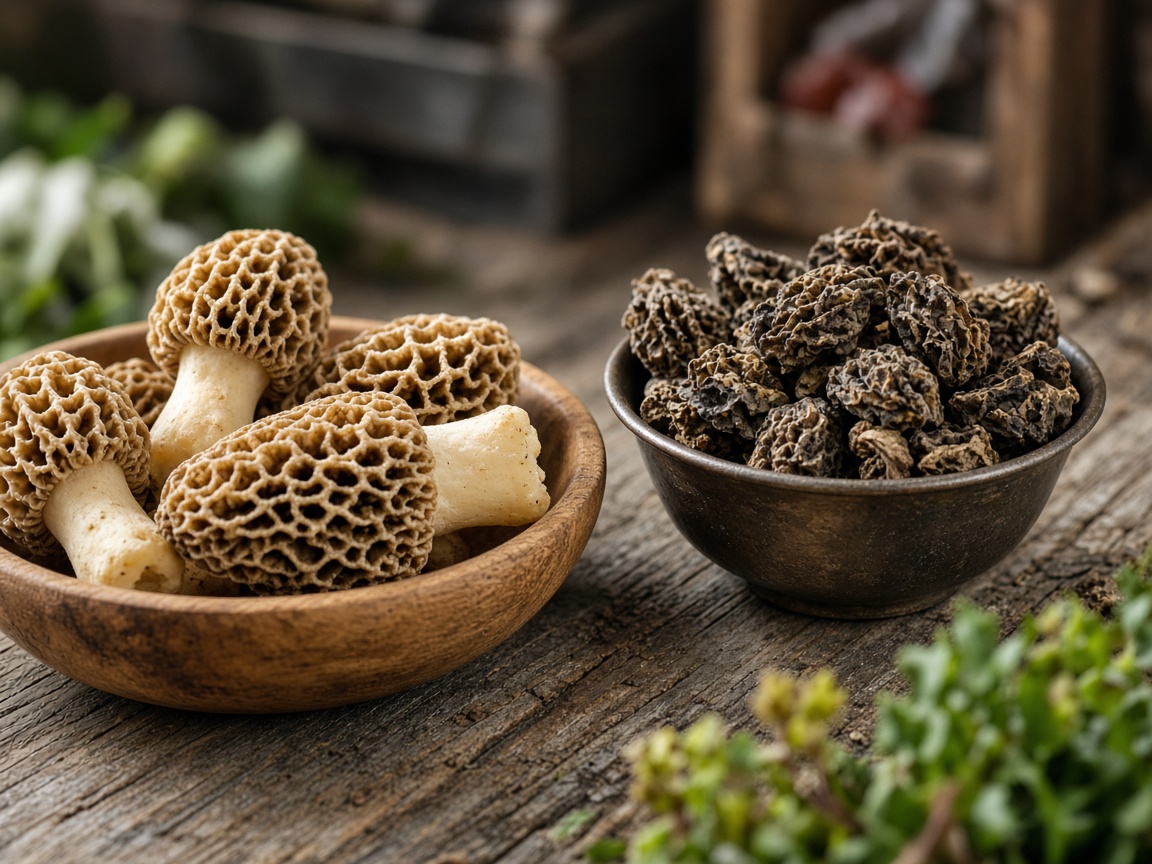
Fresh morels should feel firm but not hard. The honeycomb cap structure should be intact, with no visible slime, discoloration at the edges, or strong ammonia odor. A light earthy smell is normal and desirable. Size matters for gourmet mushroom prices: larger specimens (over 3 inches) command premium pricing because they present better on the plate and yield more usable flesh per unit. Smaller morels — sometimes called "buttons" — are perfectly edible but typically priced lower.
One critical safety note: confirm the species identification before consuming any wild mushrooms. False morels (Gyromitra spp.) can look superficially similar to true morels but contain gyromitrin, a toxin that can cause severe illness. True morels have a fully hollow interior from cap to stem base — cut one lengthwise and you'll see a single, continuous hollow cavity. False morels have a cottony or chambered interior. This distinction is non-negotiable from a safety standpoint, regardless of price or source. Reputable vendors sell only verified true morels, but if you're buying from informal channels, know how to check.
Quality markers for dried morels
Dried morels should be uniformly tan to dark brown, with intact cap structure and minimal broken pieces (breakage indicates rough handling or over-drying). Low-grade product is heavy with sandy grit — a sign of inadequate cleaning before drying. When rehydrated, premium dried morels plump back to close to their original volume within 20 minutes in warm water; low-quality product stays leathery. The rehydration liquid itself should smell richly earthy, not musty or sour. That soaking liquid, by the way, is liquid gold for stock — don't discard it.
Morel mushroom foraging: can hunting your own actually save money?
Spring mushroom foraging is genuinely one of the most cost-effective ways to access morels — but only under specific conditions. Let's be honest about the numbers.
The economics of foraging your own morels
An experienced forager in a productive Michigan or Illinois hardwood forest can harvest 3–8 lbs in a half-day outing during peak season. At a market value of $30–$50/lb, that's $90–$400 worth of mushrooms. Factor in gas, a state foraging permit (typically $15–$30/year in states that require one), and the opportunity cost of 4–6 hours of your time — and foraging only "saves money" if you find a good spot and are already reasonably experienced.
For beginners, the first season usually involves more time studying identification guides than actually finding mushrooms. That's not a reason to avoid it — morel mushroom hunting is one of the most rewarding outdoor activities in the American spring, irrespective of the economics. Just like learning to fish doesn't immediately replace buying fish at the market, foraging requires an investment of knowledge before it pays financial dividends.
Where and how to start foraging for morels
Morels fruit near dying or recently dead elm, ash, and apple trees, as well as in post-fire zones. South-facing slopes in late April tend to fruit first; north-facing slopes and bottomlands fruit later as soil temperatures catch up. The ideal soil temperature range is 50–60°F at a 2-inch depth. Most experienced foragers in the Midwest use apps like iNaturalist to track community sightings, then focus on known microhabitats within accessible public land. National forests and many state forests permit personal-use foraging under defined quantity limits — check state-specific regulations before harvesting, as rules vary meaningfully.
2026 pricing trends and what to expect the rest of the season
The 2026 morel season has already delivered some notable price signals. Here's what the current data and conditions indicate for buyers still in the market.
Climate volatility and its impact on 2026 morel availability
The 2026 spring season across the upper Midwest has been characterized by erratic temperature swings — warm periods in early April followed by hard frosts in late April — which compressed the morel flush in Illinois and southern Michigan to a narrower-than-average window of roughly 10–14 days rather than the typical 3–4 weeks. Compressed seasons mean less total supply reaching market, which pushes morel mushroom market price upward during the peak window. Buyers who waited for prices to "come down" in mid-May found that the season had largely ended before that happened.
The Pacific Northwest and northern Rocky Mountain regions have partially offset this, with a wetter-than-average spring extending morel flush further into June in some zones. For buyers willing to source from Oregon and Washington foragers, this represents an opportunity: prices from that region have remained closer to $25–$40/lb fresh through late May, versus the $50–$70 being asked in Midwest premium markets.
DTC and e-commerce pricing dynamics in 2026
Direct-to-consumer platforms have changed the competitive landscape for edible wild mushrooms value. Small foraging operations that previously sold exclusively to restaurant distributors now ship directly to consumers via Instagram, community-supported agriculture (CSA) boxes, and dedicated mushroom marketplaces. This fragmentation has created genuine price competition in the mid-tier — but it has also introduced variability in packaging, cold-chain integrity, and labeling accuracy. When you buy morel mushrooms online from a small DTC operation, ask specifically about harvest date, post-harvest handling, and whether the product is pre-sorted by grade. The answers will tell you a great deal about whether the price is justified.
For the remainder of the 2026 season, the most actionable advice is: if fresh morels are your target, buy now from Pacific Northwest sources or freeze what you find locally. If you're planning for year-round use, summer is historically when dried morel mushroom prices dip slightly as seasonal fresh product clears the market and inventory rebalances. That window — typically June through August — is the best time to stock dried morels at competitive prices before autumn demand picks up again from restaurant buyers.
Frequently asked questions
Q: How much do morel mushrooms cost at a farmers market in 2026?
A: At most US farmers markets in 2026, fresh morel mushrooms cost between $25 and $55 per pound, depending on region and timing. Prices in the Midwest peak in late April and drop slightly through mid-May. West Coast markets tend to run $5–$15 per pound less during their later flush period. Cash-only and early-morning purchases often get you the best available price.
Q: Why are dried morel mushrooms so much more expensive per pound than fresh?
A: It takes 8–10 pounds of fresh morels to produce 1 pound of dried morels. So dried morel mushroom prices of $200–$400/lb actually translate to a fresh-equivalent cost of roughly $25–$45/lb — often comparable to or less than buying fresh. Dried morels also offer a year-round shelf life and concentrated flavor, which makes them a practical value for most cooking applications.
Q: When is the best time of year to buy morel mushrooms to get the lowest price?
A: Mid-season — typically the second and third weeks of May in the Midwest — historically offers the lowest fresh morel prices, as peak supply reaches market. For dried morels, early summer (June–July) is the most cost-effective window, when post-season inventory clears and before restaurant demand picks back up in autumn.
Q: Is it safe to buy morel mushrooms from informal sources or roadside stands?
A: Generally yes, provided you can verify the mushrooms are true morels (Morchella) rather than false morels (Gyromitra). Ask the seller to cut one lengthwise — a true morel will show a completely hollow cavity from cap to stem. Reputable foragers know this test and won't hesitate to demonstrate it. When in doubt, buy from established vendors or consult an identification guide before consuming.
Q: What is the morel mushroom wholesale price for restaurant buyers in 2026?
A: Restaurant and foodservice buyers purchasing 5 lbs or more of fresh morels through wholesale distributors are typically paying $18–$35/lb in 2026, depending on grade and region. Dried morel wholesale pricing runs $120–$200/lb for domestic product and $100–$160/lb for Chinese-import grades. Accounts with established relationships and consistent order volume generally access the lower end of these ranges.
Final takeaway on morel mushroom prices in 2026
The morel mushroom price landscape in 2026 is shaped by three forces operating simultaneously: irreplaceable wild harvest supply, climate-driven yield compression, and expanding DTC market channels. Fresh morels at $30–$60/lb from a reliable source represent fair market value, not gouging. Dried morels at $200–$350/lb are a year-round pantry investment that often outperforms fresh on a flavor-per-dollar basis for cooked applications.
Whether you're a home cook trying to decide if a $45-per-pound ask at the farmers market is reasonable (it is), a restaurant buyer evaluating wholesale options, or a forager wondering whether to gear up for a spring expedition — the core answer stays consistent: morels command their price because nothing else replicates their flavor and no industrial system has replaced the forest floor as their production facility. Understanding that reality doesn't just help you spend wisely. It reframes the morel mushroom price not as a premium to resent, but as an honest reflection of one of the last truly wild ingredients in the American kitchen.
Previous Page:
Contact Us Now
We will contact you within one working day. Please pay attention to your email.

Cell phone:
Mail:
Company Address
Building 11, M60 Creative Park, Puji Road, Wuhua District, Kunming ,Yunnan , China


MESSAGES
We will contact you within one working day. Please pay attention to your email.