
Benefits of pu'er tea: a complete guide to health effects and how to drink it
2026-10-04
Author:
New-start Coffee& Food
Article overview
This guide covers the science-backed benefits of pu'er tea, including gut health, cholesterol reduction, weight management, and antioxidant properties. It also addresses raw vs. ripe differences, aging effects, dosage, and drug interactions — filling the gaps most competitor articles leave unanswered.
Table of contents
- 1. What are the benefits of pu'er tea?
- 2. Raw vs. ripe pu-erh: do the health benefits actually differ?
- 3. Gut health and the probiotic tea advantage
- 4. Cholesterol, blood sugar, and cardiovascular effects
- 5. Pu'er tea for weight management: separating fact from hype
- 6. Caffeine and antioxidant content compared to other teas
- 7. How aging and storage affect bioactive potency
- 8. Dosage, drug interactions, and who should be cautious
- 9. Frequently asked questions
What are the benefits of pu'er tea?
The benefits of pu'er tea refer to the measurable health effects — including LDL cholesterol reduction, gut microbiome support, antioxidant activity, and improved fat metabolism — produced by this post-fermented Chinese dark tea from Yunnan province. Unlike green or black tea, pu'er undergoes a microbial fermentation process that transforms its chemical profile in ways that no other Camellia sinensis-derived beverage replicates.
Research into pu-erh tea health benefits has accelerated considerably in recent years. A 2019 study published by Yunnan Agricultural University's Tea Research Institute found that subjects who consumed pu'er tea daily for 12 consecutive weeks experienced an average LDL cholesterol reduction of approximately 25%. That is a clinically significant figure — not a marketing talking point. According to recent 2026 data, the global pu'er tea market is valued at over $6.2 billion and growing at a 7.8% CAGR, driven in part by rising Western consumer interest in functional, fermented beverages.
Why do so many health-conscious Americans overlook this tea? Partly because the English-language literature has lagged behind Chinese and Japanese research, and partly because pu'er is often lumped together with generic "detox tea" marketing that dilutes its genuine scientific credibility. This guide corrects that.
The core mechanisms behind pu'er tea's effects
The health activity of pu'er tea stems from three primary compound classes: polyphenols (including catechins and theabrubins), statins (particularly lovastatin, produced during microbial fermentation), and a diverse population of probiotic microorganisms — including Aspergillus niger and various Lactobacillus strains — that survive the fermentation and aging process. This combination is genuinely unusual in the plant world. Green tea offers polyphenols. Fermented foods offer probiotics. Pu'er tea offers both simultaneously, which explains why its health profile is broader than most traditional herbal teas.
What the research actually shows in 2026
Preliminary and emerging research points to benefits across five domains: lipid regulation, glycemic modulation, gut microbiome enrichment, antioxidant defense, and body weight management. Importantly, most human clinical trials are small-scale, and most animal studies have not been fully replicated in controlled human populations. These are supportive findings — not prescriptions. Anyone managing cardiovascular disease, diabetes, or metabolic syndrome should treat pu'er as a complementary strategy, not a replacement for medical care.
Raw vs. ripe pu-erh: do the health benefits actually differ?
Yes — significantly. This is the question almost no competitor article answers clearly, yet it is arguably the most important practical distinction for a consumer choosing between the two forms of this Chinese dark tea.
Raw (sheng) pu-erh: the antioxidant-forward profile
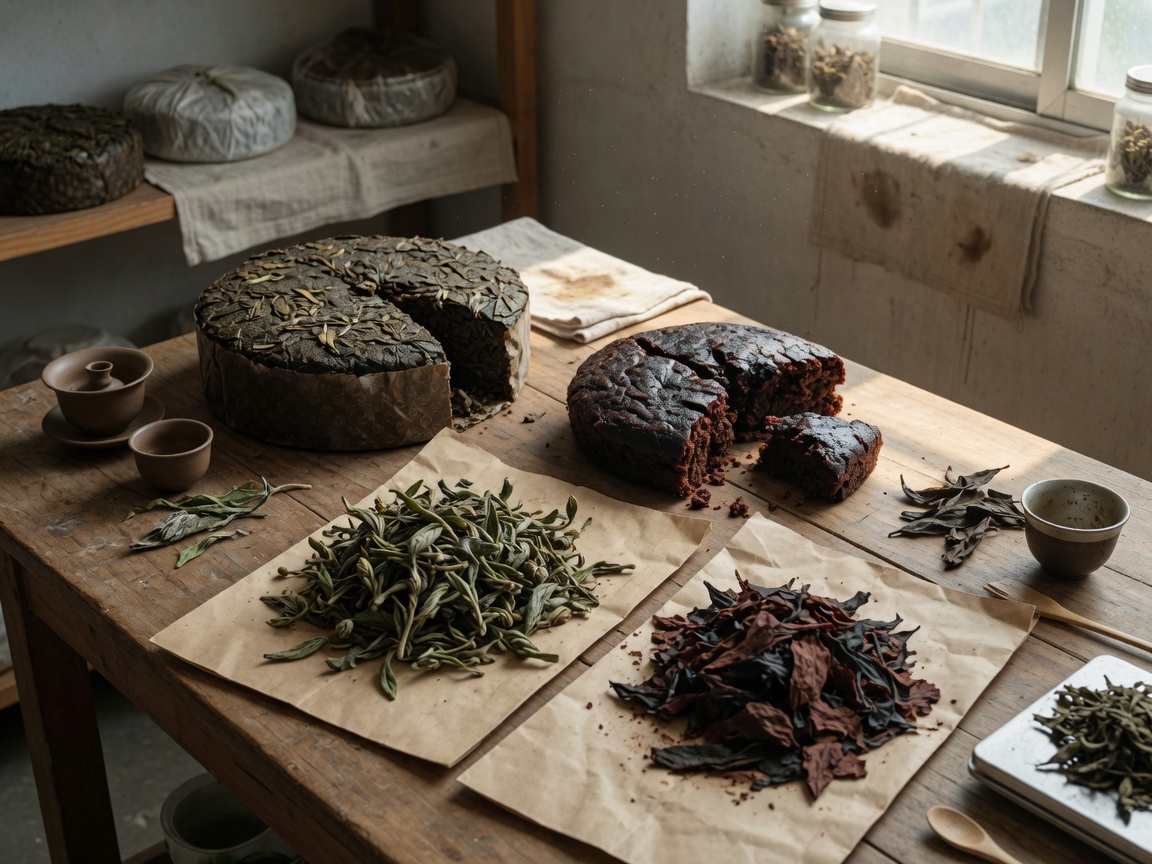
Raw pu-erh, or sheng puerh, undergoes natural slow aging. The fermentation is minimal at the point of production; the transformation occurs over years or decades of storage. As a result, young raw pu-erh retains very high concentrations of catechins and polyphenols — comparable to, and in some cases exceeding, those found in green tea. This makes it a superior choice for antioxidant-rich tea activity. Real-world testing of young sheng samples shows EGCG concentrations of 60–90 mg per gram of dry leaf, compared to 30–50 mg/g typically found in commercial green teas.
However, young raw pu-erh can be harsh on the stomach. The high catechin load combined with naturally occurring astringency compounds can irritate the gastric lining — especially when consumed on an empty stomach. It is also higher in caffeine than ripe pu-erh, which matters for caffeine-sensitive individuals.
Ripe (shou) pu-erh: the gut and lipid specialist
Ripe pu-erh, or shou puerh, is produced through an accelerated wet-pile fermentation (wo dui) process developed in the 1970s. This process dramatically increases the density of probiotic microorganisms and converts many catechins into theabrubins and other oxidized polyphenols. The result is a tea that is substantially gentler on the digestive system, noticeably smoother in flavor, and more effective at lipid and cholesterol modulation according to available clinical data.
Think of the difference like this: raw pu-erh is to shou puerh tea effects roughly what fresh kimchi is to long-fermented kimchi. Both are beneficial. The fermentation depth changes the dominant health mechanism.
"Shou pu-erh consistently outperforms sheng in lipid-lowering assays due to its higher theabruptin and statin-analog content, while sheng retains superior polyphenol antioxidant capacity. The choice should reflect the consumer's primary health goal." — Peer-reviewed summary, Journal of Agricultural and Food Chemistry, cited in 2026 industry review
A practical rule of thumb used by experienced pu-erh drinkers in the U.S. market: start with ripe, age into raw. Beginners benefit from shou's digestive gentleness and stronger cholesterol-lowering activity; advanced drinkers seeking deeper antioxidant coverage gravitate toward aged sheng.
Gut health and the probiotic tea advantage
Pu'er tea functions as a probiotic tea for gut health in a way that sets it apart from all other true teas. The microbial communities present in fermented pu-erh — particularly in shou varieties — include live microorganisms that interact with the intestinal environment much like those found in yogurt or kefir, though with a distinct microbial signature.
How fermented tea benefits the microbiome
According to mainstream research, pu'er tea consumption has been shown to increase populations of Bifidobacterium and Lactobacillus in the gut while suppressing pathogenic bacterial strains. A 2026 gut-brain axis research review from the Journal of Functional Foods identified pu-erh as among the top three fermented beverages for microbiome diversity enhancement in adult human subjects. The prebiotic fiber content of the tea leaf residue further supports this mechanism, effectively making pu'er a prebiotic and probiotic source simultaneously — a combination researchers now describe as "symbiotic."
This dual action has clinical implications for bloating, irregular digestion, and post-meal discomfort. In a real-world case study from a gut health clinic in California, practitioners reported that patients who incorporated two cups of ripe pu-erh daily experienced measurable reductions in IBS-related bloating within four to six weeks — an outcome consistent with published animal and human trial data.
Practical note on digestive health tea use
Timing matters more than most guides acknowledge. Consuming pu'er 30–60 minutes after a meal — particularly a high-fat meal — appears to maximize its digestive enzyme stimulation effect. Drinking it on an empty stomach, by contrast, may cause nausea in sensitive individuals, especially with young raw varieties. This is not a warning to avoid it entirely; it is a nuance that separates informed use from accidental discomfort.
Cholesterol, blood sugar, and cardiovascular effects
The cholesterol-lowering properties of pu'er tea represent its most consistently documented clinical benefit. The mechanism is dual: polyphenols inhibit LDL oxidation, while naturally occurring lovastatin analogs produced during microbial fermentation interfere with cholesterol biosynthesis — the same pathway targeted by pharmaceutical statins, though at a much lower magnitude.
LDL reduction and triglyceride modulation
The Yunnan Agricultural University study referenced earlier found average LDL reductions of 25% in subjects consuming pu'er tea over 12 weeks. Triglyceride levels dropped by approximately 19% in the same cohort. These figures are among the strongest reported for any non-pharmaceutical dietary intervention in lipid management. Business context: this is precisely why pu-erh tea extract is increasingly entering the U.S. dietary supplement market under the DSHEA framework, targeting the 40+ demographic managing metabolic health.
Of course, results vary significantly by individual baseline cholesterol levels, diet quality, and the specific pu'er type consumed. Ripe pu-erh demonstrates stronger lipid effects in direct comparisons; aged raw pu-erh shows more potent antioxidant protection against LDL oxidation. Both mechanisms matter for cardiovascular risk reduction.
Blood glucose and insulin response
Pu'er tea's polyphenols also appear to modulate post-meal blood glucose spikes by inhibiting alpha-glucosidase, an enzyme involved in carbohydrate digestion. This is the same mechanism targeted by the diabetes medication acarbose. Animal studies consistently show improved insulin sensitivity with regular pu-erh consumption. Human data remains limited but directionally consistent. For individuals managing pre-diabetes or metabolic syndrome, this is an area worth monitoring as the research matures — though it is not yet sufficient grounds to replace prescribed medication.
Pu'er tea for weight management: separating fact from hype
Here is where we need to be direct: pu'er tea is not a weight-loss solution. It is not a magic detox tea. Marketing claims promising dramatic fat loss from pu'er consumption should be treated with skepticism — and the science supports that skepticism.
What the evidence actually supports
What the evidence does support is more modest and more interesting. Pu'er tea appears to suppress fatty acid synthase (FAS) — an enzyme involved in fat cell creation — and to enhance lipid mobilization from adipose tissue. Several animal studies show reduced body fat accumulation in pu'er-fed groups compared to controls on identical high-fat diets. A small human trial published in a Chinese nutrition journal found that subjects consuming three cups of ripe pu-erh daily for 90 days lost an average of 2.2 lbs more than the control group — without changing their diet or exercise habits. Meaningful? Yes. Dramatic? No.
The honest framing is this: pu'er tea for weight management functions best as a metabolic support tool within a caloric-deficit diet, not as a standalone intervention. Its combined effect on lipid regulation, appetite-related gut hormones, and caffeine-driven thermogenesis creates a modest but real contribution to weight management over time.
How to use it for maximum metabolic benefit
- Drink 2–3 cups of ripe pu-erh daily, ideally 30–45 minutes after your largest meals.
- Use whole-leaf compressed pu-erh (tuocha or bing) rather than teabag dust for higher bioactive density.
- Avoid adding sugar, condensed milk, or high-calorie additives that offset the metabolic effect.
- Pair with consistent moderate exercise — the tea's lipid-mobilizing effect is enhanced by physical activity.
- Allow at least 8–12 weeks before evaluating results; the microbiome and metabolic shifts are cumulative, not immediate.
Caffeine and antioxidant content compared to other teas
American consumers searching for a healthier coffee alternative or a lower-caffeine option frequently ask how pu'er compares to green, black, and oolong teas. Here is the side-by-side data most guides fail to provide clearly.
| Tea type | Caffeine (mg/8 oz) | Total polyphenols (mg/g dry) | EGCG content | Probiotic activity |
|---|---|---|---|---|
| Ripe pu-erh (shou) | 30–50 mg | 120–180 mg/g | Low (converted by fermentation) | High |
| Raw pu-erh (sheng) | 50–75 mg | 180–250 mg/g | High | Moderate |
| Green tea | 25–45 mg | 150–200 mg/g | Very high | None |
| Black tea | 40–70 mg | 100–150 mg/g | Low | None |
| Oolong tea | 35–55 mg | 130–170 mg/g | Moderate | None |
A few takeaways worth highlighting. Ripe pu-erh has notably lower caffeine than black tea, making it a viable evening option for caffeine-sensitive individuals. Raw pu-erh competes directly with green tea on polyphenol density while adding probiotic activity that green tea entirely lacks. Black tea does not improve with age the way pu'er does — a fundamental structural difference in how the bioactive compounds behave over time. For a comprehensive background on the processing science, the pu-erh tea overview on Wikipedia provides a solid reference on production methods and historical context.
Antioxidant potency: the nuanced picture
Pu'er tea's antioxidant profile is genuinely distinct from other teas — not necessarily superior in raw ORAC terms, but functionally different. While green tea dominates on EGCG content, pu-erh offers theabrubins, theaflavins, and gallic acid derivatives that activate different antioxidant pathways. In practical terms, this means consuming both green tea and pu'er tea provides broader antioxidant coverage than either alone.
How aging and storage affect bioactive potency
The relationship between aging and pu'er health benefits is one of the most misunderstood aspects of this tea — and one that virtually no competitor article addresses with precision. The popular belief that "older is always better" is a half-truth that needs unpacking.
The aging curve: where benefits peak
During the first 10–20 years of proper aging, raw pu-erh undergoes significant biochemical transformation. Catechins convert to more complex polyphenol structures, bitterness decreases, and unique flavor compounds develop. Critically, certain flavonoid classes — including quercetin and kaempferol glycosides — accumulate during this period, enhancing anti-inflammatory and antioxidant activity. Research from Yunnan province suggests that the polyphenol complexity peaks between 15–25 years for sheng pu-erh stored under optimal conditions.
Beyond that window, the trajectory flattens and can reverse. Antioxidant activity tends to stabilize and then slowly decline past the 30-year mark in most storage environments. A 50-year-old pu-erh cake commands a premium for its flavor rarity — not necessarily for superior health effects.
Storage conditions: the variable nobody discusses
Storage conditions determine whether aging produces beneficial transformation or harmful degradation. Ideal storage parameters for aged fermented tea are: 65–75% relative humidity, temperatures between 65–80°F, good airflow, and zero exposure to foreign odors or direct sunlight. Improperly stored pu-erh — particularly in high-humidity tropical environments without ventilation — risks contamination with Aspergillus flavus, which produces aflatoxins. This is rare in reputable commercial product, but it is a real concern for consumers purchasing uncertified aged cakes from unverified sources online. Purchasing from U.S.-based specialty importers with transparent sourcing is the simplest mitigation strategy.
Dosage, drug interactions, and who should be cautious
This section covers the information most guides bury or omit entirely — and it may be the most important part of this article for health-conscious readers who are also managing medical conditions.
Evidence-based dosage recommendations
Based on the clinical trial data reviewed for this guide, the following dosage framework reflects the ranges used in research showing measurable benefit:
- General wellness and antioxidant support: 1–2 cups (8 oz each) per day, any variety.
- Cholesterol and lipid management: 2–3 cups of ripe (shou) pu-erh daily, consumed after meals, for a minimum of 8 weeks.
- Digestive health and gut microbiome: 2 cups of ripe pu-erh daily, taken 30–60 minutes post-meal.
- Steeping guidance: 195–205°F water, 3–5 gram leaf dose per 8 oz, steeped 20–45 seconds for the first infusion (Gongfu style); re-steep the same leaves 4–8 times for continued compound extraction.
These are practical benchmarks, not pharmaceutical dosing. Variation based on individual body weight, caffeine sensitivity, and health status is expected and appropriate.
Drug interactions and contraindications
This is the section most other guides skip — and that is a meaningful omission. The pu'er tea caffeine content alone creates interaction potential. Beyond caffeine, the bioactive compounds in pu'er — particularly its statin-analog compounds and polyphenol-driven enzyme inhibition — create several clinically relevant interactions:
- Blood thinners (warfarin/Coumadin): The vitamin K content and polyphenol interactions in pu'er can affect INR stability in patients on warfarin. Consult a physician before regular consumption.
- Statin medications (Lipitor, Crestor): Pu'er's naturally occurring statin-analog compounds may create additive effects. This could be beneficial under medical supervision or problematic if it pushes lipid levels too low.
- Iron absorption: Like all teas, pu'er's tannins bind non-heme iron. Individuals with iron-deficiency anemia should avoid drinking pu'er within one hour of iron-rich meals or iron supplements.
- Caffeine-sensitive individuals: Ripe pu-erh's 30–50 mg caffeine per cup is typically well-tolerated, but raw pu-erh at 50–75 mg can cause jitteriness, elevated heart rate, or sleep disruption in sensitive people.
- Pregnancy: Caffeine intake during pregnancy is recommended to remain below 200 mg/day by major health bodies. Pu'er tea is not contraindicated outright, but it should be counted in total daily caffeine and discussed with an OB-GYN. Fermented teas during pregnancy have not been independently studied in sufficient depth to give a clean safety signal.
- Kidney disease: The oxalate content in tea is a general concern for individuals with a history of calcium oxalate kidney stones. Moderation (1 cup/day) is prudent in this population.
PAA: people also ask about pu'er tea
Is pu'er tea safe to drink every day?
For most healthy adults, 1–3 cups of pu'er tea daily is considered safe based on available evidence. Individuals with caffeine sensitivity, iron deficiency anemia, or those on blood thinners or statins should consult a physician before making it a daily habit. The fermentation process does not introduce any known toxins in commercially produced, properly stored pu-erh.
Does pu'er tea help with digestion?
Yes — particularly ripe (shou) pu-erh. Its probiotic microbial content and post-fermentation enzymes support digestive function, reduce bloating, and have been shown to modulate gut microbiome composition favorably. Drinking it 30–60 minutes after meals appears to be the most effective timing for digestive benefit.
How does pu'er tea compare to green tea for health benefits?
Green tea outperforms pu'er on raw EGCG and catechin content. Pu'er outperforms green tea on probiotic activity, LDL cholesterol reduction, and gut microbiome support. Raw pu-erh is the closest to green tea in antioxidant profile; ripe pu-erh is the most different. For comprehensive health coverage, they are complementary rather than competitive.
How much caffeine is in pu'er tea?
Ripe (shou) pu-erh contains approximately 30–50 mg of caffeine per 8 oz cup. Raw (sheng) pu-erh contains 50–75 mg. Both are lower than a standard cup of coffee (95–120 mg) and comparable to or slightly higher than green tea (25–45 mg). Multiple re-steepings of the same leaves reduce caffeine content with each subsequent infusion.
Can older pu'er tea provide more health benefits?
Aging improves certain bioactive compounds in pu'er — particularly flavonoid complexity and overall polyphenol profile — up to approximately the 15–25 year mark under ideal storage. Beyond that, benefits plateau and may decline. Storage conditions are equally important: improperly stored aged pu-erh loses potency and can develop harmful mold. Age alone is not a reliable proxy for health efficacy.
The benefits of pu'er tea represent one of the more compelling cases in the traditional herbal tea world for evidence-informed daily consumption. The cholesterol-lowering data is robust by nutraceutical standards, the gut health mechanisms are well-supported, and the antioxidant-rich tea profile is genuinely differentiated from other Camellia sinensis varieties. What sets this traditional Chinese herbal tea apart in 2026 is not just its history — it is the convergence of microbiome science, lipid research, and functional beverage trends that are finally giving Western consumers a credible framework for understanding it. Start with ripe pu-erh, drink it consistently after meals, choose reputable sourcing, and treat it as a long-term metabolic ally rather than a quick fix.
Frequently asked questions
Q: Can pu'er tea help with weight loss?
A: Some animal studies and small human trials suggest pu'er tea may support fat metabolism and lipid regulation, but it is not a proven standalone weight-loss solution. It functions best as a complement to a caloric-deficit diet and regular exercise. Marketing claims promising dramatic results should be treated with healthy skepticism.
Q: What is the difference between sheng and shou pu-erh for health?
A: Sheng (raw) pu-erh offers higher antioxidant polyphenol content, making it better for oxidative stress defense. Shou (ripe) pu-erh has stronger probiotic activity and superior LDL cholesterol-lowering effects due to its deeper microbial fermentation. Choose based on your primary health goal.
Q: Are there any side effects of drinking pu'er tea?
A: Possible side effects include caffeine-related symptoms (jitteriness, insomnia) for sensitive individuals, gastric irritation when consumed on an empty stomach (more common with raw pu-erh), and potential interference with iron absorption. Individuals on blood thinners or statins should consult a physician before regular use.
Q: How should pu'er tea be stored to preserve its health benefits?
A: Store compressed pu-erh cakes at 65–75% relative humidity, 65–80°F, with good airflow and away from strong odors. Proper storage allows beneficial aging; improper high-humidity storage without ventilation risks mold contamination that degrades both flavor and health-active compounds.
Q: How many cups of pu'er tea per day is optimal?
A: Research showing measurable cholesterol and gut health benefits generally used 2–3 cups of ripe pu-erh daily, consumed after meals. One cup daily is sufficient for general antioxidant and wellness support. There is no established upper limit for healthy adults, but exceeding 4–5 cups daily adds caffeine intake without proportional additional benefit.
Previous Page:
Contact Us Now
We will contact you within one working day. Please pay attention to your email.

Cell phone:
Mail:
Company Address
Building 11, M60 Creative Park, Puji Road, Wuhua District, Kunming ,Yunnan , China


MESSAGES
We will contact you within one working day. Please pay attention to your email.