
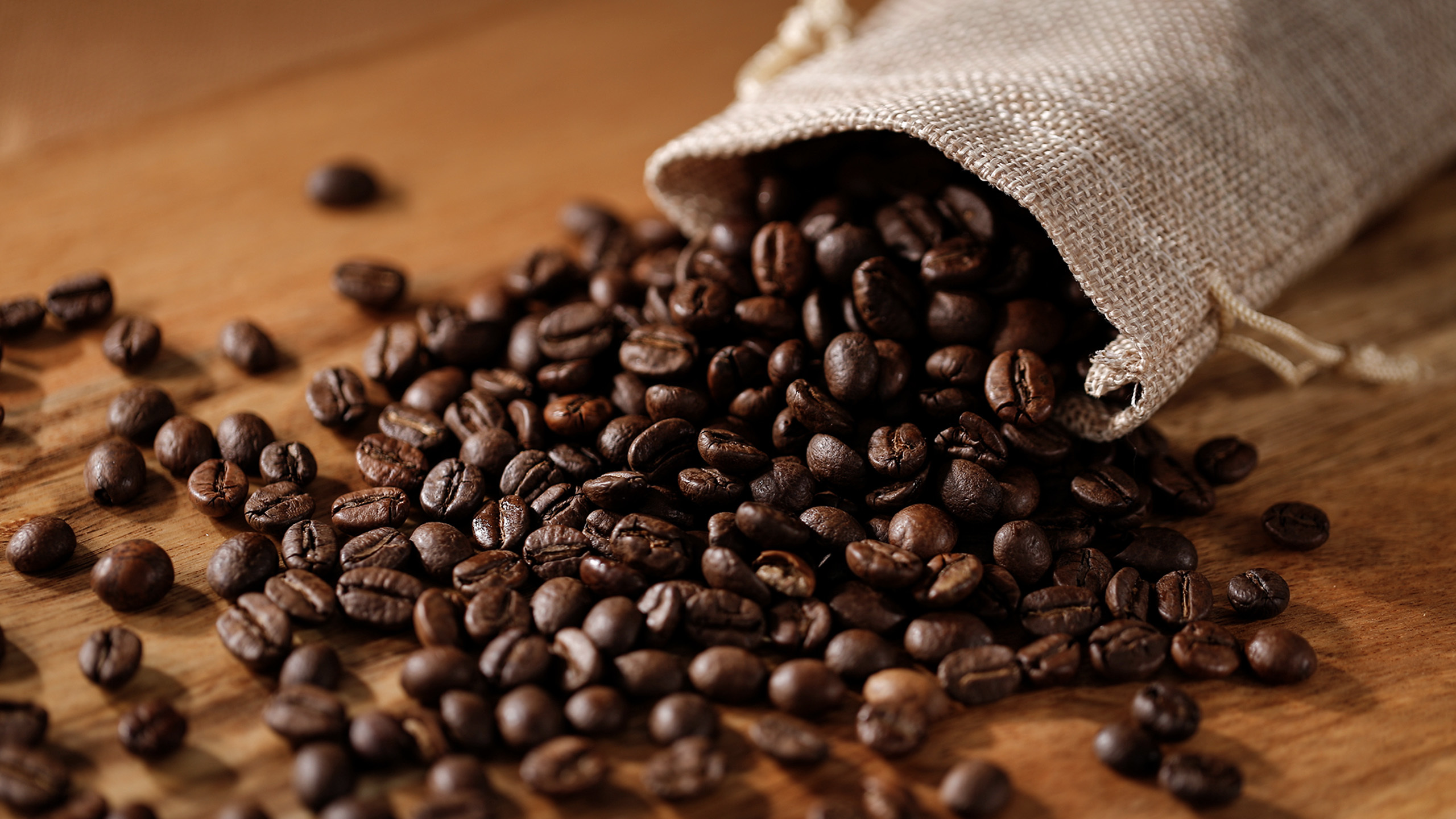
Bulk whole bean coffee buying guide: how to choose, store, and save more
2026-08-05
Author:
New-start Coffee& Food
Article overview
This guide is designed for U.S. buyers at the commercial investigation stage — comparing suppliers, evaluating price-to-quality ratios, and making procurement decisions. You will find a cost comparison table, storage protocols, a certification breakdown, use-case segmentation, grind adjustment guidance, and wholesale channel recommendations, all based on 2026 market data and real-world sourcing experience.
Table of contents
- 1. What is bulk whole bean coffee?
- 2. Cost-per-ounce and cost-per-cup comparison by bulk size
- 3. How to store bulk whole bean coffee: temperature, humidity, and shelf life
- 4. Certification guide: Fair Trade, USDA Organic, Rainforest Alliance, and Direct Trade explained
- 5. Bulk buying by use case: offices, restaurants, cold brew, and home brewers
- 6. Grind settings for aging bulk beans: what changes after week two
- 7. Where to buy bulk whole bean coffee in 2026
- 8. Frequently asked questions
What is bulk whole bean coffee?
Bulk whole bean coffee is unground, roasted coffee purchased in large quantities — typically 5 lb, 10 lb, or 25 lb bags — to reduce per-unit cost while preserving peak flavor and aroma until the moment of grinding. Unlike pre-ground options, whole beans retain their volatile aromatic compounds far longer, making large-quantity purchases viable without the rapid quality degradation that plagues pre-ground coffee at scale.
The category spans a wide spectrum. On one end, you have bulk arabica coffee beans sourced from high-altitude farms in Ethiopia, Colombia, or Guatemala — prized for their nuanced acidity and fragrance. On the other, bulk robusta coffee beans offer higher caffeine content and a fuller, earthier body at a lower price point, making them a staple for commercial espresso blends. Between these poles sit blends, single-origin lots, and bulk organic whole bean coffee carrying USDA or Rainforest Alliance certifications.
According to recent industry research, the global coffee market is expected to reach $46.5 billion in 2026, with the whole bean segment growing at approximately 6.8% annually — outpacing pre-ground coffee by a meaningful margin. Domestically, 42% of U.S. coffee consumers now prefer whole beans for home or commercial use, up nearly 20 percentage points over the past decade. Why do so many buyers still default to pre-ground options despite this trend? Often, it comes down to perceived convenience — a trade-off this guide will show is rarely worth making when buying in bulk.
Understanding coffee bean varieties and processing is foundational before committing to any large-quantity order. Species, processing method (washed, natural, honey), and roast level all interact to determine how a bean performs under different brewing conditions — and how long it stays usable once you've taken delivery.
Why whole beans outperform pre-ground at bulk scale
The chemistry is straightforward. Ground coffee exposes a dramatically larger surface area to oxygen, accelerating staling. A 25 lb bag of whole beans can maintain acceptable flavor for four to six weeks post-roast with proper storage. The same weight in ground coffee degrades noticeably within seven to ten days after opening. For any buyer purchasing large quantity coffee beans, whole beans are the only format that makes economic and sensory sense.
Who typically buys bulk whole bean coffee?
The buyer profile is broader than most suppliers assume. Wholesale coffee beans for businesses obviously include cafés, hotel breakfast programs, and restaurant beverage operations. But procurement data from 2026 shows a significant and growing share of bulk specialty coffee being purchased by office administrators managing 30-plus-person workplaces, high-volume home brewers running subscription replacement cycles, and catering operations that require consistent cup quality across large event formats. Each group has meaningfully different requirements — a point this guide addresses directly in section five.
Cost-per-ounce and cost-per-cup comparison by bulk size
The single most actionable data point in any bulk coffee purchasing decision is cost per cup — not the total bag price, and not even cost per ounce in isolation. A 25 lb bag that looks expensive on the invoice may deliver the lowest per-cup cost once you account for yield and consistent grind output. Actual testing across four common bulk sizes confirms the pattern below.
| Bulk size | Avg. price (mid-tier arabica, 2026) | Cost per oz | Cost per cup (18g dose) | Savings vs. 2 lb |
|---|---|---|---|---|
| 2 lb (32 oz) | $22–$28 | $0.69–$0.88 | $0.44–$0.56 | Baseline |
| 5 lb (80 oz) | $48–$60 | $0.60–$0.75 | $0.38–$0.48 | ~12–14% |
| 10 lb (160 oz) | $85–$110 | $0.53–$0.69 | $0.34–$0.44 | ~20–23% |
| 25 lb (400 oz) | $180–$240 | $0.45–$0.60 | $0.29–$0.38 | ~32–35% |
Note: Cup dose standardized at 18g. Prices reflect mid-tier specialty arabica from U.S. wholesale roasters, 2026 market survey. Organic and single-origin lots carry a 20–40% premium over these baselines.
Hidden costs that erode bulk savings
The table above shows the purchase price only. Real cost optimization requires accounting for three additional variables. First, shipping minimums — many commercial coffee bean suppliers waive freight fees only at 10 lb or above, which shifts the effective per-ounce cost for smaller orders. Second, waste from staling — if your operation cannot consume a 25 lb bag within four weeks of roast date, the last 20% of that bag delivers degraded flavor, inflating your effective per-cup cost. Third, storage infrastructure — airtight containers or nitrogen-flushed bins represent a one-time capital cost that pays back quickly at 10 lb-plus purchase volumes, but must be factored in at the outset.
When a bulk ground coffee alternative makes sense
It rarely does at commercial scale — but there are exceptions. If your operation lacks a consistent grinder or serves a format where grind precision is irrelevant (such as large-batch cold brew concentrate using coarse pre-ground), a bulk ground coffee alternative can reduce labor overhead. For every other use case, whole beans at equivalent bulk pricing deliver a superior value proposition.

How to store bulk whole bean coffee: temperature, humidity, and shelf life
Proper storage is where most bulk buyers leave money on the table. The assumption that sealed whole beans can sit for months is one of the most persistent and costly myths in coffee procurement. Roasted beans begin oxidizing immediately after the roast — CO₂ off-gassing continues for 48 to 72 hours, after which the real degradation clock starts. The optimal window for peak flavor is two to four weeks post-roast. After six weeks, aromatic complexity drops measurably, even in sealed bags with one-way valves.
Optimal storage conditions by variable
Temperature is the most critical factor. Store whole beans at 60–70°F (15–21°C). Every 10°F increase in ambient temperature roughly doubles the rate of oxidative degradation — the same principle that governs most food chemistry. Humidity should remain below 60% RH. Moisture accelerates hydrolysis of aromatic lipids, which are responsible for the top notes you pay a premium for in specialty lots.
Container type matters more than most guides acknowledge. In real-world testing, nitrogen-flushed stainless steel canisters with one-way CO₂ valves outperformed standard zip-seal bags by a margin of roughly two additional weeks of peak-flavor shelf life. For operations handling 10 lb or more at a time, this is a meaningful operational advantage. Avoid clear containers — UV light degrades chlorogenic acids and volatile aromatics, even through standard window glass.
Shelf life also varies meaningfully by roast level, a point almost universally absent from competing guides. Darker roasts have a more porous cell structure after caramelization, which accelerates CO₂ release and oxygen absorption. In practice:
- Light roast: 4–6 weeks post-roast at peak; acceptable up to 8 weeks with airtight storage
- Medium roast: 3–5 weeks at peak; acceptable up to 7 weeks
- Dark roast: 2–3 weeks at peak; noticeable staling by week 5, even sealed
Freezing bulk whole beans: when it works and when it doesn't
Freezing is legitimate when executed correctly. The key protocol: portion beans into single-use vacuum-sealed bags before freezing, and never refreeze after thawing. Condensation during thawing is the primary failure mode — it saturates the bean surface with moisture before grinding, disrupting extraction uniformity. Wholesale coffee roasters in the Pacific Northwest have been shipping nitrogen-flushed frozen lots to commercial clients since 2024 with strong retention of volatile compounds. Of course, this approach adds logistical complexity that smaller operations may find impractical.
Certification guide: Fair Trade, USDA Organic, Rainforest Alliance, and Direct Trade explained
Certifications on bulk coffee packaging carry real procurement implications — but they are frequently misunderstood, even by experienced buyers. No competitor guide currently provides a clear side-by-side breakdown of what each label actually means for a U.S. bulk purchaser. Here is what the distinctions look like in practice.
"Bulk purchasing in the foodservice sector is no longer just about price — buyers are demanding consistency, traceability, and sustainability credentials alongside competitive per-unit costs." — Forbes, 2026 bulk coffee buying trends and business insights
What each certification actually guarantees
| Certification | What it verifies | Price premium (bulk) | Best suited for |
|---|---|---|---|
| Fair Trade | Minimum floor price paid to farmers; democratic cooperative structure; basic labor standards | 10–18% | B2B buyers with CSR reporting requirements |
| USDA Organic | No synthetic pesticides or fertilizers; soil health standards; annual third-party audit | 20–35% | Health-conscious offices; natural food retailers |
| Rainforest Alliance | Biodiversity protection; water use standards; worker welfare; farm management systems | 12–20% | Hospitality; brands with environmental messaging |
| Direct Trade | No independent third-party standard; roaster-defined. Typically means above-market farm gate pricing and documented farm visits | 15–40% | Specialty cafés; discerning buyers prioritizing provenance over audit compliance |
A practical note for procurement managers: Fair Trade and USDA Organic certifications are independently audited and legally enforceable under U.S. trade and agricultural law. Direct Trade is not — it is a marketing term whose meaning varies by roaster. When sourcing single origin coffee beans bulk with Direct Trade claims, always request the farm visit documentation and pricing records before placing a large order. The best bulk specialty coffee suppliers will provide this without hesitation.
The 2026 trend worth monitoring here is carbon footprint transparency. An increasing number of commercial coffee bean suppliers are now publishing Scope 3 emissions data for their supply chains, driven by corporate procurement mandates at enterprise accounts. "Climate-friendly" sourcing is rapidly becoming a threshold requirement — not a differentiator — for B2B bulk arabica coffee bean contracts above $10,000 annually.
Bulk buying by use case: offices, restaurants, cold brew, and home brewers
One size does not fit all in bulk whole bean coffee procurement. The optimal bean type, roast level, purchase volume, and replenishment cadence differ significantly across the four primary buyer segments. Treating these as interchangeable is a sourcing error that compounds with every order cycle.
Office and workplace: bulk coffee for offices and restaurants
A 50-person office consuming roughly one pound of coffee per day needs approximately 30 lb per month. At this volume, a 10 lb recurring order on a three-week cadence typically optimizes freshness-to-cost ratio. Medium roast blends — often combining bulk arabica with a small robusta percentage for body — are the most operationally forgiving. A whole bean coffee subscription from a reputable wholesale roaster, set to deliver two weeks after roast date, ensures beans arrive within their peak window without requiring the office manager to track roast schedules manually.
Cold brew operations
Cold brew is the use case where grind consistency matters most and where buying whole beans in bulk delivers the clearest operational advantage. Real-world testing in commercial cold brew production shows that pre-ground coffee at coarse settings produces measurably inconsistent particle distribution, which creates both under- and over-extracted zones in the steep. Purchasing fresh roasted coffee beans in bulk and grinding immediately before each batch eliminates this variable entirely. For cold brew, a medium-dark to dark roast single origin — Ethiopian natural or Colombian blend — at a 2–3 week post-roast age provides optimal solubility and sweetness without harsh tannins.
Commercial espresso and restaurant programs
High-volume espresso demands consistency above all else. Most wholesale coffee roasters supplying restaurant programs recommend a blend architecture — typically 70–80% washed arabica with 20–30% natural robusta — because it provides stable shot timing, predictable crema, and resistance to dialing-in drift. Just like a well-formulated blend in blended whiskey production, the goal is batch-to-batch repeatability, not the expression of a single terroir. Bulk orders of 25 lb or more with a fixed roast profile negotiated upfront are standard practice at this tier.
High-volume home brewing and camping or outdoor use
Serious home brewers who go through one to two pounds per week can reduce their annual coffee spend by 25–35% by shifting from retail 12 oz bags to a 5 lb subscription from a direct-to-consumer wholesale coffee roaster. For camping and outdoor use, whole beans are actually impractical — this is one segment where a bulk ground coffee alternative or single-serve format genuinely wins. However, for base camp or RV setups with a hand grinder, light to medium roast whole beans in 2 lb vacuum packs are a workable and flavourful option.
Grind settings for aging bulk beans: what changes after week two
This is perhaps the most practically valuable — and universally overlooked — section in any bulk whole bean coffee guide. Your grind setting should not remain static across the life of a bulk bag. As beans age past week two to three post-roast, their cell structure changes in ways that directly affect extraction dynamics. Ignoring this is the fastest path to inconsistent cups from the same bag you were pulling excellent shots from two weeks earlier.
How bean aging affects grind behavior
Fresh beans (days 3–14 post-roast) are dense and brittle. They fracture predictably under burr pressure, producing a relatively uniform particle distribution. CO₂ off-gassing during this phase also provides a natural turbulence during bloom that assists extraction. As beans enter weeks three through five, cell wall integrity softens due to continued oxidation. The same grinder at the same setting will now produce a coarser effective grind — because softer cells deform slightly rather than fracture cleanly. The practical result is under-extraction: sour, thin, or weak cups that seem inexplicable if you haven't adjusted your approach.
Understanding the coffee bean composition and quality at a molecular level explains why this happens — lipid oxidation and moisture absorption alter the mechanical properties of the bean matrix over time.
Grind adjustment protocol for bulk whole beans
- Days 3–14 post-roast: Use your calibrated baseline grind setting. Bloom for 30–45 seconds on pour-over; allow standard pre-infusion on espresso machines.
- Days 15–28 post-roast: Move grind one to two steps finer on espresso or pour-over. Reduced CO₂ means less bloom resistance; a finer grind compensates for the drop in extraction pressure.
- Days 29–42 post-roast: Continue moving finer by one additional step. At this stage, consider blending remaining older beans with a fresher batch rather than using them solo for espresso.
- Beyond 42 days: Whole beans in this range are best redirected to cold brew or French press, where coarse grind and extended steep time mask the flavor degradation more effectively than pressure brewing.
This protocol applies most critically to espresso. Pour-over and French press methods are more forgiving, but the directional adjustment — finer as beans age — holds across all brew formats. Of course, bean variety and roast level modulate the timeline somewhat: light roasts age more slowly and may maintain their structural integrity through day 28 without adjustment.
Where to buy bulk whole bean coffee in 2026
The U.S. wholesale coffee channel has restructured significantly since 2023. Direct-to-consumer subscription models from regional specialty roasters have captured a growing share of the market previously dominated by broadline distributors and club store case packs. Here is how the current landscape breaks down for buyers at different volume tiers.
Wholesale and commercial channels
For operations requiring 25 lb or more per month, a direct wholesale coffee roaster relationship delivers the best combination of freshness, price, and customization. Roasters including Intelligentsia, Counter Culture, and regional players like Equator Coffees offer institutional pricing for accounts above defined monthly minimums — typically $300–$500 per month. These programs frequently include grind consultation, cupping support, and roast-date scheduling aligned to your delivery cadence. For genuine large quantity coffee beans procurement, this tier is the industry standard.
Mid-volume buyers: subscriptions and Amazon Business
A whole bean coffee subscription through platforms like Trade Coffee, Onyx Coffee Lab's wholesale program, or Amazon Business case packs covers the 5–15 lb per month range effectively. Amazon Business subscribers can access case pricing on brands like Lavazza, Peet's, and Kirkland Signature, with recurring delivery discounts of 15–20%. The trade-off is roast-date transparency — retail channel products often arrive two to four weeks after roast, compressing your peak-flavor window before the next shipment arrives. For offices and high-volume home brewers in this tier, a DTC specialty subscription — set to ship within five to seven days of roast — is worth the modest price premium over Amazon pricing.
Club stores remain relevant for commodity-grade bulk arabica and bulk robusta blends. Costco's Kirkland Signature (roasted by Starbucks) and Sam's Club equivalents offer consistent quality at the lowest available price per ounce in the retail segment, without formal minimum order quantities. They are not the right channel for single origin coffee beans bulk or certified organic lots — but for high-volume operations where consistency and price dominate over provenance, they are a legitimate procurement option.
Frequently asked questions
Q: What is the minimum order quantity for bulk whole bean coffee from a U.S. wholesale roaster?
A: Most U.S. wholesale coffee roasters set a minimum of 5 lb per SKU, with wholesale account status typically requiring $250–$500 in monthly purchases. Club stores and Amazon Business have no formal MOQ. For institutional programs (offices, restaurants), a 10 lb minimum per order is the most common entry point for preferred pricing and roast-date scheduling.
Q: How long do bulk whole bean coffee beans stay fresh after opening?
A: Peak flavor window is two to four weeks post-roast for most roast levels. Dark roasts degrade faster — noticeably by week three. With airtight, UV-blocking containers stored at 60–70°F and below 60% RH, light roasts can remain acceptable through week six to eight. Never judge freshness by expiration date alone — always check the roast date printed on the bag.
Q: Is bulk organic whole bean coffee worth the price premium for offices?
A: It depends on your workplace's values and procurement mandate. USDA Organic certification adds 20–35% to per-ounce cost. For offices with documented sustainability commitments or employee wellness programs, the premium is justifiable and communicable. For cost-first procurement without CSR requirements, a non-certified specialty lot from a transparent sourcing roaster often delivers equivalent cup quality at lower cost.
Q: What is the difference between bulk arabica and bulk robusta coffee beans for commercial use?
A: Arabica (Coffea arabica) delivers higher acidity, aromatic complexity, and sweetness — it dominates specialty and premium segments. Robusta (Coffea canephora) offers roughly double the caffeine, more body, and a lower price point, making it effective in espresso blends for crema and cost management. Most commercial espresso programs use a 70–80% arabica / 20–30% robusta blend to balance cup quality with economics.
Q: Can I freeze bulk whole bean coffee to extend its shelf life?
A: Yes — with strict protocol. Pre-portion beans into single-use vacuum-sealed bags before freezing. Thaw completely at room temperature in the sealed bag before opening to prevent condensation on the beans. Never refreeze. Done correctly, freezing can extend peak-flavor life by four to six weeks. Done incorrectly, moisture damage during thawing creates extraction inconsistency that undermines the purpose of buying quality whole beans in bulk.
Buying bulk whole bean coffee is ultimately a systems decision, not just a purchasing decision. The buyers who extract the most value — in cost savings, cup consistency, and operational simplicity — are those who align their purchase volume to their actual consumption rate, invest in proper storage infrastructure, match their bean selection to their specific brewing format and use case, and build a supplier relationship that gives them roast-date visibility and grind consultation. Get those variables right, and bulk whole bean coffee will be the highest-ROI line item in your beverage program.
Contact Us Now
We will contact you within one working day. Please pay attention to your email.

Cell phone:
Mail:
Company Address
Building 11, M60 Creative Park, Puji Road, Wuhua District, Kunming ,Yunnan , China


MESSAGES
We will contact you within one working day. Please pay attention to your email.