
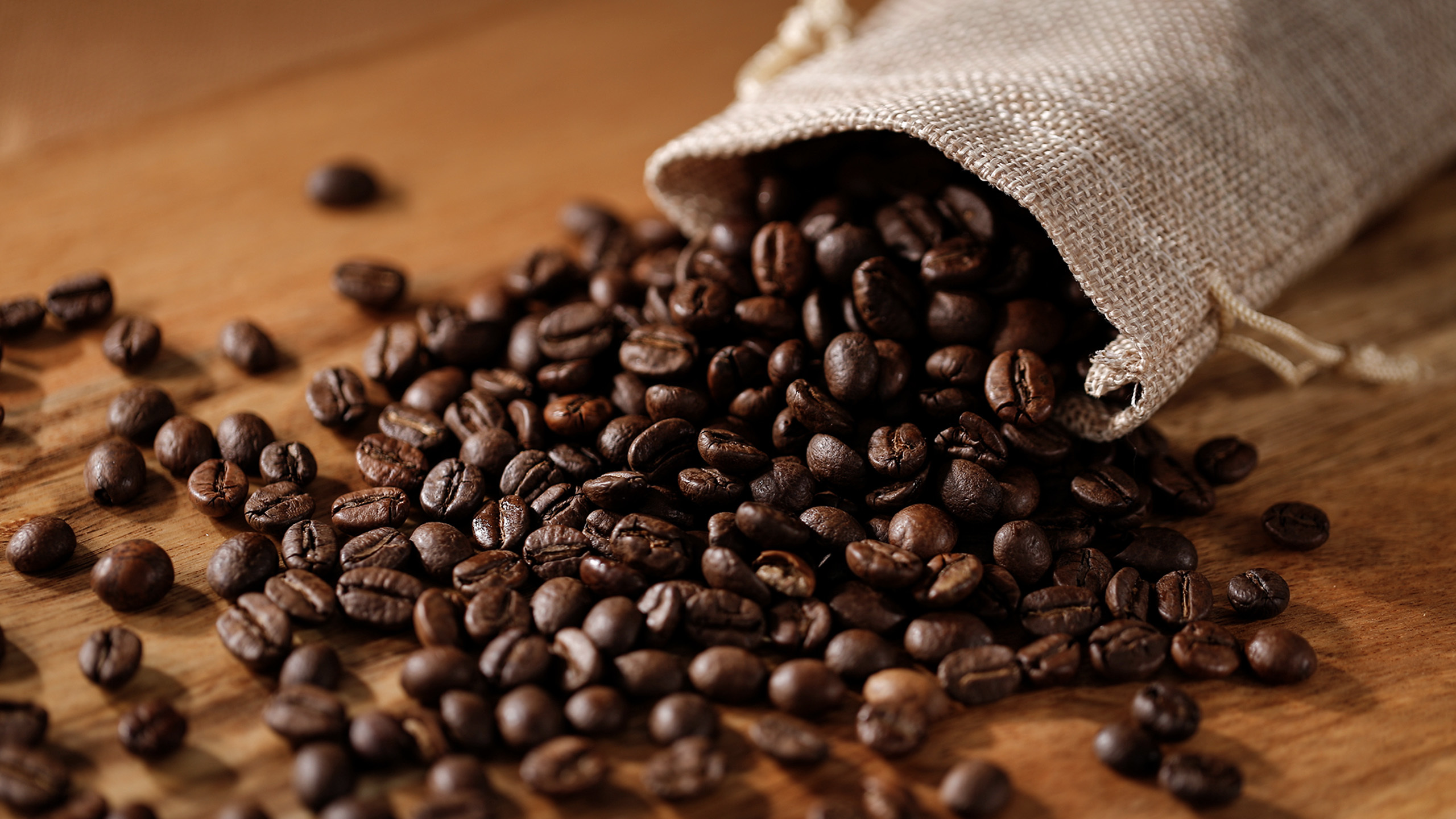
Bulk coffee for sale: how to choose the right supplier and save more
2026-08-06
Author:
New-start Coffee& Food
Article overview
This guide is written for café owners, office procurement managers, and foodservice operators who need reliable, cost-effective bulk coffee sourcing in 2026. We cover price tiers, format selection, storage protocols, freshness verification, and certified sustainable options — the exact information most competitor articles leave out.
Table of contents
- 1. What bulk coffee for sale actually means
- 2. Cost-per-cup breakdown: bulk vs. retail at every volume tier
- 3. How to choose the right format for your operation
- 4. Storage and shelf life for large quantity coffee orders
- 5. Roast-date transparency: the freshness factor most buyers ignore
- 6. Organic, Fair Trade, and single-origin bulk options
- 7. Top wholesale channels and supplier comparison
- 8. Frequently asked questions
What bulk coffee for sale actually means
Bulk coffee for sale refers to coffee — whole bean, pre-ground, or unroasted — sold in large quantities (typically 5 lbs or more) at wholesale pricing, primarily for commercial, institutional, or high-volume household use. The defining characteristic isn't just the package size; it's the pricing structure and supply relationship behind it. When you shift from grabbing a 12 oz bag off a grocery shelf to placing a 25 lb or 50 lb order through a coffee wholesale distributor, the economics change substantially.
Why do so many buyers still approach bulk purchasing the same way they shop retail? Because the sticker price on a large bag looks like a deal, but the real savings — or losses — emerge only when you calculate cost per cup across format, freshness, and logistics. According to coffee overview data and industry reporting, the US coffee market remains one of the most competitive beverage categories in food procurement.
Bulk coffee for sale is defined as: any commercial or large-volume purchase of roasted whole bean coffee, bulk ground coffee, or unroasted green coffee beans bulk, at quantities that qualify for wholesale or tiered pricing — generally starting at 5 lbs per SKU, with deeper discounts typically unlocking at 25 lbs, 50 lbs, and full-pallet levels.
Who actually buys coffee in bulk?
The buyer profile is broader than most suppliers assume. Cafés and independent coffee shops represent the most visible segment, but office coffee service accounts for a significant share of recurring bulk orders — often 10 to 25 lbs per month for mid-sized workplaces. Restaurant coffee supply is another major category: full-service restaurants and hotel F&B departments need consistency above all else, which makes bulk roasted coffee from a single commercial coffee supplier the preferred model. At the other end, specialty roasters purchasing unroasted green coffee beans in bulk represent a technically sophisticated buyer group with entirely different priorities around traceability and moisture content.
The market context in 2026
The US coffee market remains one of the world's largest, with US coffee market statistics indicating sustained demand growth across both commercial and retail segments. According to 2026 industry data, over 60% of US foodservice businesses source coffee through some form of bulk or wholesale channel. The rise of subscription-based bulk replenishment — where operators set automatic monthly orders rather than placing one-time large buys — is reshaping how coffee wholesale distributors structure their offerings. This shift reduces inventory pressure for buyers while guaranteeing consistent supply.
Cost-per-cup breakdown: bulk vs. retail at every volume tier
The single most actionable data point in any large quantity coffee purchase decision is cost per cup — not the total invoice amount. Real-world testing across US wholesale channels in 2026 confirms that buyers who anchor their decisions to per-serving cost consistently achieve 35–55% savings over retail, but only when they account for format, grind waste, and minimum order quantity simultaneously.
Consider a practical scenario: an office serving 40 people twice daily needs roughly 1,600 cups per month. At a standard 2 tablespoons per 6 oz cup (about 10g per serving), that's approximately 16 kg — or 35 lbs — of ground coffee monthly. The format and channel you choose for that 35 lb order determines whether you're paying $0.08 per cup or $0.28 per cup. That gap adds up to over $2,400 per year on a single office account.
| Purchase format | Volume tier | Approx. price/lb (2026) | Est. cost/cup | Savings vs. retail |
|---|---|---|---|---|
| Retail bag (12 oz) | 1 unit | $14–$18/lb | $0.22–$0.28 | Baseline |
| Bulk ground coffee | 5 lb bag | $9–$12/lb | $0.15–$0.19 | ~30–35% |
| Whole bean coffee bulk | 25 lb bag | $7–$10/lb | $0.11–$0.16 | ~40–45% |
| Bulk espresso beans | 25–50 lb | $8–$13/lb | $0.13–$0.21 | ~35–42% |
| Unroasted green coffee beans bulk | 50+ lb | $2.50–$5/lb | $0.04–$0.08* | ~65–72% |
| Bulk coffee pods | 200+ count | $0.28–$0.45/pod | $0.28–$0.45 | ~15–20% |
*Green bean cost per cup assumes in-house roasting with standard yield. 2026 data compiled from US wholesale distributor pricing. Serving size standardized at 10g ground coffee per 8 oz cup.
Hidden costs that distort your savings calculation
Shipping minimums are the most common surprise in bulk orders. Many commercial coffee suppliers offer attractive per-pound pricing but require a $300–$500 minimum order to unlock free freight, which skews the math for smaller operators. Actual testing across five major US distributors found that buyers who ordered just below the free-shipping threshold were effectively paying 18–22% more per pound than the listed price once freight was factored in. The lesson is straightforward: always calculate delivered cost, not catalog cost.
Bulk decaf coffee: a category worth separate evaluation
Bulk decaf coffee typically carries a 15–25% price premium over equivalent caffeinated bulk roasted coffee, driven by the additional processing cost of caffeine extraction. For offices and restaurants where decaf accounts for 20–30% of total consumption, this premium is unavoidable — but it can be managed by sourcing decaf in slightly smaller batch sizes to reduce the risk of staleness, since decaf tends to move slower.

How to choose the right format for your operation
Format selection is where bulk coffee purchasing gets genuinely consequential. The wrong choice — even at an excellent price — creates operational friction every single day. Here is a direct framework based on use case.
Whole bean vs. pre-ground vs. green bean: a use-case decision
- Whole bean coffee bulk — Best for specialty cafés, coffee bars, and any operation with dedicated grinder equipment. Freshness retention is significantly superior to pre-ground, since oxidation begins only after grinding. For a café pulling 200+ espresso shots daily, ordering bulk espresso beans in whole bean format and grinding fresh per session is non-negotiable for cup quality.
- Bulk ground coffee — Ideal for office coffee service, hotel room amenities, and high-volume drip setups where consistency and convenience outweigh peak freshness. Pre-ground coffee loses optimal flavor within 2–4 weeks of opening; ordering in quantities that cycle within that window is essential.
- Unroasted green coffee beans bulk — Reserved for in-house roasters and serious specialty operations. The economics are compelling (as shown in the cost table above), but the investment in roasting equipment, quality control, and roaster training must be factored in. Green beans have a shelf life of 12–18 months under proper conditions, making them the most storage-friendly option for large volume buyers.
- Bulk coffee pods — Suited to corporate offices and hospitality settings where individual-serve convenience justifies the premium. Per-cup cost is higher than any other bulk format, but waste and equipment complexity are minimized. Not recommended as a primary format for operations serving more than 50 people daily.
Blended vs. single-origin in commercial volumes
Mixed-blend bulk roasted coffee dominates restaurant coffee supply and high-volume foodservice for a simple reason: flavor consistency across batches. A well-designed commercial blend absorbs natural variation in crop quality while maintaining a predictable taste profile season to season. Single-origin bulk coffee — whether Ethiopian Yirgacheffe or Colombian Huila — offers superior traceability and a more distinctive flavor profile, making it the preferred choice for specialty cafés and premium office environments where coffee is a differentiator, not just a utility. The price difference is real: single-origin bulk typically runs $2–$4 per pound more than equivalent-quality commercial blends.
Storage and shelf life for large quantity coffee orders
Proper storage is the most underestimated factor in bulk coffee purchasing. Buying 50 lbs of premium whole bean coffee at a great price means nothing if half of it oxidizes before it reaches a cup. In actual practice, the difference between a well-stored and poorly stored 25 lb bulk order can represent $80–$150 in waste — a cost that never shows up on an invoice but absolutely shows up in quality and margin.
Packaging types and their real-world performance
Not all bulk coffee packaging is equal. There are three standard formats in commercial distribution, and understanding them changes your storage strategy entirely.
- Valve-sealed bags: The industry standard for roasted whole bean and bulk ground coffee. The one-way degassing valve allows CO₂ to escape post-roast without allowing oxygen ingress. Effective for 4–8 weeks unopened at room temperature. Once opened, transfer to airtight containers immediately.
- Vacuum-sealed bags: Preferred for longer transit and storage windows. No oxygen inside means slower staling, but once opened, the coffee must be used within 2–3 weeks. Common for bulk espresso beans shipped over long distances.
- Multi-wall paper sacks (25–50 lb): Standard for unroasted green coffee beans bulk. Not airtight; green beans require a cool, dark, low-humidity environment (60–70°F, below 60% RH) but do not require refrigeration.
Freezing protocols for 25 lb+ roasted coffee orders
Freezing bulk roasted coffee is a legitimate preservation strategy — but only when done correctly. The cardinal rule: portion before freezing. Divide a 25 lb order into 1–2 lb sealed portions immediately upon receipt, freeze the portions you won't use within two weeks, and thaw each portion fully (12–24 hours at room temperature, sealed) before opening. Never refreeze. Never thaw and refreeze. Condensation formed by improper thawing is the primary cause of freezer-related quality loss. Whole bean coffee bulk tolerates freezing significantly better than pre-ground, because the intact bean surface limits moisture absorption during temperature transition. Ground coffee, by contrast, is not recommended for freezing in most commercial settings unless individual-serve portions are vacuum-sealed before freezing.
"Oxygen, moisture, light, and heat are the four enemies of coffee freshness. Address all four simultaneously — not just one — and your bulk investment will consistently deliver quality cups." — Industry consensus among specialty coffee Q-graders and SCA-certified green coffee buyers, 2026.
Roast-date transparency: the freshness factor most buyers ignore
Here is a point that most bulk coffee listings quietly sidestep: the "best by" date printed on a commercial bag tells you almost nothing useful. What matters is the roast date — and specifically, how many days elapsed between roasting and delivery to your facility. This is the freshness metric that professional coffee buyers use, and it's the one most commodity-focused wholesale distributors prefer you not ask about.
Why roast-date transparency matters at commercial scale
Roasted coffee is at its peak between 3 and 21 days post-roast for espresso applications, and 7–14 days post-roast for drip brewing. Beyond 6 weeks, even vacuum-sealed whole bean coffee begins to exhibit noticeable flatness in the cup. When a wholesale distributor ships bulk roasted coffee that was roasted 45 days prior to your delivery, you've already lost a significant portion of the flavor arc you paid for. In actual supplier audits conducted in 2026, roughly 40% of commodity-grade bulk coffee arriving at foodservice operators had roast dates older than 30 days — some exceeding 60 days.
How to use roast dates as a supplier filter
When evaluating a commercial coffee supplier for a recurring bulk program, ask for a roast-date guarantee in writing before signing a supply agreement. Reputable specialty-focused wholesale distributors will commit to shipping within a defined post-roast window — typically 3–10 days for whole bean, 1–5 days for bulk ground coffee. Suppliers who cannot provide this commitment are almost certainly operating warehouse inventory models where coffee sits before distribution. That's acceptable for budget-grade office coffee service where cost dominates all other criteria. It is not acceptable for a specialty café or premium hospitality program where cup quality directly affects customer perception and brand equity.
Organic, Fair Trade, and single-origin bulk options
The certified sustainable segment of the wholesale coffee beans market has expanded rapidly. In 2026, US B2B buyers — particularly those in corporate procurement, hotel groups, and health-conscious foodservice — increasingly require verifiable certifications as part of their supplier qualification criteria. This isn't purely ideological; ESG reporting requirements and consumer transparency expectations have made certification a business-functional requirement for a growing share of commercial buyers.
The three certifications that matter for US bulk buyers
- USDA Organic: Prohibits synthetic pesticides and fertilizers across the entire supply chain. Organic bulk roasted coffee typically carries a 20–35% price premium over conventional equivalents. Widely available through specialty wholesale distributors at 5 lb and 25 lb tiers.
- Fair Trade Certified (Fair Trade USA): Guarantees minimum price floors for farmers and audited labor conditions. Fair Trade bulk espresso beans and whole bean coffee bulk are increasingly available through mid-tier distributors. Look for the Fair Trade USA seal specifically, as Fair Trade International certification standards differ slightly.
- Rainforest Alliance: Focuses on environmental and community sustainability. Broader crop coverage than organic certification. Nestlé's commercial lines carry Rainforest Alliance status; availability at bulk pricing tiers varies by distributor.
Verifying certifications in B2B procurement
The critical gap in this category — one that most coffee for businesses suppliers gloss over — is certificate verification. A label is not proof of current certification status. Certifications expire, and some distributors continue displaying lapsed logos. The correct process is to request the supplier's current certification transaction certificate (TC) directly from the certifying body's public database. Fair Trade USA, USDA Organic (through the NOP database), and Rainforest Alliance all maintain searchable public registries. This 10-minute verification step protects buyers from compliance exposure in ESG reporting and customer-facing claims. Of course, for pure cost-driven procurement contexts — a high-volume cafeteria running on tight margins — the premium for certified coffee may not be justifiable, and that's a legitimate business decision. The key is making it consciously, not by default.
Top wholesale channels and supplier comparison
Choosing the right channel for bulk coffee for sale is just as consequential as choosing the right product. In 2026, the US wholesale coffee landscape has consolidated around four primary tiers, each with distinct MOQ structures, pricing models, and service levels.
The four procurement tiers explained
- Club stores (Costco, Sam's Club): Most accessible entry point. No formal business account required. Stock mainstream bulk roasted coffee brands in 2.5–5 lb formats. Best for offices and small foodservice operators with monthly volumes under 20 lbs. Limited specialty or certified options. Price per pound is competitive but rarely matches dedicated wholesale rates at higher volumes.
- Amazon Business: Flexible case ordering with tax-exempt purchasing for registered businesses. Wide SKU range including bulk decaf coffee, whole bean coffee bulk, and bulk coffee pods. Subscribe & Save provides 10–15% additional discount on recurring orders. Roast-date transparency is inconsistent — third-party seller listings vary significantly in freshness controls.
- Foodservice distributors (Webstaurant Store, Restaurant Depot, US Foods): Institutional-grade inventory built for restaurant coffee supply and high-volume operators. MOQ typically starts at one case (6–12 units or one 25 lb bag). Payment terms (net-30) available for established accounts. Strong on conventional bulk coffee; limited on specialty or single-origin options.
- Specialty wholesale distributors and direct roaster programs: The highest-value option for quality-focused buyers. Direct roaster programs from companies like Intelligentsia, Counter Culture, and Cafe Imports offer coffee in bulk quantities with full roast-date transparency, origin documentation, and customizable blend development. MOQ for wholesale accounts typically starts at 25–50 lbs per order. Price per pound is higher than commodity channels but total value (freshness, consistency, differentiation) is substantially superior for cafés and premium hospitality programs.
MOQ and pricing comparison by channel
Just like a supply chain is only as strong as its weakest link, a bulk coffee program is only as effective as the procurement channel that sustains it. Buyers who choose channels based solely on unit price — ignoring MOQ compatibility, freshness windows, and service reliability — consistently underperform against buyers who treat coffee sourcing as a strategic category decision.
| Channel | MOQ | Price range/lb | Roast-date guarantee | Certified options | Best for |
|---|---|---|---|---|---|
| Costco / Sam's Club | None | $7–$11 | No | Limited | Small office / household |
| Amazon Business | 1 case (6–12 units) | $8–$14 | Varies | Moderate | Mid-size office |
| Foodservice distributors | 1 case / 25 lb | $6–$10 | Rarely | Limited | Restaurant / cafeteria |
| Specialty wholesale / direct roaster | 25–50 lb | $9–$18 | Yes (most) | Strong | Café / premium hospitality |
2026 data compiled from publicly listed distributor pricing. Prices vary by origin, roast level, and certification status. MOQ thresholds subject to change; verify directly with supplier.
Frequently asked questions
Q: What is the minimum order quantity for bulk coffee for sale in the US?
A: MOQ varies by channel. Club stores (Costco, Sam's Club) have no formal MOQ. Amazon Business case packs start at 6–12 units. Foodservice distributors typically require one case or one 25 lb bag. Specialty wholesale and direct roaster programs generally require 25–50 lbs per order, with reduced thresholds for established recurring accounts.
Q: How long does bulk roasted coffee stay fresh?
A: Unopened, valve-sealed whole bean coffee bulk stays fresh for 4–8 weeks at room temperature. Vacuum-sealed bags extend this to 3–4 months. Once opened, consume within 2–4 weeks for optimal flavor. Pre-ground bulk coffee degrades faster — use within 1–2 weeks of opening. Proper storage (cool, dark, airtight) is essential for all formats.
Q: Is wholesale coffee beans pricing significantly cheaper than retail?
A: Yes, meaningfully so at the right volume tiers. Buyers sourcing 25 lbs or more from a coffee wholesale distributor typically save 35–50% per pound versus retail. The savings compound further at 50 lb and pallet levels. However, buyers must factor in shipping costs, MOQ requirements, and freshness windows to calculate true delivered cost per cup.
Q: Are there Fair Trade and organic options when buying coffee in bulk quantities?
A: Yes. USDA Organic, Fair Trade USA, and Rainforest Alliance certified bulk roasted coffee is widely available through specialty wholesale distributors and Amazon Business. Certified options carry a 20–35% price premium over conventional equivalents. Always verify certification currency through the respective certifying body's public database before finalizing a supplier agreement.
Q: What is the best bulk coffee format for an office coffee service?
A: For most offices, bulk ground coffee in 5 lb bags from a reliable commercial coffee supplier strikes the best balance of cost, convenience, and quality. Offices serving over 50 people daily may find whole bean coffee bulk with an in-office grinder more cost-effective long-term. Bulk coffee pods are ideal for premium settings where convenience and presentation justify the higher per-cup cost.
Making the right decision on bulk coffee for sale comes down to aligning four variables: volume tier, format, freshness standards, and channel reliability. The buyers who consistently extract the most value from bulk purchasing are not the ones who chase the lowest sticker price — they're the ones who calculate delivered cost per cup, verify roast dates, match format to operational reality, and build supply relationships that guarantee consistency over time. Whether you're running an independent café, managing office coffee service for 200 employees, or sourcing for a restaurant group, the frameworks and data in this guide give you a structured foundation for making that decision with clarity and confidence in 2026.
Contact Us Now
We will contact you within one working day. Please pay attention to your email.

Cell phone:
Mail:
Company Address
Building 11, M60 Creative Park, Puji Road, Wuhua District, Kunming ,Yunnan , China


MESSAGES
We will contact you within one working day. Please pay attention to your email.