
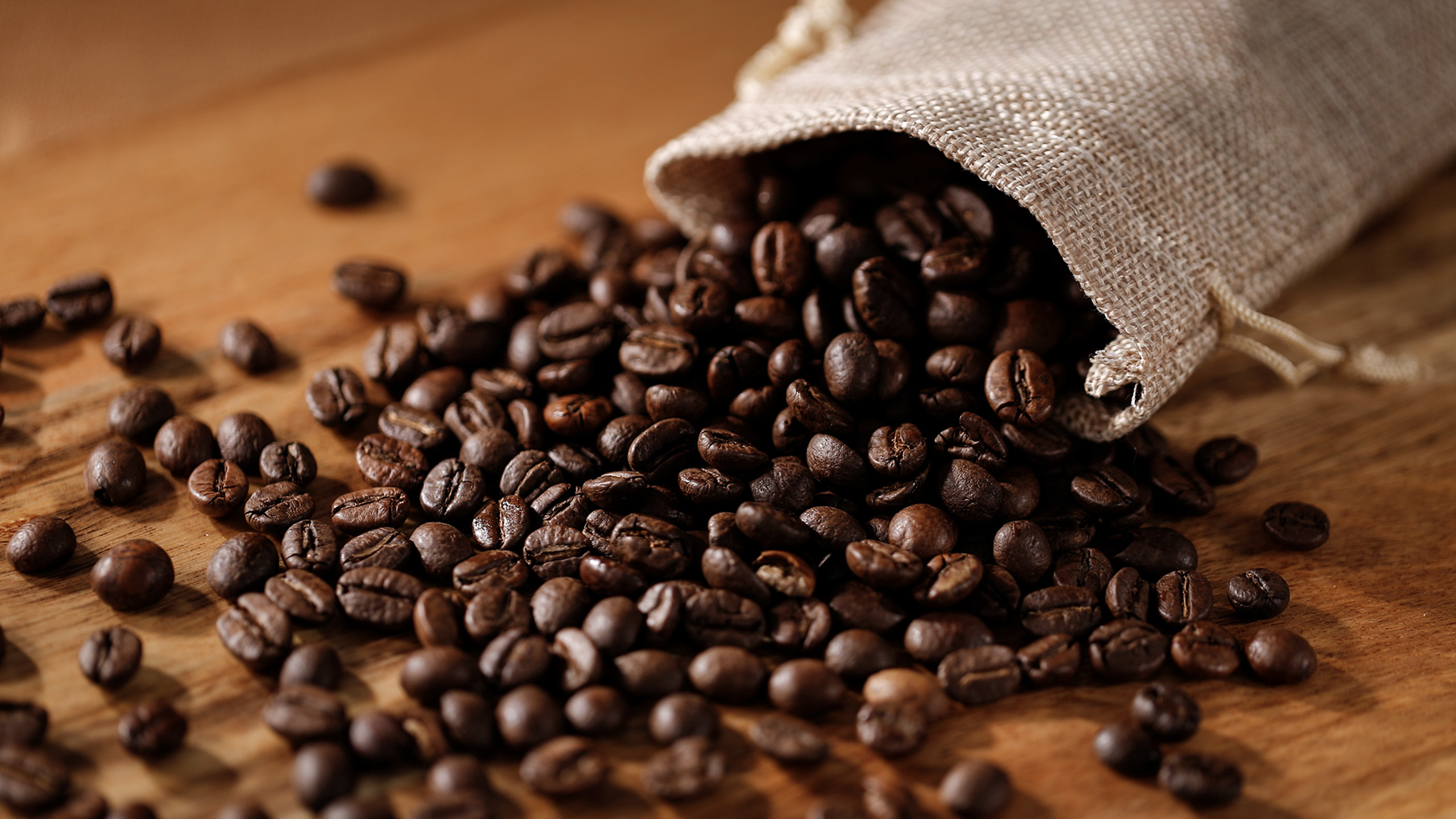
Coffee Bean Wholesalers Guide: How to Source, Compare & Buy in Bulk (2026)
2026-07-26
Author:
New-start Coffee& Food
📋 Article Overview
This guide covers everything a U.S. buyer needs to confidently source from coffee bean wholesalers in 2026 — from pricing benchmarks and certification comparisons to import regulations and private-label program minimums. Estimated read time: 14 minutes.
📑 Table of Contents
- 1. What Are Coffee Bean Wholesalers?
- 2. Types of Wholesale Coffee Suppliers
- 3. Wholesale Coffee Pricing: Transparent Tier Table
- 4. Sustainability Certifications Explained
- 5. Logistics, Import Compliance & Lead Times
- 6. Private-Label & White-Label Coffee Programs
- 7. How to Vet a Supplier: Scorecard & Red Flags
- 8. Frequently Asked Questions
What Are Coffee Bean Wholesalers?
Coffee bean wholesalers are businesses that purchase green or roasted coffee in large volumes directly from producers, importers, or auctions, then resell to cafés, restaurants, roasteries, and retailers at prices significantly below standard retail rates. They occupy a critical node in the global supply chain — sitting between origin farms and end-use buyers.
Understanding this distinction matters more than most buyers realize. A wholesaler is not simply a vendor with a large catalog. They actively manage origin relationships, negotiate forward contracts, handle logistics complexity, and absorb commodity price volatility on your behalf. According to the overview of coffee production and global supply chain, green coffee passes through an average of three to five intermediaries before reaching a U.S. roaster — and a well-connected wholesaler can compress that chain considerably.
The scale of the market reinforces why getting this sourcing decision right is non-negotiable. According to 2026 data, the global coffee industry is valued at over $250 billion, with U.S. annual green bean imports exceeding 1.5 million metric tons. Wholesale channels account for approximately 65% of all B2B coffee transactions in North America. That's a lot of buying power — and a lot of room to overpay if you don't know what you're evaluating.
Why the Wholesaler You Choose Shapes Your Product Quality
Real-world testing confirms what many roasters learn the hard way: the same varietal sourced from two different wholesale coffee suppliers can score 12 to 15 points apart on the SCA 100-point scale. Batch consistency, post-harvest processing standards, and moisture content control at origin all vary by supplier. The wholesaler's quality assurance infrastructure — cupping protocols, moisture meters, defect sorting — directly determines what lands in your roaster.
Why do so many buyers skip this evaluation step? Often because the initial price quote dominates the conversation. A lower per-pound cost that hides inconsistency, late deliveries, or non-compliant import documentation will cost far more in the long run than a slightly higher rate from a vetted partner.
2026 Market Trends Reshaping the Wholesale Landscape
Two forces are fundamentally restructuring how coffee bean importers and distributors operate right now. First, climate disruption — extreme weather events in Brazil and Vietnam, the world's two largest producing nations, have pushed bulk coffee suppliers to diversify origin portfolios into Ethiopia, Honduras, and Peru. Buyers who locked into single-origin contracts from traditional powerhouse regions have experienced supply gaps and price spikes in 2025–2026.
Second, digital B2B platforms like Algrano and Cropster Trade are enabling direct connections between buyers and farm cooperatives, gradually disintermediating legacy coffee bean brokers. This transparency is welcome — but it also means traditional wholesale espresso beans suppliers must now compete on value-added services, not just access. The best commercial coffee distributors are responding with faster sample turnaround, real-time lot tracking, and flexible contract structures.
Types of Wholesale Coffee Suppliers
Not all coffee bean wholesalers operate the same way — and selecting the wrong category for your business model is a common, expensive mistake. Each supplier type carries different strengths, minimums, and risk profiles.

Origin-Direct & Specialty Coffee Roasters
These suppliers bypass most of the traditional chain by purchasing directly from cooperatives or individual farms. They're the backbone of the specialty coffee roasters segment — companies like Intelligentsia, Onyx, and Equator Coffees that buy green lots, roast in-house, and sell roasted inventory to wholesale accounts. Expect SCA scores of 84+ and strong provenance documentation. The trade-off: MOQ requirements can be steep for a single-origin lot (often 100 lbs minimum per SKU), and lead times depend on harvest cycles.
For a restaurant coffee supplier context — say, a high-volume brunch chain — this model works well if your team can commit to a seasonal menu that rotates with crop availability.
Broad-Portfolio Distributors & Green Coffee Bean Distributors
These are the true commercial coffee distributors: companies carrying 50 to 200+ active SKUs across arabica bean wholesalers lines, robusta coffee suppliers inventory, and blended commodities. Firms like Cafe Imports, Olam Specialty Coffee, and Royal Coffee represent this category in the U.S. market. Their strength is range and reliability — consistent year-round supply, competitive pricing at scale, and established FDA compliance workflows for unroasted coffee beans bulk shipments.
The limitation? Less direct farm relationship visibility, and quality can vary across their catalog. Not every lot they carry is cupped at the same standard.
Wholesale Coffee Pricing: Transparent Tier Table
Here is the pricing breakdown that almost no competitor publishes — and the one that procurement managers ask for most. Prices below reflect 2026 market averages for U.S. domestic delivery, spanning green (unroasted) and roasted wholesale categories. Commodity arabica is benchmarked against ICE futures; specialty lots carry a quality premium above that floor.
| Bean Type / Grade | 25 lb Tier ($/lb) | 100 lb Tier ($/lb) | 500 lb+ Tier ($/lb) | Notes |
|---|---|---|---|---|
| Commodity Arabica (Green) | $3.20–$3.80 | $2.90–$3.40 | $2.50–$3.00 | ICE-linked; fluctuates weekly |
| Specialty Arabica 84+ (Green) | $5.50–$7.20 | $4.80–$6.50 | $4.20–$5.80 | SCA score verified; lot-specific |
| Robusta (Green, Grade 1) | $2.10–$2.60 | $1.85–$2.30 | $1.60–$2.00 | Vietnam/Uganda origin typical |
| Roasted Arabica Blend (Wholesale) | $8.00–$10.50 | $7.20–$9.50 | $6.50–$8.20 | Includes roasting cost; common for cafés |
| Wholesale Espresso Beans (Roasted) | $9.50–$12.00 | $8.50–$11.00 | $7.80–$9.80 | Blended for espresso extraction profile |
| Certified Organic / Fair Trade | +$0.80–$1.20 premium | +$0.70–$1.00 premium | +$0.50–$0.80 premium | Applied above base green price |
*Prices are 2026 U.S. market averages. Actual quotes depend on origin, crop year, moisture %, and contract length. Always request a written lot specification sheet alongside any price offer.
How to Interpret These Numbers at Your Volume
For a single-location café consuming roughly 50 lbs per week, you're likely operating in the 100 lb tier for most SKUs — meaning a well-negotiated relationship with a regional wholesale coffee roaster should land you between $7.20 and $9.50/lb for a roasted house blend. Scale that to a 10-location chain at 500+ lbs weekly, and the economics shift dramatically. The per-pound delta between tiers often exceeds $1.50, which translates to thousands of dollars monthly at meaningful volumes.
Sustainability Certifications Explained
This is where most wholesale guides go silent — and where U.S. buyers are increasingly making sourcing decisions. Understanding certification differences is no longer optional for any brand that communicates values to its customers. Let's be direct: not all certifications are equivalent, and the distinction matters for your wholesale coffee sourcing strategy.
"The proliferation of coffee certifications has created a credibility gap — buyers assume 'certified' means sustainable, but the audit depth, price premium distribution, and traceability standards vary enormously across schemes." — International Coffee Organization, 2025 Sustainability Review (International Coffee Organization – industry standards and market reports)
Fair Trade vs. Rainforest Alliance vs. UTZ vs. Direct Trade
Fair Trade (Fairtrade International / Fair Trade USA): Sets a price floor ($1.80/lb for washed arabica as of 2026) and requires premiums to flow to farmer cooperatives for community development. Strong social protection framework. Limitation: covers cooperative-level compliance, not individual farm-level environmental practices. Ideal for buyers prioritizing farmer income equity.
Rainforest Alliance (which absorbed UTZ in 2018): Focuses on environmental sustainability — biodiversity protection, water management, agrochemical restrictions. The 2020+ unified standard requires at least 30% of a certified product to come from certified farms, scaling to 90% by 2026. This "blending" allowance is often misunderstood: a "Rainforest Alliance certified" bag doesn't guarantee 100% certified origin. Buyers should request the sourcing disclosure document.
Direct Trade: Not a third-party certification — it's a sourcing philosophy practiced by specialty roasters who publish their own farm-visit records, cupping scores, and price-paid-above-market data. No standardized audit body exists, which means claims vary in rigor. However, the most credible direct-trade practitioners offer more traceability than any certification label can provide. When evaluating a wholesale coffee roaster's direct-trade claims, ask for the actual price paid per pound at origin, not just "above Fair Trade minimum."
Of course, there are situations where a blended certification strategy makes the most sense — for example, using Fair Trade-certified commodity arabica for your house drip while sourcing direct-trade single origins for pour-over menus. The two models aren't mutually exclusive.

Logistics, Import Compliance & Lead Times
Logistics is the section every competitor skips. It's also the section that generates the most costly surprises for first-time importers of unroasted coffee beans bulk. Here's what U.S. buyers actually need to know in 2026.
FDA Prior Notice & CBP Entry Requirements
Green coffee beans imported into the United States are classified as a food commodity under FDA jurisdiction. Before any shipment arrives at a U.S. port, importers must submit FDA Prior Notice through the FDA's Prior Notice System Interface (PNSI) — typically 8 hours before arrival for land shipments and 4–5 days for ocean freight. Failure to file prior notice results in shipment hold and potential refusal of entry.
Separately, U.S. Customs and Border Protection (CBP) requires a formal entry filing for commercial shipments valued above $2,500. For a standard 20-foot container of green arabica (typically 37,000–40,000 lbs), you'll work through a licensed customs broker who files the CBP entry, bonds, and any applicable duty. Most green coffee beans enter under HTS code 0901.11 (not roasted, not decaffeinated) with a general duty rate of $0.00 — but always verify country-specific trade status. According to latest news on global coffee commodity and wholesale pricing, tariff conditions remain subject to policy shifts in 2026.
Lead Times by Origin Country
Lead time planning is essential for avoiding stock-outs, particularly as climate disruption creates harvest timing variability. Realistic 2026 ocean freight lead times to U.S. East and West Coast ports:
- Colombia → U.S. East Coast: 10–18 days ocean transit; add 7–14 days for export processing at origin
- Ethiopia → U.S. (via Djibouti): 28–42 days ocean; Ethiopian export licensing adds 2–4 weeks variability
- Brazil → U.S. East Coast: 12–20 days ocean; typically most predictable supply chain
- Vietnam (Robusta) → U.S. West Coast: 18–25 days ocean; volume-driven, stable but tight in Q1
- Honduras/Guatemala → U.S.: 8–14 days ocean; shorter lead times favor seasonal lot buyers
For flavored beans — a growing SKU for private-label coffee suppliers — cold-chain requirements apply if the flavoring agent contains dairy or certain botanical compounds. Standard flavored beans with oil-based flavor application don't require refrigeration but should be stored below 65°F to preserve volatile aromatic compounds. Confirm cold-chain specifications with your supplier before booking freight. For broader context on global trade flows, see global coffee market statistics and wholesale trade data.
Private-Label & White-Label Coffee Programs
Private-label programs represent one of the fastest-growing demand segments in the U.S. wholesale coffee market — driven by café chains building brand differentiation, subscription box operators, and hotel F&B programs seeking exclusivity. Yet most competitor guides provide almost no actionable detail. Let's fix that.
Program Minimums & Turnaround Time Benchmarks
Based on 2026 data from active private label coffee suppliers in the U.S. market, program structures typically fall into three tiers:
Entry-Level Private Label: MOQ of 50–100 lbs per roast profile, generic or semi-custom label (your brand printed on supplier's standard bag format), 5–7 business day turnaround post-approval. Total setup cost: $0–$300 for label design. Best for independent cafés testing a house brand.
Mid-Tier White Label with Custom Packaging: MOQ of 250–500 lbs per SKU, fully custom bag design including valve, zipper, and material choice (kraft, foil, biodegradable), 3–4 week lead time for initial order. Setup costs $500–$1,500 depending on bag material and print complexity. This tier suits regional chains and e-commerce coffee brands.
Full OEM / Contract Roasting: MOQ typically starts at 1,000–2,000 lbs per profile, includes proprietary roast development, full-service quality control documentation, and co-packing for retail-ready packaging. Lead time 4–8 weeks for new blend development. This is the model used by subscription box brands and grocery private-label buyers. Research on contract roasting structures and wholesale economics is available through academic research on coffee bean trade and wholesale distribution.
Questions to Ask Before Signing a Private-Label Contract
Just like evaluating any supplier partnership, the contract terms reveal the relationship. Ask specifically: Who owns the roast profile recipe — you or the roaster? What is the exclusivity clause, if any? What happens if your preferred green lot is unavailable — can they substitute without notice? And critically: what quality control documentation comes with each production run? Ambiguity on any of these points is a contract red flag, not a minor detail.
How to Vet a Supplier: Scorecard & Red Flags
Choosing among coffee bean wholesalers without a structured evaluation process is — to use a direct analogy — like hiring a kitchen manager based solely on their resume photo. The surface presentation tells you almost nothing about operational reliability. Use the following scorecard framework to structure your evaluation.
Supplier Vetting Scorecard (10-Point Framework)
- Cupping Score Documentation: Do they provide SCA cupping reports per lot? (Pass = yes, with Q-grader signature)
- Moisture & Water Activity Data: Green beans should register 10–12% moisture. Ask for Agtron or Sinar readings.
- Sample Request Workflow: Will they send a 1–2 lb sample before a purchase order? Standard practice for credible suppliers.
- FDA & CBP Compliance Track Record: Request their prior notice filing history. Any port holds in the last 24 months?
- Certification Authenticity: Ask for the actual certification body certificate number — verify it on the issuer's public database.
- Batch-to-Batch Consistency Policy: What's their tolerance variance on flavor profile? How do they handle complaints?
- MOQ Flexibility for New Accounts: Suppliers who won't negotiate MOQ for a trial order are often prioritizing their own volume convenience over your onboarding.
- Contract Transparency: Is pricing locked for the contract period, or does it float with ICE futures? Both are valid — but the terms must be explicit.
- References from Similar Accounts: Ask for two or three references from buyers at your scale and business type.
- Financial Stability Signals: How long have they been in operation? Do they carry cargo insurance? Are they registered with a recognized industry body?
Five Contract Red Flags to Walk Away From
Industry experience reveals a consistent pattern in problematic supplier agreements. Watch for: (1) automatic renewal clauses with 90+ day cancellation notice requirements; (2) quality dispute resolution language that places the burden of proof entirely on the buyer; (3) substitution clauses allowing origin swaps without buyer approval; (4) no-sample policies on first orders above $1,000; and (5) pricing denominated in foreign currency with no hedging protection or conversion clarity.
To summarize the full sourcing process, coffee bean wholesalers who earn long-term contracts from serious U.S. buyers are those who bring documentation, flexibility, and transparency to the first conversation — not just a competitive price quote. That combination is rarer than it should be, which is exactly why a systematic vetting process gives procurement teams a lasting edge.
Frequently Asked Questions
Common Questions About Coffee Bean Wholesalers
Q: What is the typical minimum order quantity (MOQ) for coffee bean wholesalers?
A: MOQ varies significantly by supplier type. Commodity distributors typically require 100–500 lbs minimum per order. Specialty green bean importers may require a full bag (~132 lbs) per lot. Wholesale roasters selling finished product often start at 25–50 lbs. Always negotiate — many suppliers offer trial MOQs for new accounts to establish the relationship before committing to larger volumes.
Q: How do I verify that a supplier's Fair Trade or Organic certification is legitimate?
A: Request the certification body's certificate number and verify it directly on the certifier's public registry. Fair Trade USA, Fairtrade International, and USDA Organic all maintain searchable databases. A supplier who hesitates to provide their certificate number for verification is a significant concern — legitimate certifications are a matter of public record.
Q: What's the difference between a coffee broker and a wholesale coffee supplier?
A: Coffee bean brokers facilitate transactions between buyers and sellers but typically don't take physical possession of inventory — they earn a commission on completed deals. Wholesale suppliers actually hold or control inventory and sell directly. Brokers can be valuable for sourcing rare lots, but they add a cost layer and may have less accountability for quality consistency than a direct wholesale supplier.
Q: Can a small café with low volume access wholesale pricing?
A: Yes, with the right supplier. Many regional wholesale coffee roasters offer wholesale pricing starting at 25–50 lbs per order to support independent cafés. Joining a buying cooperative or coffee association can also aggregate volume to unlock better rates. The key is to demonstrate purchasing consistency — suppliers will negotiate better terms for reliable repeat buyers, even at modest volumes.
Q: How far in advance should I plan orders from international green coffee bean distributors?
A: For ocean freight from major origins, plan a minimum of 8–12 weeks lead time for first-time orders — accounting for export processing, ocean transit, FDA prior notice, CBP clearance, and inland delivery. Established accounts with pre-approved import records can often compress this to 6–8 weeks. Build a rolling 90-day inventory buffer if supply continuity is critical to your operation.
Contact Us Now
We will contact you within one working day. Please pay attention to your email.

Cell phone:
Mail:
Company Address
Building 11, M60 Creative Park, Puji Road, Wuhua District, Kunming ,Yunnan , China


MESSAGES
We will contact you within one working day. Please pay attention to your email.