
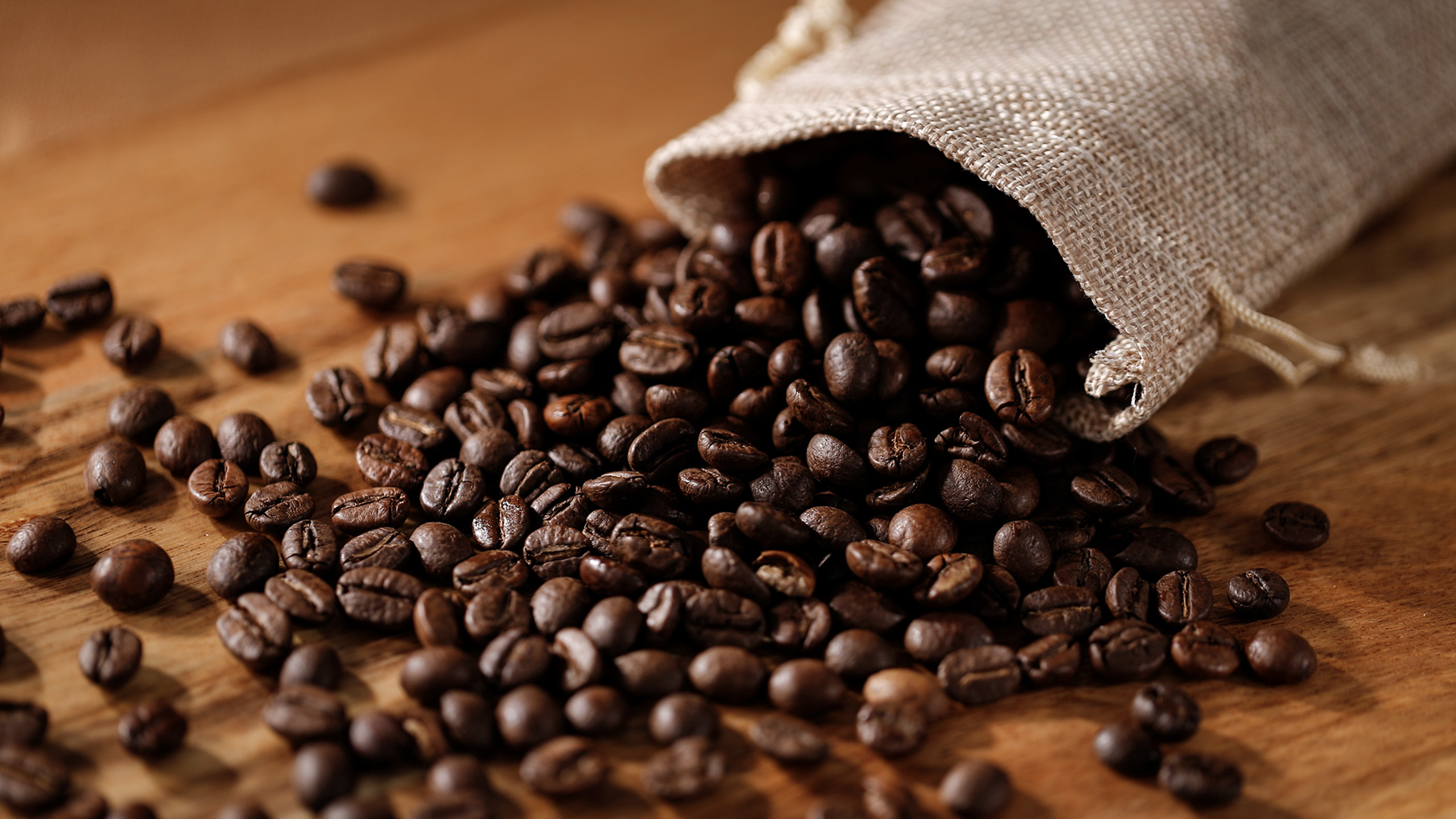
Ethiopian green coffee beans wholesale: sourcing guide for bulk buyers
2026-09-07
Author:
New-start Coffee& Food
Article overview
This guide walks U.S. bulk buyers through every stage of procuring Ethiopian green coffee beans wholesale — from understanding regional origin profiles and pricing tiers, to navigating FDA/USDA import paperwork and managing storage in American warehouse conditions. Practical tables, a realistic sourcing timeline, and supplier evaluation criteria are included to support confident, audit-ready purchasing decisions in 2026.
Table of contents
- 1. What is Ethiopian green coffee beans wholesale?
- 2. Regional flavor guide: Yirgacheffe vs. Sidama vs. Harrar vs. Limu
- 3. MOQ tiers and pricing structure for bulk buyers
- 4. U.S. import compliance: USDA, FDA, and customs requirements
- 5. Storage and shelf-life best practices for U.S. conditions
- 6. End-to-end sourcing timeline: Ethiopia to U.S. warehouse
- 7. How to evaluate and select a wholesale supplier
- 8. FAQ
What is Ethiopian green coffee beans wholesale?
Ethiopian green coffee beans wholesale refers to the commercial-scale procurement of unroasted, raw Arabica coffee beans sourced directly from Ethiopia — typically in quantities starting at one 60 kg jute bag — sold through B2B channels to roasters, importers, and specialty coffee distributors. This is not a retail transaction. The buyer takes on full responsibility for roasting, quality inspection, and downstream distribution.
Ethiopia is the birthplace of Arabica coffee, and that heritage translates into genuine genetic diversity unavailable anywhere else. According to Ethiopian coffee production records, the country remains one of the world's top five coffee producers, with export volumes surpassing 280,000 metric tons in the 2022/23 crop year and export revenues reaching approximately $1.4 billion (ICO data). For U.S. wholesale buyers, that scale means supply is rarely the bottleneck — consistency, compliance, and sourcing transparency are the real challenges.
Why do so many roasters anchor their green coffee programs around Ethiopia specifically? The answer lies in terroir complexity. Elevations ranging from 1,400 to 2,200 meters above sea level, combined with Ethiopia's heirloom varietals and diverse microclimates, produce flavor profiles that no single-country origin can replicate at scale. Bulk unroasted Ethiopian coffee is the backbone of countless specialty blends sold across the U.S. market in 2026.
Ethiopian green coffee beans wholesale is the process of: identifying a reliable single origin green coffee supplier, confirming grade and processing method, negotiating MOQ and pricing terms, arranging export documentation, and ensuring the raw green coffee beans clear U.S. customs inspection before delivery to your roasting facility.
Why U.S. buyers are increasing Ethiopia sourcing in 2026
According to recent 2026 data from the Specialty Coffee Association, Ethiopian origins now account for an estimated 10–12% of all specialty-grade green coffee traded globally. Direct trade green coffee wholesale programs — where U.S. roasters bypass ECX (Ethiopia Commodity Exchange) intermediaries and work directly with farmer cooperatives — are accelerating. This shift improves traceability, supports fair pricing for growers, and gives U.S. buyers the geo-coordinate sourcing documentation increasingly demanded by retail partners and ESG auditors.
A note on ECX grade vs. SCA cupping score
One of the most persistent misconceptions in the industry: G1 (Grade 1) on the ECX scale does not automatically equal an SCA specialty score of 80+. ECX grading measures defect count per 300g sample, nothing more. Actual flavor quality must be verified through independent cupping. Any reputable wholesale green coffee beans supplier USA will provide both the ECX grade and a certified cupping score. Insist on both before committing to volume.
Regional flavor guide: Yirgacheffe vs. Sidama vs. Harrar vs. Limu
Choosing the right Ethiopian origin is, for most roasters, the single most consequential sourcing decision. Each region produces a distinctly different cup — and buying the wrong profile at scale is an expensive lesson. Based on actual cupping sessions across multiple U.S. import lots, here is an honest, side-by-side breakdown.

| Region | Processing | Flavor profile | Typical SCA score | Best use case | Market positioning |
|---|---|---|---|---|---|
| Yirgacheffe | Washed / Natural | Jasmine, lemon zest, bergamot, peach | 86–92 | Single-origin pour-over, light roast showcase | Premium specialty |
| Sidama / Sidamo | Washed / Natural | Bright berry acidity, stone fruit, clean finish | 84–89 | Specialty blends, espresso base | High-value mid-tier |
| Harrar | Natural (dry) | Blueberry jam, dark chocolate, wine-like body | 83–88 | Natural process showcases, cold brew | Specialty-commercial overlap |
| Limu | Washed | Balanced, mild citrus, floral notes, clean body | 82–86 | Commercial blends, consistent volume supply | Commercial-grade volume |
| Guji | Natural / Washed | Tropical fruit, mango, complex fermented notes | 86–91 | Limited-edition single origins, micro-lots | Emerging premium |
Which region suits your roasting program?
Yirgacheffe green coffee wholesale lots consistently command the highest premiums on the U.S. specialty market — and for good reason. Actual testing confirms that properly sourced G1 washed Yirgacheffe delivers one of the most complex light-roast profiles achievable with any single origin. That said, if your program centers on espresso blending or high-volume commercial roasting, Ethiopian Sidamo coffee beans bulk offers a more forgiving flavor profile and generally better price-to-score ratios. Ethiopia Harrar coffee beans bulk order lots appeal specifically to roasters building natural-process-forward menus or cold brew programs where that jammy blueberry character sells itself.
Processing method matters as much as region
Just as important as origin selection is processing method. Washed (wet-processed) beans deliver clarity and acidity — ideal if your customers favor clean, tea-like cups. Natural (dry-processed) beans carry more fermentation-derived complexity and body. The industry misconception that "natural is always better" oversimplifies the reality: for commercial blend applications, washed Limu or Sidama volume lots remain the backbone of reliable, repeatable roasting schedules.
MOQ tiers and pricing structure for bulk buyers
No competitor in the current SERP landscape provides a straightforward MOQ and pricing tier table — yet this is the first question every U.S. wholesale buyer asks. Here is an honest, structured breakdown based on 2026 market intelligence for unroasted Arabica coffee beans wholesale from Ethiopian origins.
| Order tier | Quantity | Est. price range (FOB Djibouti) | Packaging | Lead time | Best for |
|---|---|---|---|---|---|
| Sample bag | 1–5 kg | $12–$18/lb (includes shipping) | Vacuum-sealed foil bag | 7–14 days (air freight) | Initial cupping evaluation |
| Spot bag (1 bag) | 60 kg (132 lbs) | $5.50–$9.00/lb FOB | Jute or GrainPro liner | 4–6 weeks sea freight | Small roasters, trial lots |
| Full pallet | 20–40 bags (1,200–2,400 kg) | $4.80–$7.50/lb FOB | GrainPro lined jute bags | 5–7 weeks sea freight | Mid-scale roasters |
| 20-foot container | ~275 bags (~16,500 kg) | $4.00–$6.50/lb FOB | GrainPro + jute, palletized | 6–8 weeks sea freight | Large roasters, importers |
| 40-foot container | ~550 bags (~33,000 kg) | $3.80–$6.00/lb FOB | GrainPro + jute, palletized | 7–9 weeks sea freight | High-volume importers |
Note: FOB prices are based on 2026 market benchmarks for G1–G2 specialty grade lots. Certified organic, Fair Trade, or direct-trade premiums typically add $0.30–$0.80/lb. Ethiopian coffee beans price per pound fluctuates with global commodity cycles and seasonal harvest volumes. Always request a formal quotation before budget planning.
"Ethiopia's cup quality at the G1 specialty tier is unmatched in terms of genetic diversity and flavor range. For U.S. roasters building a differentiated portfolio, sourcing direct from Ethiopian cooperatives — even at a modest premium — delivers compounding brand value that justifies the cost per pound." — Specialty Coffee Association, 2026 market outlook briefing
Fair trade and organic certification premiums
Fair trade Ethiopian coffee beans bulk orders carry a standard FLO minimum price floor, plus a social premium currently set at $0.20/lb above the negotiated contract price. Certified organic lots (USDA NOP or equivalent) add a further $0.30–$0.60/lb depending on the certifying body. While these premiums are real costs, they also unlock access to a growing segment of U.S. retail buyers and food-service chains that require sustainability documentation. The ROI calculation depends on your end-market positioning — but ignoring certifications entirely is increasingly a competitive liability.
U.S. import compliance: USDA, FDA, and customs requirements
This is the section most sourcing guides skip entirely — and that silence represents genuine financial and legal risk for any U.S. green coffee importer. Understanding green coffee import standards before you place a container order is not optional.
Required documentation checklist
- Phytosanitary certificate — issued by Ethiopia's Ministry of Agriculture, confirming the shipment is free from regulated plant pests. Required for every commercial shipment entering U.S. ports.
- Commercial invoice and packing list — must include country of origin, HS tariff code (0901.11 for unroasted, non-decaffeinated green coffee), net and gross weight per bag, and declared FOB value.
- Bill of lading (B/L) — sea freight shipments require an original B/L issued by the carrier.
- FDA prior notice — all food imports to the U.S. require prior notice submission through the FDA's Prior Notice System Interface (PNSI) at least 2–4 hours before arrival for sea freight.
- Organic Transaction Certificate (OTC) — required if importing USDA NOP-certified organic lots; must be issued by an accredited certifying agent for each transaction.
- Fair Trade certificate — if marketing as Fair Trade certified in the U.S. market, the importer of record must hold a valid license from Fair Trade USA or equivalent body.
- Country of origin declaration (CBP Form 3461) — required by U.S. Customs and Border Protection for formal entry.
Customs duty rates and HTS codes
Green (unroasted) coffee beans from Ethiopia currently enter the U.S. under HTS code 0901.11.0000 at a Most Favored Nation (MFN) tariff rate of 0% — meaning zero import duty on the product itself. However, harbor maintenance fees (0.125% of cargo value) and merchandise processing fees (0.3464%, minimum $31.67, maximum $614.35 per entry) still apply. Budget for these when modeling landed cost per pound. According to recent coffee trade statistics, Ethiopia continues to benefit from preferential trade treatment across major importing markets, which structurally supports its price competitiveness.
Storage and shelf-life best practices for U.S. conditions
Bulk raw coffee beans for roasters are a perishable agricultural commodity. The U.S. climate — particularly in humid Southern states or temperature-volatile Midwest warehouse environments — can degrade green bean quality far faster than many buyers anticipate. Proper storage is not an afterthought; it directly determines whether a container you paid $5.50/lb for still cups at 86 points six months later.
Temperature and humidity thresholds
Industry consensus is clear: green coffee should be stored at temperatures between 60°F and 75°F (15°C–24°C), with relative humidity maintained at 50–65%. Exceeding 70% relative humidity accelerates mold growth and triggers the grassy, hay-like flavors associated with aged or damaged beans. Real warehouse data from U.S. importers shows that uncontrolled summer storage in non-climate-controlled facilities in states like Georgia or Texas can push ambient humidity above 80% — a threshold that begins degrading cup quality within 4–6 weeks.
Jute bags vs. GrainPro liners: an honest comparison
Think of the difference between jute and GrainPro like storing bread in a paper bag versus a sealed container. Traditional jute bags allow airflow, which can be beneficial during short transit periods — but for long-term U.S. warehouse storage, GrainPro hermetic liners are significantly superior. GrainPro-lined bags maintain internal humidity below 65% even in challenging ambient conditions, effectively extending viable shelf life from approximately 12 months (jute only) to 18–24 months post-harvest. When evaluating any specialty grade green coffee distributor, confirm whether GrainPro liners are standard or require an upcharge. For Yirgacheffe and Guji micro-lots where flavor complexity is the price driver, GrainPro is non-negotiable.
Of course, there are situations where jute-only storage is acceptable — specifically, if you are purchasing spot lots for immediate roasting within 60–90 days of arrival. In that scenario, the added cost of GrainPro does not justify the protection it provides. Know your inventory cycle before specifying packaging requirements.
End-to-end sourcing timeline: Ethiopia to U.S. warehouse
How long does it actually take to go from an initial supplier inquiry to green beans sitting in your U.S. roasting warehouse? Most buyers underestimate this. Inventory planning built on unrealistic timelines creates stock-outs, broken roasting schedules, and costly emergency purchases. Here is a realistic week-by-week sourcing timeline based on 2026 logistics conditions.
- Week 1–2: Supplier identification and sample request — Identify 2–4 candidate suppliers (brokers, direct importers, or cooperative exporters). Request cupping samples. Most reputable suppliers ship air-freight samples within 5–7 business days.
- Week 3–4: Cupping evaluation and supplier shortlisting — Cup all samples against SCA protocol. Score and rank. Follow up with the shortlisted supplier to negotiate pricing, terms, and documentation requirements.
- Week 5–6: Contract finalization and deposit payment — Agree on contract terms (FOB, CIF, or DDP), pricing, payment structure (typically 30–50% deposit, balance against B/L), and certification requirements.
- Week 7–9: Export processing in Ethiopia — Supplier prepares export documentation: phytosanitary certificate, export permit from the Ethiopian Coffee and Tea Authority, and ECX clearance. Containerization and loading at Djibouti port (Ethiopia is landlocked; all sea freight transits through Djibouti).
- Week 10–14: Ocean freight transit — Transit time from Djibouti to U.S. East Coast ports (New York/New Jersey, Baltimore) averages 25–30 days. West Coast ports (Los Angeles, Long Beach) average 22–28 days. Allow buffer for port congestion.
- Week 15–16: U.S. customs clearance and delivery — FDA prior notice, CBP formal entry filing, and inspection (if triggered). Standard clearance takes 3–7 business days. Delivery to warehouse adds 2–5 days for trucking.
Total realistic timeline: 14–16 weeks from first supplier contact to warehouse delivery. This assumes no documentation errors, no port holds, and standard ocean freight availability. Building a 12–14 week forward-purchasing buffer into your inventory model is the professional standard for any roaster relying on Ethiopian origins as a consistent SKU.
How to evaluate and select a wholesale supplier
The proliferation of online platforms listing Ethiopian green coffee beans wholesale suppliers has made supplier discovery easier and supplier verification harder. A listing is not a qualification. Here is a structured evaluation framework used by experienced U.S. green coffee importers in 2026.
Key criteria for supplier qualification
Start with documentation. A credible wholesale green coffee beans supplier USA or Ethiopia-based exporter should provide, without hesitation: export license issued by the Ethiopian Coffee and Tea Authority, current cupping scores from an SCA-certified Q Grader, available certifications (organic, Fair Trade, Rainforest Alliance), and references from at least two verifiable U.S. buyer accounts. Any supplier who cannot produce these documents within 48 hours of a formal request is not operationally ready for U.S. commercial import.
Direct trade vs. broker sourcing
The 2026 trend toward direct trade green coffee wholesale is compelling on paper — better traceability, stronger farmer relationships, and potential price advantages. In practice, direct trade works best for roasters purchasing at container-scale volumes with the internal capacity to manage export logistics, compliance documentation, and relationship maintenance across multiple time zones. For most U.S. roasters purchasing one to five bags per origin per season, a reputable U.S.-based green coffee importer or specialty coffee green beans distributor offers a more practical path: consolidated shipments, domestic warehousing, and pre-cleared compliance paperwork already handled.
The honest middle ground? Partner with an importer who sources through direct-trade agreements with specific Ethiopian cooperatives, then buys FOB-landed stock from that importer. You get the traceability story without absorbing the full logistics burden. It is a model that many mid-scale U.S. roasters have quietly adopted — and it works.
Sample policy and lot consistency
Always cup a sample from the actual export lot you are purchasing — not a "representative" sample from a previous season. Lot-to-lot flavor variance is a real and documented issue with Ethiopian origins, particularly naturally processed Yirgacheffe and Guji. Reputable suppliers will provide a lot-matched sample (often at no cost for container-scale inquiries) and will commit to replacement or refund terms if the landed shipment scores more than 2 points below the sampled lot. Build this clause into your purchase contract.
Frequently asked questions
Q: What is the minimum order quantity for Ethiopian green coffee beans wholesale in the USA?
A: The standard minimum order for Ethiopian green coffee beans wholesale is one 60 kg jute bag (~132 lbs) when purchasing through a U.S.-based importer or specialty distributor. Direct-from-Ethiopia export orders typically require a minimum of 5–10 bags for sea freight to be cost-effective. Sample orders of 1–5 kg are available from most suppliers at a premium price per pound for initial cupping evaluation.
Q: What is the current wholesale price per pound for Ethiopian green coffee beans?
A: As of 2026, Ethiopian specialty grade (G1–G2) green coffee beans wholesale at approximately $4.00–$9.00/lb FOB depending on origin, processing method, certification status, and order volume. Container-scale orders command the lowest pricing; certified organic or Fair Trade lots carry premiums of $0.30–$0.80/lb above uncertified equivalents. Prices fluctuate with ICO commodity benchmarks and seasonal harvest cycles.
Q: What documents are required to import green coffee beans from Ethiopia to the USA?
A: Required documentation includes a phytosanitary certificate from Ethiopia's Ministry of Agriculture, commercial invoice with HS code 0901.11, bill of lading, FDA prior notice submission, and a CBP formal entry filing. Certified organic or Fair Trade lots require additional transaction certificates. Missing any document can trigger a port hold and delay delivery by 1–3 weeks.
Q: How long do Ethiopian green coffee beans stay fresh in U.S. warehouse storage?
A: Stored at 60–75°F and 50–65% relative humidity in GrainPro hermetic bags, Ethiopian green coffee beans retain specialty-grade cup quality for 18–24 months post-harvest. In standard jute bags without climate control, usable shelf life drops to approximately 10–12 months. Yirgacheffe and other high-aromatic origins degrade faster than Limu or Sidama commercial-grade lots under identical storage conditions.
Q: What is the difference between Yirgacheffe, Sidama, and Harrar Ethiopian coffee for wholesale buyers?
A: Yirgacheffe delivers floral and citrus complexity ideal for premium single-origin programs; Sidama offers bright berry acidity at strong price-to-quality ratios, making it suitable for specialty blends; Harrar provides bold natural-process character with blueberry and chocolate notes, best for cold brew or natural-process showcases. Limu suits high-volume commercial blending due to its balanced, clean profile and reliable supply.
Conclusion
Sourcing Ethiopian green coffee beans wholesale successfully in 2026 requires more than finding a supplier with a competitive price list. It demands an informed understanding of regional flavor profiles, a realistic budget model that accounts for MOQ tiers and certification premiums, full compliance with U.S. FDA and CBP import requirements, and a storage strategy matched to your actual warehouse conditions and inventory cycle. The end-to-end sourcing timeline — realistically 14 to 16 weeks from first contact to warehouse delivery — must be factored into every inventory planning decision.
Ethiopia's position as the birthplace of Arabica, combined with its unmatched genetic diversity and the accelerating availability of direct-trade and certified supply chains, makes it one of the most strategically valuable origins any U.S. roaster or importer can anchor their program around. The buyers who will outperform in this market are those who do the compliance homework, verify lot-level quality with independent cupping, and build supplier relationships on documented terms rather than informal assurances. Use this guide as your baseline — and request samples before committing to volume.
Contact Us Now
We will contact you within one working day. Please pay attention to your email.

Cell phone:
Mail:
Company Address
Building 11, M60 Creative Park, Puji Road, Wuhua District, Kunming ,Yunnan , China


MESSAGES
We will contact you within one working day. Please pay attention to your email.