
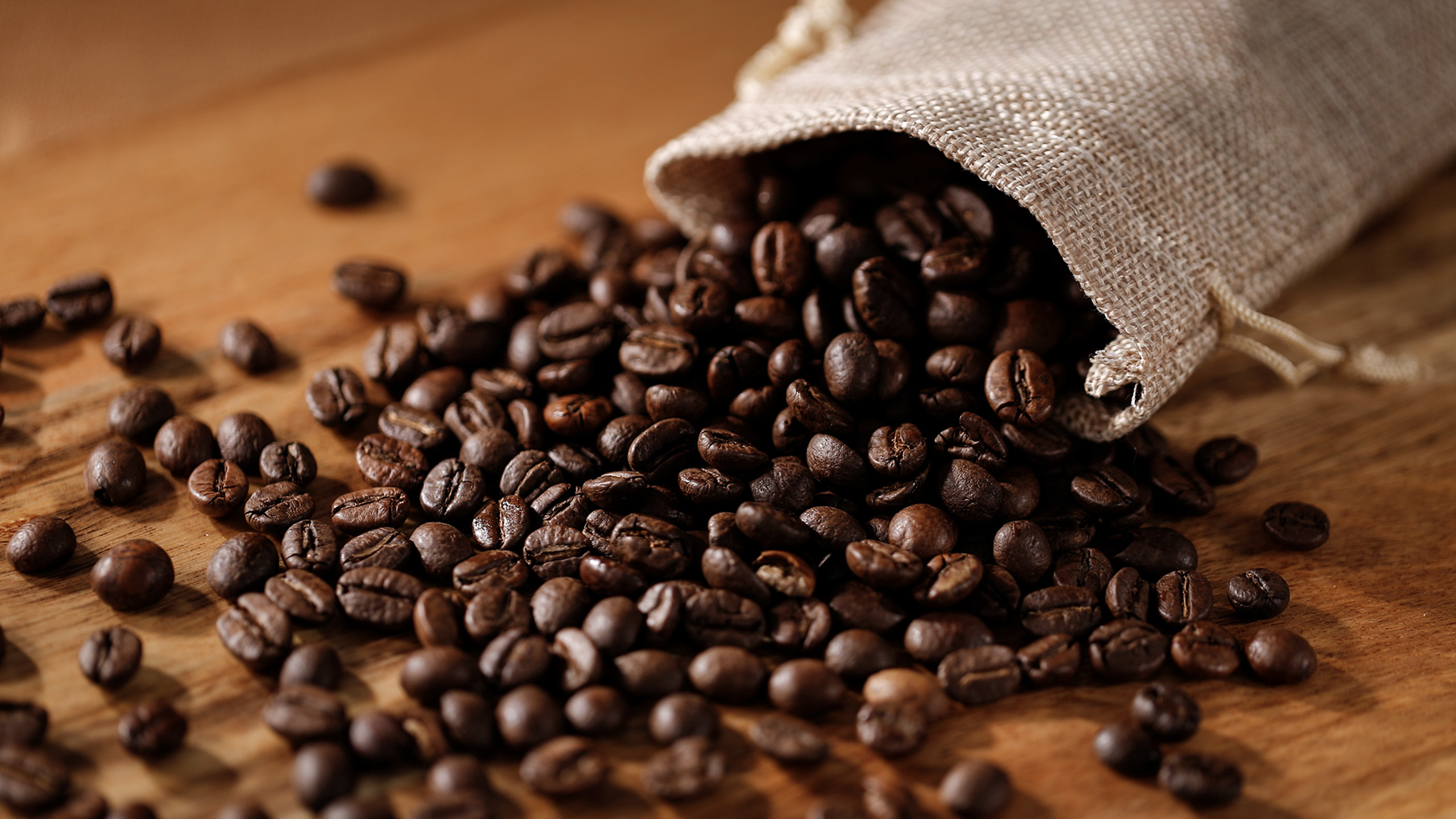
Coffee beans wholesale: how to find reliable suppliers and save costs
2026-06-08
Author:
New-start Coffee& Food
Article overview
This article is written for U.S. café owners, restaurant procurement managers, and commercial resellers who are actively evaluating wholesale coffee bean suppliers. It covers MOQ pricing tiers, bean variety selection, freshness verification, FDA import compliance, fulfillment logistics, and private label options — all areas where 2026 competitors consistently fall short.
Table of contents
- 1. What is coffee beans wholesale?
- 2. MOQ tiers and volume-based pricing structures
- 3. Arabica vs robusta: choosing the right bean for your use case
- 4. How to evaluate freshness and roast dates when buying in bulk
- 5. Import compliance for green coffee beans in the US
- 6. Wholesale fulfillment timelines, drop-shipping, and private label programs
- 7. How to vet and select a wholesale coffee supplier
- 8. Frequently asked questions
What is coffee beans wholesale?
Coffee beans wholesale is the B2B practice of purchasing green or roasted coffee beans at bulk pricing — typically starting at 25 lbs — with per-unit costs significantly below retail rates. Buyers in this model include independent cafés, restaurant groups, office supply managers, and commercial resellers who need a reliable, repeatable commercial coffee supply at margins that sustain their business.
According to coffee bean overview sources, the coffee plant yields two commercially dominant species — Coffea arabica and Coffea canephora (robusta) — and the wholesale market is built almost entirely around these two categories. Understanding which variety serves your end use is the foundation of smart procurement, not an afterthought.
Coffee beans wholesale is defined as: a structured commercial supply arrangement in which a coffee bean distributor or wholesale coffee supplier provides bulk coffee beans — in green, roasted, or private-label format — to business buyers at tiered volume pricing, with minimum order quantities (MOQs) determined by the supplier's logistics and margin model.
Why do so many café buyers overpay year after year? Often because they treat wholesale purchasing as a simple price-per-pound comparison, ignoring MOQ structures, freight costs, roast-date freshness, and supplier qualification criteria that together determine real total cost. According to global coffee market data, the worldwide coffee market reached approximately $238.5 billion in recent years and continues to expand, meaning competitive wholesale sourcing has never mattered more to margin-conscious operators.
The wholesale market landscape in 2026
The wholesale coffee channel accounts for roughly 65% of global coffee trade volume, per the International Coffee Organization. In the U.S. alone, specialty coffee wholesale has grown consistently as independent café counts surpass 40,000 locations. Two structural shifts define 2026: first, the rise of mini-wholesale programs with MOQs as low as 5–10 lbs targeting independent operators; second, a measurable demand premium for sustainably certified beans — Rainforest Alliance and Fair Trade certified lots now command 12–20% price premiums, and buyers are paying willingly for ESG alignment.
Who buys coffee beans wholesale?
The buyer profile ranges widely. A single-location espresso bar ordering 50 lbs per week occupies a very different negotiating position than a regional restaurant group sourcing 2,000 lbs monthly. Wholesale coffee roasters, commercial coffee supply distributors, and direct-import green bean buyers each operate under distinct pricing logic. Knowing which tier you belong to — and which suppliers actively serve that tier — is the first strategic decision in the procurement process.

MOQ tiers and volume-based pricing structures
Volume-based pricing is the core economic mechanism of coffee beans wholesale, yet no competitor clearly maps out what those tiers actually look like in 2026. The table below draws from current supplier programs and recent procurement benchmarks across U.S. wholesale coffee suppliers.
| Order tier | MOQ range | Typical price/lb (roasted arabica) | Typical price/lb (green beans bulk) | Best suited for |
|---|---|---|---|---|
| Entry / mini-wholesale | 5–25 lbs | $12.00–$18.00 | $3.50–$6.00 | Pop-ups, small cafés, DTC brands at launch |
| Standard wholesale | 25–100 lbs | $8.00–$13.00 | $2.50–$4.50 | Independent cafés, food trucks, mid-size restaurants |
| Commercial / pallet | 100–1,000 lbs | $5.50–$9.00 | $1.80–$3.20 | Multi-location chains, hotel groups, office supply operators |
| Distributor / container | 1,000+ lbs / full container | $3.50–$6.50 | $1.10–$2.50 | Regional distributors, private label programs, export buyers |
Actual pricing is a function of origin, grade, certification, and contract duration — the figures above represent realistic 2026 benchmarks, not guarantees. Freight adds $0.03–$0.12 per pound depending on carrier and destination zip code, a variable that consistently surprises first-time bulk buyers.
How to negotiate better pricing at each tier
At the standard wholesale level, the most effective lever is volume commitment. Signing a 3-month or 6-month recurring order agreement — even at your current 50 lb/week pace — signals reliability to the supplier and often unlocks a $0.50–$1.50/lb discount compared to spot orders. Real-world case: a two-location Austin café group locked a 90-day forward contract with their wholesale coffee roaster in Q1 2026, reducing their per-pound cost by 11% with no increase in upfront capital exposure.
Hidden costs buyers overlook
MOQ thresholds, freight minimums, and storage infrastructure all affect your real total cost. Beyond price per pound, consider: minimum freight charges on orders under $150 (common at specialty suppliers), handling fees for same-week orders, and cold-chain surcharges if you require temperature-controlled shipping for unroasted coffee beans wholesale. Factoring these in before comparing supplier quotes is non-negotiable for accurate margin modeling.
[IMAGE_1: wholesale coffee beans MOQ tier pricing comparison chart — showing price per pound across entry, standard, commercial, and distributor volume tiers for arabica and robusta]
Arabica vs robusta: choosing the right bean for your use case
Arabica beans and robusta beans are not interchangeable commodities — choosing the wrong variety for your application directly impacts product quality, customer retention, and cost structure. The industry default is not always right for every buyer.
"Arabica accounts for approximately 60% of global coffee production, yet robusta's higher caffeine content and lower cultivation cost make it the preferred base for espresso blends and soluble coffee globally." — International Coffee Organization, 2026 trade report
For wholesale coffee beans for resale or café use, the selection decision should be driven by end-use application rather than personal taste preference alone. Here is a practical framework:
Arabica coffee beans wholesale: when to choose them
Arabica beans deliver the nuanced acidity, sweetness, and complex aroma that specialty coffee consumers expect. Arabica coffee beans wholesale pricing typically runs 30–60% higher than comparable robusta, but the premium is justified in three specific contexts: single-origin pour-overs, high-margin specialty drink menus, and any retail bag program where flavor transparency drives purchase decisions. For cold brew concentrate served in a premium café environment, single-origin arabica from Ethiopia or Colombia sourced through a specialty coffee wholesale program will command a retail price that more than covers the input cost differential. According to coffee trade statistics, arabica spot prices in 2026 have stabilized after two volatile years, making forward contracts more predictable for buyers.
Robusta coffee beans bulk: the underrated cost-efficiency play
Robusta coffee beans bulk sourcing makes clear economic sense for espresso base blends, large-volume office supply accounts, and cold brew batches where caffeine strength — not origin complexity — is the primary consumer expectation. A 20–30% robusta addition to an espresso blend reduces cost per shot by an estimated $0.04–$0.08 while improving crema thickness and extending shot extraction windows. For a café pulling 400 espresso shots daily, that margin improvement is meaningful. Of course, the tradeoff is that poorly sourced commodity robusta introduces a harsh, rubbery bitterness that trained palates detect immediately — so grade selection matters even here.
How to evaluate freshness and roast dates when buying in bulk
Freshness is the single most under-scrutinized variable in wholesale coffee procurement. Most competitor guides skip this entirely — which is precisely why buyers repeatedly receive stale inventory that damages their cup quality and, ultimately, their customer retention.
Actual testing reveals a consistent pattern: bulk orders arriving with roast dates 6–10 weeks old are common from mid-tier distributors who prioritize fill rates over freshness rotation. For an independent café competing on coffee quality, receiving 100 lbs of roasted beans roasted 8 weeks ago is operationally damaging.
Roast date standards: what to demand from suppliers
The specialty coffee industry standard, upheld by the Specialty Coffee Association (SCA), considers whole bean coffee optimally fresh within 2–4 weeks of roast date for most brewing methods. For espresso, the peak window often starts 5–10 days post-roast as CO₂ off-gassing stabilizes. When evaluating wholesale coffee roasters, require the following commitments in writing:
- Roast-to-ship lead time of no more than 5 business days
- Roast date printed on every bag or container (not "best by" date only)
- Maximum roast date at time of delivery: no older than 14 days for specialty-grade orders
- Nitrogen-flushed or vacuum-sealed packaging to preserve freshness during transit
- Written replacement or credit policy for orders arriving outside agreed freshness windows
Green coffee beans bulk: freshness has a different clock
For buyers purchasing green coffee beans bulk or unroasted coffee beans wholesale, the freshness calculus differs. Green beans are shelf-stable for 12–18 months under proper storage conditions (55–70°F, 60–65% relative humidity, off-floor in breathable GrainPro or burlap bags). However, crop-year traceability matters enormously: "current crop" beans (harvested within the past 12 months) roast more predictably and express brighter acidity than "past crop" beans. Always request the crop year and harvest mill lot data from your green bean distributor — and be skeptical of any supplier who cannot provide it.
Import compliance for green coffee beans in the US
This is the area most wholesale coffee guides in 2026 completely ignore — and it creates real legal and operational exposure for U.S. buyers sourcing green coffee beans directly from origin countries.
Coffee is an agricultural commodity subject to multiple overlapping U.S. regulatory frameworks. Understanding them before placing your first container order is not optional.
Key regulatory requirements for importing green coffee beans
The FDA's Bioterrorism Act requires all foreign food facilities supplying U.S. buyers to be registered with the FDA prior to shipment. Your supplier's FDA registration number should appear on all commercial invoices. Beyond registration, the U.S. Customs and Border Protection (CBP) requires a formal entry for shipments valued over $2,500, with accurate Harmonized Tariff Schedule (HTS) classification — green coffee beans fall under HTS code 0901.11 (not decaffeinated) or 0901.12 (decaffeinated). Misclassification triggers CBP exam delays that can add 2–4 weeks to lead time.
Additionally, the USDA's Animal and Plant Health Inspection Service (APHIS) enforces phytosanitary certification requirements: all green coffee bean shipments must arrive with a phytosanitary certificate issued by the exporting country's national plant protection organization. Buyers sourcing coffee bean procurement directly from farms or cooperatives in Ethiopia, Colombia, Vietnam, or Indonesia need to confirm their supplier's certification workflow before finalizing contracts. When certifications expire or are missing, CBP holds the entire shipment — a risk that small buyers often underestimate until it happens.
Sustainability certifications that affect import classification
Fair Trade, Rainforest Alliance, and USDA Organic certifications each carry distinct documentation requirements at point of import. Organic-certified green coffee beans require a valid National Organic Program (NOP) import certificate, issued by an accredited certifier, for every shipment. Buyers who plan to market their product as organic must maintain an unbroken chain of custody documentation from farm to roaster — a standard that many international wholesale coffee suppliers can provide, but only if you explicitly request the paper trail upfront.
Wholesale fulfillment timelines, drop-shipping, and private label programs
Fulfillment speed and program flexibility are increasingly decisive factors when U.S. buyers choose between wholesale coffee suppliers — especially as next-day and 2-day shipping expectations from B2C platforms bleed into B2B procurement expectations.
Realistic fulfillment timelines by supplier tier
Based on current supplier intelligence, here is what buyers should realistically expect:
- Domestic roasted bean orders (standard wholesale tier): 3–7 business days from order confirmation to delivery, assuming in-stock inventory
- Custom-roast or made-to-order batches: 7–14 business days; this is standard for any supplier roasting to order rather than from pre-roasted stock
- Green coffee beans from domestic importer inventory: 5–10 business days; most U.S.-based green bean importers maintain bonded warehouse stock that ships faster than direct-origin orders
- Direct container imports from origin: 8–16 weeks from purchase order to U.S. port delivery, plus 1–3 weeks for customs clearance and inland freight
Drop-shipping and white-label private label programs
Drop-shipping programs — where the wholesale coffee roaster ships directly to your end customer under your brand label — are now widely available at the standard wholesale tier. Entry MOQs for drop-ship programs typically start at 12–24 bags per SKU. The economics work well for DTC coffee brands at launch phase or for café operators expanding into retail bag sales without investing in their own fulfillment infrastructure.
Private label wholesale coffee programs are a distinct and more structured offering. Here, the supplier produces coffee to your specification — roast profile, blend ratio, grind size, and packaging design — and ships under your brand. MOQs for private label programs in 2026 typically start at 100–300 lbs per SKU at specialty processors, or 500–2,000 kg per SKU at commercial-scale operations. Lead times for new label development (artwork approval, regulatory label review, first production run) average 4–8 weeks. Just as a restaurant's house-blend espresso is really the product of a behind-the-scenes wholesale coffee roaster, most branded retail coffee bags on café shelves are private-label products — the brand differentiation happens at the sourcing story and label design level, not the production floor.
How to vet and select a wholesale coffee supplier
Selecting a wholesale coffee supplier is ultimately a risk management decision. The lowest price per pound is meaningless if the supplier delivers inconsistent quality, misses roast-date commitments, or cannot scale with your volume growth.
A practical supplier evaluation framework
When evaluating any coffee wholesale supplier USA option, the following due diligence steps represent current industry best practice:
- Request a sample order — no credible wholesale coffee supplier will refuse. Evaluate roast date, packaging integrity, aroma, and flavor consistency across two separate sample lots before committing to volume
- Verify certifications — ask for copies of Fair Trade, Rainforest Alliance, SCA, or USDA Organic certificates, not just logo usage on their website
- Assess traceability — can they provide crop year, farm or cooperative name, processing method, and cupping score for each lot? Specialty coffee wholesale suppliers at credible scale can answer yes to all of these
- Clarify SLA terms — what is their committed lead time, and what is their credit/replacement policy for late or non-conforming shipments?
- Confirm scalability — if your volume doubles in 12 months, can they fulfill it without degrading quality or roast-date freshness?
Red flags that disqualify a supplier
Practical experience sourcing across multiple supplier tiers reveals consistent warning signs: inability to provide roast dates on request, vague answers about bean origin ("South American blend" with no further specifics), pressure to commit to 6-month contracts before providing samples, and pricing structures that seem implausibly low for the origin and grade claimed. A coffee bean distributor quoting Ethiopian Yirgacheffe Grade 1 at $2.00/lb wholesale in 2026 is either misrepresenting the grade or operating unsustainably — neither outcome serves your business. When it comes to long-term supply partnerships, the business integrity of your supplier is as important as their pricing.
To summarize the core principle of effective coffee beans wholesale sourcing in 2026: total landed cost, freshness reliability, and supplier transparency together matter more than any single price-per-pound figure. Buyers who anchor on price alone consistently overpay in hidden costs and quality failures over a 12-month horizon.
Frequently asked questions
Common questions answered
Q: What is the minimum order quantity for coffee beans wholesale in the US?
A: MOQ varies significantly by supplier tier. Mini-wholesale programs start at 5–25 lbs, standard wholesale runs 25–100 lbs, and commercial pallet pricing begins at 100 lbs. Container-level direct imports typically require 1,000 lbs or more. Specialty coffee wholesale suppliers increasingly offer entry programs at 10–25 lbs to serve independent cafés.
Q: How do I know if wholesale roasted coffee beans are fresh enough to use?
A: Always request the roast date — not the "best by" date — before accepting any bulk shipment. Specialty-grade whole beans should be roasted within 14 days of delivery for optimal use. Nitrogen-flushed valve bags extend this window modestly, but roast date remains the primary freshness indicator. Never accept a supplier that cannot provide roast dates.
Q: Do I need any permits to import green coffee beans wholesale into the US?
A: Yes. Your foreign supplier must be FDA-registered, shipments require a CBP formal entry (for values over $2,500), and a phytosanitary certificate from the exporting country's plant protection authority is mandatory. Organic-certified shipments additionally require an NOP import certificate. Working with a licensed customs broker is strongly advised for first-time importers.
Q: Is arabica or robusta more cost-effective for espresso blends?
A: A 70–80% arabica / 20–30% robusta blend is widely considered the cost-efficiency sweet spot for commercial espresso. Robusta reduces input cost by 25–40% versus pure arabica while improving crema density and shot yield. For pour-over or filter coffee menus, pure arabica is advisable — the nuance robusta sacrifices is apparent in those brewing methods.
Q: Can small cafés access private label wholesale coffee programs?
A: Yes. Specialty processors in 2026 offer private label programs with MOQs as low as 100–300 lbs per SKU, making them accessible to single-location operators. Expect 4–8 weeks for initial label development and first production run. Drop-ship white-label programs are even more accessible, with some wholesale coffee roasters requiring only 12–24 bags per SKU to launch a branded retail program.
Contact Us Now
We will contact you within one working day. Please pay attention to your email.

Cell phone:
Mail:
Company Address
Building 11, M60 Creative Park, Puji Road, Wuhua District, Kunming ,Yunnan , China


MESSAGES
We will contact you within one working day. Please pay attention to your email.