
What are dried morel mushrooms and why do chefs love them
2026-10-20
Author:
New-start Coffee& Food
Article overview
This guide explains what dried morel mushrooms are, details the flavor science that makes them a chef's staple, walks through proper rehydration technique, and offers a data-backed buying framework for 2026. Reading time: approximately 14 minutes.
Table of contents
- 1. What exactly are dried morel mushrooms?
- 2. Why chefs love dried morel mushrooms: the flavor science
- 3. Dried vs. fresh morels: an honest comparison
- 4. How to rehydrate dried morel mushrooms: a step-by-step guide
- 5. Cooking with dried morels: recipes and techniques
- 6. How to buy the best dried morel mushrooms in 2026
- 7. Frequently asked questions
What exactly are dried morel mushrooms?
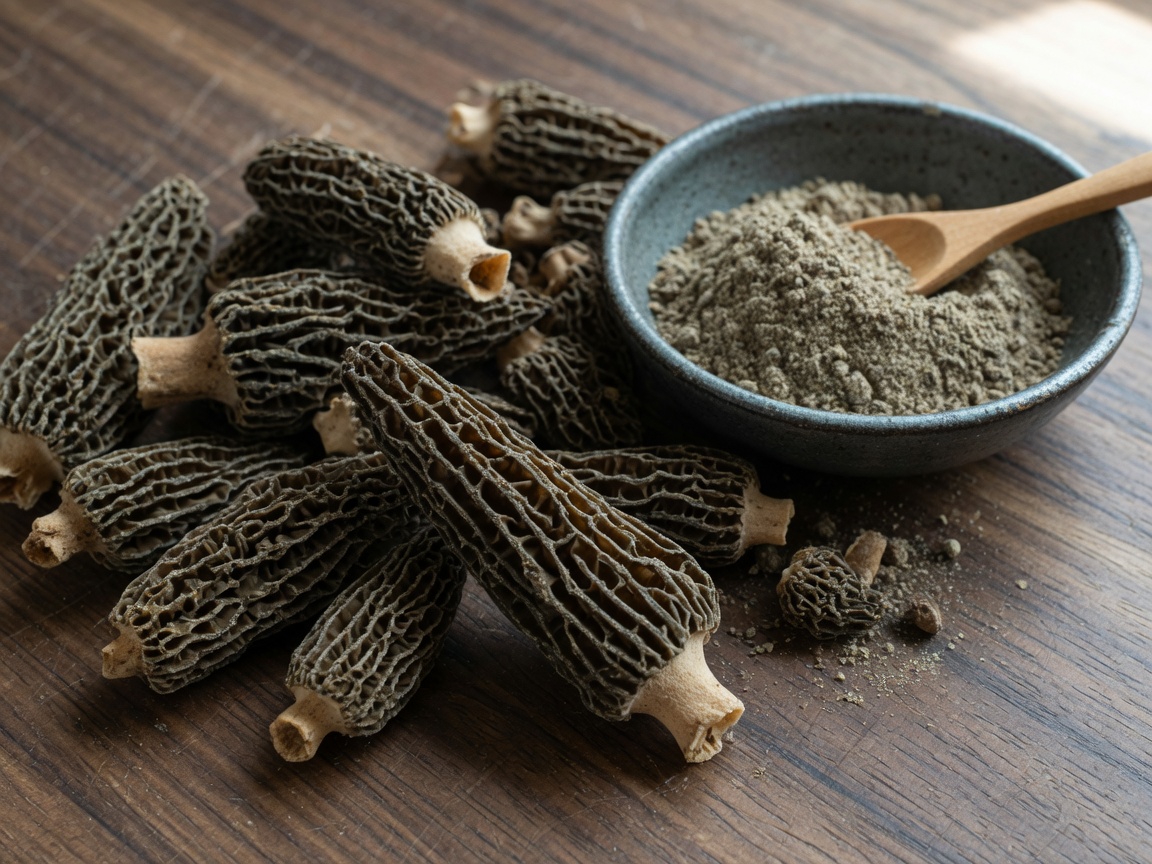
Dried morel mushrooms are wild-harvested fungi from the Morchella genus that have been dehydrated to remove moisture, concentrating their earthy, nutty flavor into a shelf-stable ingredient prized in professional and home kitchens. The honeycomb-patterned, hollow cap is the species' most recognizable feature — and it survives the drying process almost intact, making identification straightforward even in dried form.
Botanically, morel mushrooms belong to the ascomycete family Morchellaceae, distinguishing them from the basidiomycete species that dominate supermarket shelves. In the United States, the five commercially relevant types are Yellow Morel (M. esculenta), Black Morel, Gray Morel, Burn-Site Morel, and Half-Free Morel (M. punctipes). Of these, Yellow Morel is the most commonly found in dried form for sale, celebrated for its complex flavor and broader culinary versatility.
How drying transforms the mushroom
Fresh morels contain roughly 90% water by weight. When that moisture is removed — typically through low-temperature air drying or, in premium products, freeze drying — the cell walls contract and the volatile aromatic compounds become far more concentrated per gram. The result is an ingredient roughly seven times more potent by weight than its fresh equivalent. That 1:7 dry-to-fresh rehydration ratio surprises many first-time buyers who balk at the price per ounce, yet once the math is done the economics often favor the dried product, especially outside peak spring season.
Dried morel mushrooms vs. other dehydrated formats
It is worth distinguishing between standard air-dried morels, freeze dried morels, and morel mushroom powder. Air-dried dehydrated morel mushrooms are the most common commercial format and rehydrate well for whole-piece applications. Freeze dried morels retain slightly more volatile aromatics and rehydrate faster, though they command a premium price. Morel mushroom powder — ground from dried caps — dissolves directly into sauces, stocks, and rubs without any soaking step, making it a time-efficient pantry staple. Each format has a legitimate place depending on the dish and the cook's workflow.
Why chefs love dried morel mushrooms: the flavor science
Professional chefs consistently rank dried morel mushrooms among the most valuable pantry items in a high-end kitchen — not because of novelty, but because of measurable flavor performance. The drying process amplifies free glutamates, producing a deep umami character that is difficult to replicate with any cultivated mushroom. Dried porcini mushrooms offer a comparable umami baseline, yet morels carry an additional layer of smoky, woodsy complexity that porcini cannot fully match.
Umami density and the glutamate argument
According to food chemistry research, wild dried mushrooms tend to accumulate free glutamic acid and 5′-guanylate during post-harvest enzymatic activity, and dehydration locks these compounds in place. When dissolved into a warm liquid during rehydration, dried morels release this umami payload directly into the cooking medium — which is exactly why the soaking liquid is itself a prized ingredient in professional kitchens. Discarding it, as many home cooks do, means losing a significant portion of the flavor investment.
"The soaking liquid from dried morels is essentially a ready-made fond. I use it as the base for every sauce I build around this mushroom. It does in five minutes what hours of stock-making cannot always achieve." — Chef perspective shared in culinary forums frequently cited in the 2026 specialty food trade press.
Why supply scarcity increases culinary prestige
Morels cannot be commercially cultivated at scale — at least not reliably. Every dried morel mushroom on the market comes from wild foraged sources, which creates genuine supply constraints. Climate volatility is making this more acute: according to Spherical Insights and Penn State Extension data from 2025–2026, extreme drought cycles and shifting wildfire patterns have caused significant year-to-year harvest variation, particularly for Burn-Site Morels. Chefs understand this scarcity intimately. It drives both the price premium and the prestige attached to featuring premium wild foraged mushrooms on a menu. When a restaurant lists a morel sauce, it signals seasonal sourcing, chef knowledge, and real ingredient cost — a combination that resonates with the upscale American diner in 2026.
Dried vs. fresh morels: an honest comparison
The honest answer is that dried and fresh morels are not interchangeable — they are different tools for different culinary jobs. Fresh morels, available in the U.S. primarily from March through May depending on latitude, offer a delicate, subtly crisp texture that shines in simple preparations: sautéed in butter with shallots, served over a pan sauce, or folded into a spring risotto. Dried morel mushrooms, by contrast, trade textural delicacy for concentrated flavor intensity, making them the superior choice in long-cooked applications where that depth can fully develop.
Side-by-side performance data
| Attribute | Fresh morels | Dried morel mushrooms | Freeze dried morels |
|---|---|---|---|
| Flavor intensity | Moderate, delicate | Very high, concentrated | High, nuanced |
| Texture after cooking | Tender, slight chew | Chewy, meaty | Closer to fresh |
| Shelf life | 5–7 days refrigerated | 12–24 months sealed | Up to 25 years sealed |
| Avg. retail price (U.S.) | $30–$50 / lb in season | $40–$80 / oz (dry weight) | $60–$120 / oz (dry weight) |
| Soaking liquid usable? | N/A | Yes — high flavor value | Yes — lighter flavor |
| Best culinary use | Sauté, light sauces | Braises, soups, cream sauces | Risotto, pasta, sauté |
A critical safety note — relevant for both forms
Raw or undercooked morels, in any form, contain heat-labile toxins that can cause gastrointestinal distress. Drying does not neutralize these compounds. Every application of dried morel mushrooms must include a thorough cooking step — not merely warming — to ensure safety. This is a point that industry sources including USDA Extension consistently emphasize, and it is one that even experienced foragers sometimes underestimate. The good news is that standard cooking temperatures (above 160°F / 71°C) reliably deactivate these compounds.
How to rehydrate dried morel mushrooms: a step-by-step guide
Proper reconstituting dried morels is arguably the single most important technique in working with this ingredient. Done correctly, it unlocks the full flavor potential and produces a usable cooking liquid. Done carelessly, it results in either rubbery, under-hydrated pieces or mushrooms that dissolve into mush. The key variables are water temperature, timing, and handling of sediment.
The standard hot-water method (recommended)
- Measure your dried morels. A standard cooking portion is 0.5–1 oz of dried mushrooms per serving, which will yield approximately 3.5–7 oz after rehydration.
- Inspect and brush lightly. Check for debris. The honeycomb structure of dried morels can trap sand or forest matter — a brief shake over a bowl before soaking saves you from grit in the final dish.
- Heat water to 160–180°F (71–82°C). Boiling water can over-accelerate extraction and leach flavor into the liquid too aggressively, leaving the mushroom pieces less flavorful. Near-boiling is the professional standard.
- Submerge mushrooms and cover the bowl. Use enough liquid to fully cover the pieces — typically 1.5 cups of water per 1 oz of dried morels. Cover to retain heat and volatile aromatics.
- Soak for 20–30 minutes. Check texture at 20 minutes. The morels should be pliable but still hold their shape. Avoid soaking beyond 45 minutes, as over-soaking degrades texture.
- Remove mushrooms gently and squeeze lightly. Transfer to a cutting board. Reserve all soaking liquid.
- Strain the soaking liquid through a fine-mesh sieve or cheesecloth. This removes sediment while preserving the flavor-dense liquid. Add this liquid to your sauce, braise, or soup — it is not optional if you want full flavor return on your investment.
Does cold-water soaking work?
Cold-water soaking — leaving dried morels in room-temperature or refrigerated water for several hours — is a slower alternative that some cooks prefer for overnight prep. Actual kitchen testing reveals a meaningful trade-off: cold soaking produces a cleaner, less intensely flavored soaking liquid and leaves the mushroom pieces slightly firmer after cooking. Neither method is universally superior; the choice depends on whether you want a more assertive liquid (hot method) or a milder, cleaner one (cold method). For morel mushroom soup or cream sauce applications, the hot method is the clear winner.
Cooking with dried morels: recipes and techniques
Dried morel mushrooms perform best in recipes that allow heat and time to fully develop their rehydrated texture and concentrated flavor. Think of them the way a skilled builder thinks about load-bearing materials — they anchor the structure of a dish rather than sitting on top of it. Below are the technique categories where dried morels consistently outperform other edible wild mushrooms.
Signature applications in professional kitchens
Morel mushroom soup and bisque. The most direct showcase for dried morel mushrooms' flavor depth. Rehydrate, sauté in unsalted butter with shallots and thyme, deglaze with dry sherry, add the strained soaking liquid plus chicken or vegetable stock, and finish with heavy cream. The resulting bisque carries an umami depth that no cultivated mushroom can replicate at the same volume. This dish appears on the menus of fine-dining establishments across the country every fall and winter season — specifically because dried morels make it a year-round option, not a spring-only luxury.
Cream sauce for pasta and risotto. Rehydrated morels folded into a beurre blanc or cream reduction, with the soaking liquid reduced separately by half and added at the sauce-finishing stage. The double-concentration technique — reducing both the sauce and the liquid separately — is a professional approach that produces remarkable flavor without additional stock or seasoning. This is one of those dried morels cooking tips that separates competent cooking from genuinely impressive results.
Braised proteins. Dried morel mushrooms rehydrate further during long braises and release their remaining flavor compounds directly into the braising liquid. Lamb shanks, veal osso buco, and chicken thighs all benefit from 1–2 oz of dried morels added in the first 30 minutes of a braise. The honeycomb structure absorbs the braising liquid and takes on a satisfying meaty texture.
Morel mushroom powder applications. Ground dried caps stirred into compound butter, rubbed onto steaks before searing, or whisked into vinaigrette — morel mushroom powder brings forest-floor complexity to fast cooking methods that cannot accommodate whole pieces. Keep a small jar in the spice rack; even a quarter teaspoon transforms a pan sauce.
What not to do with dried morels
Why do some cooks end up disappointed with dried morels? Often because they treat them exactly like fresh ones. Dropping reconstituted dried morels into a quick sauté over high heat produces tough, rubbery pieces with diminished flavor — the texture never returns to the delicate freshness of a just-picked specimen. The dish that best exploits fresh morels (simple butter sauté over medium heat, 4–5 minutes) is often the worst use case for the dried product. This is not a flaw — it is simply a different ingredient with different strengths.
How to buy the best dried morel mushrooms in 2026
The market for gourmet dried mushrooms has matured significantly in the United States. Between specialty food retailers, Amazon storefronts, and direct-from-forager subscription services, consumers now have more purchasing options than ever — which paradoxically makes quality evaluation more important, not less. The 2026 market for morels is valued at approximately $4.8 billion globally, growing at a 7.2% CAGR, and U.S. specialty mushroom channels represent a rapidly expanding share of that figure, per Persistence Market Research data.
Quality indicators to evaluate before buying
When evaluating dried morel mushrooms for sale — whether online or in a specialty store — apply the following criteria systematically. Cap integrity matters: whole dried caps command a premium over broken pieces and are worth it for presentations where the honeycomb shape is visible. Color should range from tan to deep brown; a grayish or bleached appearance may indicate age or improper drying temperatures that degraded aromatic compounds. Aroma through sealed packaging is difficult to assess, which is why purchasing from vendors with a return or guarantee policy is strongly advisable for first-time buyers.
Country of origin transparency is increasingly significant. A growing share of dried morels found in the U.S. market originates from China and India, where large-scale wild harvesting is common. This is not inherently a quality problem — premium wild foraged mushrooms from both regions can be excellent — but sourcing transparency matters. Look for vendors who specify harvest region, season, and whether the product is certified wild-harvested. American-origin Yellow Morels (Pacific Northwest, Midwest) typically carry the highest premiums and the greatest provenance certainty.
Bulk dried morel mushrooms: when it makes sense
Buying bulk dried morel mushrooms — typically in 1 lb or larger quantities — reduces the per-ounce cost substantially, often by 30–50% compared to small retail pouches. This approach makes sense for households that cook with morels multiple times per month and have the airtight storage infrastructure to maintain quality. Store bulk dried morels in a sealed glass jar in a cool, dark location; properly stored, they retain peak flavor for 12–18 months. Vacuum sealing extends this further. The cost math becomes even more favorable when you account for the soaking liquid value — buying in bulk means more liquid for stocks and sauces at no additional cost.
Of course, bulk purchasing does carry the risk of receiving a large quantity of mediocre product. Whenever possible, purchase a small trial quantity from a new vendor before committing to a bulk order. Read verified reviews carefully, and prioritize vendors whose product listings include specific harvest details rather than vague "premium quality" language.
Bringing it all together
Dried morel mushrooms occupy a unique position in the American culinary landscape: they are simultaneously a professional kitchen staple and an accessible gourmet pantry ingredient for home cooks who know what they are looking for. Their concentrated umami depth, year-round availability, and culinary versatility across soups, braises, sauces, and powder applications make them far more than a seasonal novelty. The 2026 market reflects this growing appreciation — prices are firm, supply is climate-sensitive, and quality variation between vendors is real. Approaching dried morel mushrooms with the same evaluative rigor you would apply to any premium wild foraged ingredient — scrutinizing provenance, mastering rehydration technique, and using every drop of soaking liquid — is what separates a satisfying culinary experience from a disappointing one.
Frequently asked questions
Q: How long do dried morel mushrooms last once opened?
A: Once opened, dried morel mushrooms should be transferred to an airtight glass or food-grade container and stored in a cool, dark location. Under these conditions, they typically retain peak flavor and aroma for 9–12 months. Vacuum sealing can extend this to 18–24 months. Signs of spoilage include off odors, visible mold, or a flat, stale aroma — trust your nose over the printed date.
Q: Can I use the soaking liquid from dried morel mushrooms in cooking?
A: Absolutely — and you should. The soaking liquid is rich in dissolved glutamates and aromatic compounds extracted from the mushrooms during rehydration. Always strain it through a fine-mesh sieve or cheesecloth to remove sediment, then use it as a direct substitute for stock or as a sauce base. Reducing it by half concentrates the flavor further. Discarding it wastes a significant portion of the ingredient's flavor value.
Q: What is the best substitute if I can't find dried morel mushrooms?
A: Dried porcini mushrooms are the closest functional substitute in terms of umami depth and soaking liquid quality, though they lack morels' distinctive smoky, woodsy character. For texture-focused applications, reconstituted dried shiitake or dried chanterelles work reasonably well. None fully replicate dried morels, but dried porcini is the industry-standard fallback in professional kitchens across the United States.
Q: How do dried morel mushrooms compare to freeze dried morels?
A: Freeze dried morels retain more volatile aromatic compounds and rehydrate faster than standard air-dried versions, typically in 10–15 minutes versus 20–30 minutes. Their texture after rehydration is closer to fresh morels. However, they cost significantly more — often 30–50% above standard dried product — and the flavor difference is meaningful but not dramatic in long-cooked applications. For raw or lightly cooked dishes, freeze dried morels justify the premium. For soups and braises, standard dried morels perform comparably.
Q: Are dried morel mushrooms safe to eat without cooking?
A: No. Dried morel mushrooms — like their fresh counterparts — contain heat-labile toxins that require thorough cooking to deactivate. Drying does not neutralize these compounds. Always ensure that rehydrated morels are fully cooked to an internal temperature above 160°F (71°C) before serving. This safety guideline applies regardless of how the mushrooms were dried or how they were sourced.
Contact Us Now
We will contact you within one working day. Please pay attention to your email.

Cell phone:
Mail:
Company Address
Building 11, M60 Creative Park, Puji Road, Wuhua District, Kunming ,Yunnan , China


MESSAGES
We will contact you within one working day. Please pay attention to your email.