
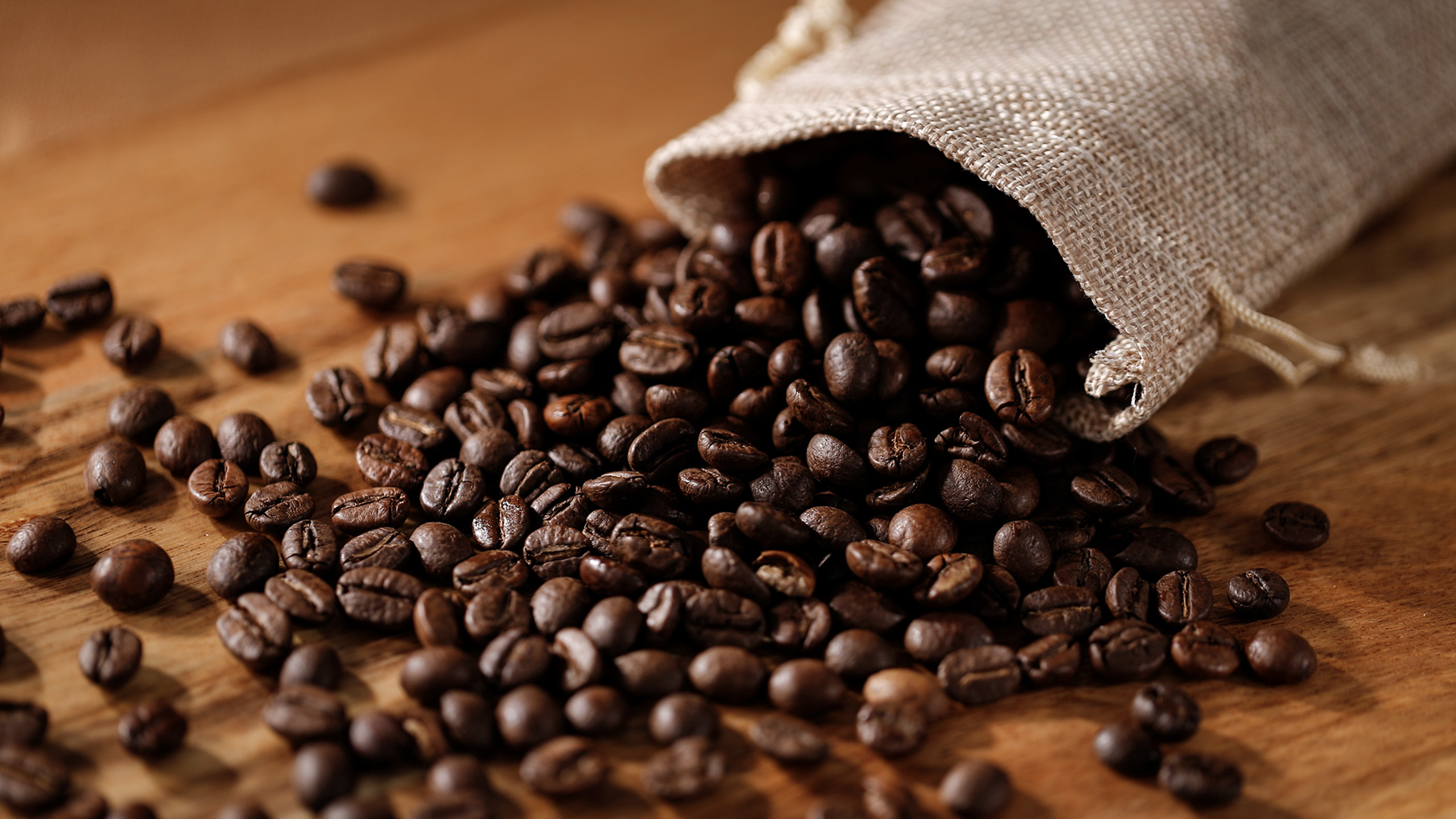
What is speciality coffee? A beginner's guide to quality beans and brewing
2026-10-17
Author:
New-start Coffee& Food
Article overview
This beginner's guide covers the SCA definition of speciality coffee, grading and scoring, single origin sourcing, roasting profiles, home brewing methods, and how to shop for quality beans in the UK. Estimated reading time: 14 minutes.
Table of contents
- 1. What is speciality coffee? The SCA definition explained
- 2. How speciality coffee is graded and scored
- 3. Single origin vs. blends: what really matters
- 4. Coffee roasting and how it shapes flavour
- 5. Brewing methods for speciality coffee at home
- 6. How to buy speciality coffee in the UK
- 7. Common myths about speciality coffee debunked
- 8. FAQ
What is speciality coffee? The SCA definition explained
Speciality coffee is defined as coffee that scores 80 points or above on the Specialty Coffee Association (SCA) 100-point grading scale, evaluated by a certified Q-grader across criteria including aroma, flavour, aftertaste, acidity, body, balance, and uniformity. It represents the top tier of the global coffee supply chain, characterised by traceable single-farm sourcing, transparent processing, and careful handling at every stage from crop to cup.
The term entered mainstream British culture during the early 2010s alongside the growth of third wave coffee — a movement that repositioned coffee not as a commodity but as an artisanal product worthy of the same scrutiny we apply to fine wine or craft beer. Independent coffee shops across London, Manchester, Bristol, and Edinburgh helped accelerate this shift, introducing consumers to pour over brewing, tasting notes, and direct trade relationships with farming communities.
What distinguishes speciality coffee from commercial-grade beans is not simply price, though quality does carry a premium. It is the rigour of selection. At every point in the supply chain — harvest, processing, green bean export, roasting — defects are monitored and minimised. A lot of green coffee cannot be called speciality if it contains more than five full defects per 350g sample. That standard eliminates the vast majority of commercially traded coffee globally.
According to 2026 data from Grand View Research, the UK speciality coffee market generated approximately $5.5 billion in revenue in 2025 and is projected to reach $12.8 billion by 2033 — a compound annual growth rate of around 10.7%. For context, the UK coffee shop sector as a whole reached £6.1 billion in turnover in 2024/25, with premium and artisan coffee driving the most significant share of growth. This is not a niche trend. It is a structural shift in how British consumers relate to their daily cup.
Why the term "speciality" is spelled differently in the UK
British English favours "speciality" while American English — and the SCA's official documentation — uses "specialty". Both terms refer to identical standards and the same grading framework. In UK searches and on packaging from British roasters, you will encounter both spellings interchangeably. The underlying meaning is the same: coffee of exceptional quality with a verifiable provenance. For a broader specialty coffee overview, the Wikipedia entry covers the movement's global history in useful detail.
How speciality coffee differs from commodity coffee
Commodity coffee — the kind found in most supermarket tins and high-street chain espresso — is traded on the New York "C" price market, where individual origins are blended to maintain consistency and reduce cost. Flavour is secondary to volume and shelf stability. Speciality coffee inverts these priorities entirely. The focus is on flavour complexity, seasonal variation, and storytelling rooted in a specific farm, region, or processing method. Where commercial roasters might hold beans for 12 to 18 months post-harvest, craft coffee roasters typically work with freshly roasted coffee that reaches the consumer within weeks of leaving the roaster.
How speciality coffee is graded and scored
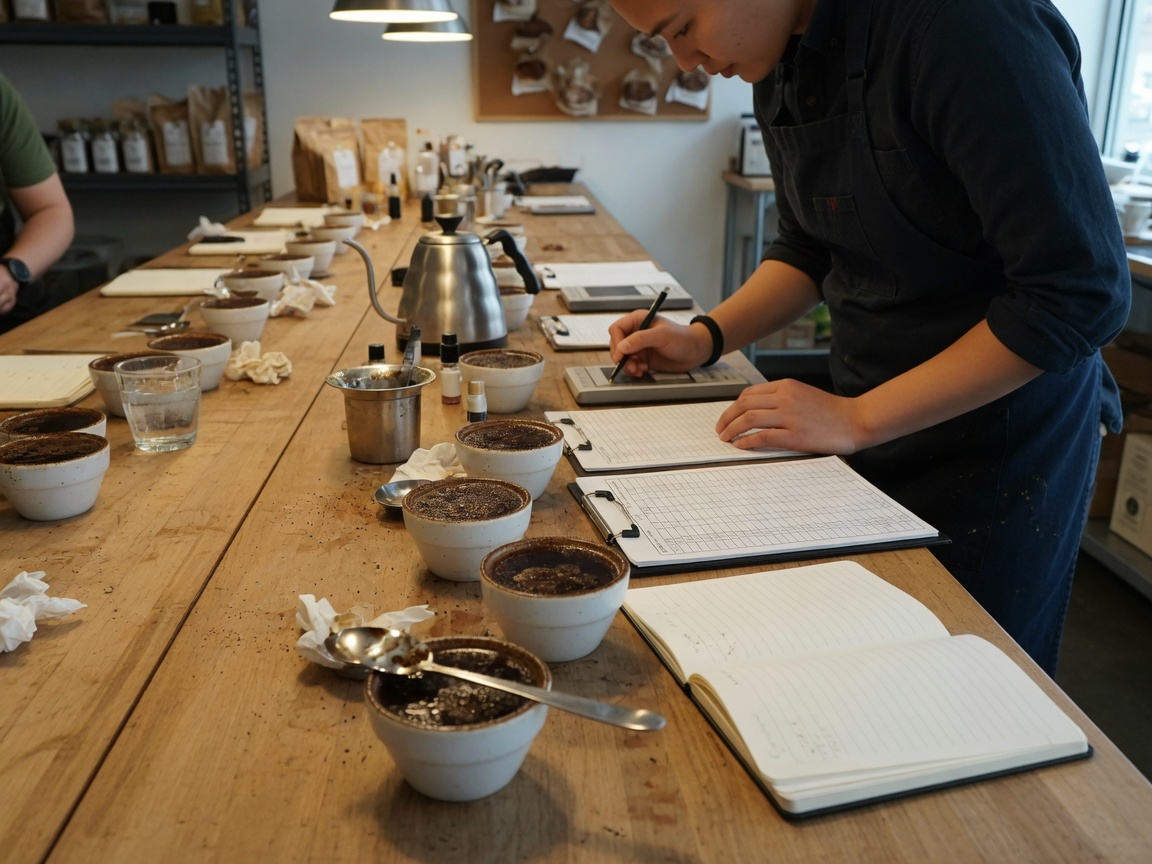
The SCA cupping protocol is the industry standard for evaluating coffee quality. A trained Q-grader assesses a brewed sample across ten attributes, each scored on a scale that contributes to a final total out of 100. Coffees scoring 80–84.99 are classified as "Very Good", 85–89.99 as "Excellent", and 90 and above as "Outstanding" — a threshold very few lots ever reach.
The ten SCA cupping criteria
Understanding what Q-graders actually assess helps demystify the scoring process. Real-world cupping sessions, as observed at UK roasteries including Hasbean and Square Mile, follow a structured protocol where each attribute is scored independently before arriving at a total.
- Fragrance/Aroma — The smell of ground coffee (fragrance) and the brewed liquid (aroma), evaluated before and after hot water is added.
- Flavour — The combined impression of all tastes and aromas experienced during tasting.
- Aftertaste — The quality and duration of positive flavour that lingers after swallowing.
- Acidity — Brightness and vibrancy; a positive quality in speciality coffee, not to be confused with sourness from poor extraction.
- Body — The tactile weight and texture of the liquid on the palate.
- Balance — How well all attributes complement rather than overpower one another.
- Uniformity — Consistency across the five cups prepared from the same lot.
- Clean cup — Absence of negative off-flavours or defects in the cup.
- Sweetness — Natural sweetness present in a well-processed, ripe coffee.
- Overall — The grader's holistic assessment, reflecting qualities not captured by individual scores.
According to leading specialty coffee research, arabica coffee varieties consistently outperform robusta in cupping scores, primarily due to their lower caffeine content, higher sugar concentration, and broader aromatic complexity. Most certified speciality lots are 100% arabica, though some natural-processed robusta from select Vietnamese and Indian farms has begun approaching the 80-point threshold in recent years.
What do coffee tasting notes actually mean?
One of the most common frustrations among UK buyers — flagged repeatedly in communities like Reddit's r/specialtycoffeeuk — is the gap between tasting notes on packaging and what actually lands in the cup. "Blueberry, jasmine, brown sugar" sounds extraordinary. The reality can feel flat if the brewing variables are wrong. Tasting notes are not flavour additives; they are the grader's vocabulary for describing compounds that occur naturally in the bean. Achieve the correct water temperature, grind size, and ratio, and those descriptors become genuinely perceptible. Miss those parameters, and even a 90-point lot can taste unremarkable. This is why brewing skill matters as much as bean quality.
| Score range | Classification | Typical UK retail price (250g) | Common origins |
|---|---|---|---|
| 90–100 | Outstanding | £22–£40+ | Ethiopia Yirgacheffe, Panama Geisha |
| 85–89.99 | Excellent | £15–£22 | Kenya AA, Colombia Huila |
| 80–84.99 | Very Good (entry-level speciality) | £10–£15 | Brazil Cerrado, Guatemala Antigua |
| Below 80 | Commercial / commodity grade | £4–£9 | Undisclosed blends |
Single origin vs. blends: what really matters
Single origin coffee — traceable to a specific farm, cooperative, or defined region — is the backbone of the speciality coffee world. It allows roasters and consumers alike to explore how geography, altitude, soil composition, and processing methods express themselves in the cup. A washed Ethiopian Yirgacheffe and a natural-processed Honduran from the same harvest year can taste as different as a Chablis and a Barolo. That is the point.
When blends make sense
Blends are not inherently inferior. In an espresso context — where the pressure of extraction amplifies acidity and can make delicate single origins taste sharp or unbalanced — a well-designed blend of two or three complementary single origins can produce a more harmonious, consistent result. Many of the UK's most respected artisan coffee roasters, including Workshop Coffee and Monmouth, maintain signature espresso blends precisely for this reason. The craft lies in combining beans whose flavour profiles support rather than clash with each other. For filter and pour over brewing, however, single origin coffees consistently offer a more expressive and educational experience.
Understanding processing methods and why they matter
The processing method — how the coffee cherry is handled after harvest — dramatically influences the final flavour. Washed (wet) processing removes the fruit before drying, producing clean, bright, terroir-forward cups. Natural (dry) processing dries the whole cherry intact, imparting fruity, wine-like complexity. Honey processing is a middle ground, retaining partial mucilage and creating sweetness and body. When shopping for speciality beans in the UK, look for roasters who specify the processing method alongside the origin — this is a reliable indicator of transparency and quality sourcing.
Coffee roasting and how it shapes flavour
Coffee roasting is the critical transformation that converts green, grassy-tasting raw beans into the aromatic, flavour-rich product we recognise. For speciality coffee, roasting philosophy is fundamentally different from commercial practice — the goal is to reveal the bean's inherent character, not to impose a standardised flavour profile.
"The roaster's job is to get out of the way of the bean. Our role is to amplify what the farmer has already achieved, not to overwrite it with carbon."
— James Hoffmann, World Barista Champion and co-founder of Square Mile Coffee Roasters, London
Light, medium, and dark roasts in speciality coffee
Speciality coffee roasters predominantly use light to medium roast profiles. Why? Because high-temperature, extended roasting — the kind that produces dark, oily beans — destroys the volatile aromatic compounds responsible for nuanced flavour. Lighter roasts preserve the origin characteristics: the floral notes of an Ethiopian arabica, the stone-fruit brightness of a Kenyan peaberry, the chocolate-and-walnut depth of a Colombian washed lot. Darker roasts shift the flavour profile toward generic bitterness, roast character, and reduced sweetness — qualities that belong to the bean's transformation, not its origin. This contradicts one of the most persistent myths in British coffee culture, which we address directly later in this guide.
Freshly roasted coffee: why the date on the bag matters
Freshly roasted coffee is not simply a marketing phrase — it reflects measurable chemistry. Immediately after roasting, beans off-gas CO₂ through a process called degassing. Brewing too early (within 48 hours of roasting) can produce uneven extraction. But leaving beans beyond three to four weeks post-roast leads to oxidation and staling. Most UK speciality roasters print a roast date rather than a best-before date; ideally, you want to brew filter coffee between five and twenty-one days post-roast, and espresso between seven and twenty-eight days. If a bag carries only a "best before" date several months away with no roast date, treat that as a warning sign.
Brewing methods for speciality coffee at home
The brewing method you choose shapes how the coffee's qualities are expressed. No single method is superior — each suits different bean profiles, taste preferences, and occasions. That said, certain methods are better suited to showcasing the complexity that makes speciality coffee worth the investment.
Pour over: the method most loved by enthusiasts
Pour over coffee — using devices such as the Hario V60, Chemex, or Origami — produces a clean, transparent cup that allows every nuance of the bean to come through with minimal interference. It is the method most commonly used at UK independent coffee shops for showcasing single origin lots. Think of it like listening to an acoustic recording rather than a heavily produced studio track: every detail is exposed.
A standard pour over recipe as a starting point:
- Grind 15g of freshly roasted coffee to a medium-fine consistency (roughly sea salt texture).
- Heat water to 93–96°C — a gooseneck kettle gives you the control needed.
- Pre-wet (bloom) the grounds with 30–40ml of water for 30–45 seconds to allow degassing.
- Pour the remaining water in slow, circular pulses to a total of 250ml over approximately 2.5–3 minutes.
- Total brew time should fall between 3 and 3.5 minutes. Adjust grind coarser if over-extracting (bitter), finer if under-extracting (sour).
Espresso, cold brew, and other approaches
Espresso concentrates flavour through pressure extraction, making it unforgiving of poor beans but spectacular with quality ones. A flat white or cortado in a well-run British independent coffee shop — using an 85+ scoring single origin — can be a revelation. Cold brew coffee, made by steeping coarsely ground beans in cold water for 12–24 hours, is the UK's fastest-growing speciality format in 2026. It produces a naturally sweet, low-acidity concentrate that works particularly well with natural-processed or medium-roasted beans. According to recent sales data from UK subscription roasters, cold brew-optimised bean selections have increased by over 35% year-on-year since 2024.
Of course, there are situations where a simple cafetière or AeroPress suits better — travel, office settings, or early mornings when precision is not the priority. Speciality coffee does not require ceremony. It requires quality beans and enough attention to avoid obvious pitfalls like boiling water (which scalds the grounds) or pre-ground coffee that has been sitting open for weeks.
How to buy speciality coffee in the UK
Navigating the UK market for genuine speciality coffee requires knowing what signals to look for — and what red flags to avoid. The British market is now large enough that opportunistic labelling is common. Not all bags carrying the word "speciality" meet SCA standards.
What to look for on the bag
Reputable artisan coffee roasters and craft coffee suppliers will typically provide the following information on their packaging or website: the country and region of origin, the farm or cooperative name, the processing method, the variety (e.g., Bourbon, Typica, SL28), the harvest year, the roast date, and — ideally — the cupping score or Q-grade. Transparency at this level is a strong indicator of a legitimate speciality operation. Broad descriptions like "South American blend" or "premium reserve" with no further detail are marketing rather than information.
UK roasters and independent coffee shops worth knowing
The UK has a well-developed speciality coffee ecosystem. In London, roasters such as Square Mile, Monmouth, and Climpson & Sons have established strong reputations over more than a decade. Outside the capital, Origin Coffee (Cornwall), Dark Arts (Hackney), Foundry Coffee (Sheffield), and Machina Espresso (Edinburgh) represent a spread of regional quality that reflects genuine depth in the British market. For home delivery, subscription services from roasters like Hasbean, Pact Coffee, and Assembly Coffee allow consumers to receive freshly roasted coffee on a regular cycle — a format that has grown substantially since 2022 and continues to expand in 2026.
Understanding the full value of specialty coffee across the supply chain — from farmer to consumer — helps contextualise why quality beans carry the prices they do, and why that premium is often justified.
Direct trade and sustainable sourcing in 2026
One of the defining trends of the current UK speciality coffee scene is the shift toward direct trade relationships — roasters buying directly from specific farms, bypassing commodity brokers, and paying above Fair Trade minimums. This model benefits farmers through higher, more stable prices, and benefits consumers through greater traceability and fresher green beans. In 2026, Coherent Market Insights data confirms that ethical sourcing and carbon transparency have become primary purchasing drivers for UK speciality coffee consumers, particularly in the 25–40 demographic. When a roaster publishes the farm gate price paid alongside the retail price, that is a meaningful signal of integrity.
Common myths about speciality coffee debunked
Misconceptions circulate persistently in this space — partly because commercial coffee culture has shaped expectations for decades, and partly because the industry itself sometimes communicates poorly with newcomers. Here are the most important ones to understand before spending a penny.
Myth 1: "Dark roast means stronger, better coffee"
This is perhaps the most deeply embedded misunderstanding in British coffee culture. Dark roasting does produce a more intense, bitter flavour — but it does so by burning off the compounds that give speciality coffee its complexity. Dark-roasted speciality beans are, in a meaningful sense, damaged speciality beans. The strength of a coffee in terms of caffeine content is determined by brew ratio and extraction, not roast level. A light-roast pour over brewed at a 1:12 ratio contains more caffeine than a dark-roast espresso. The preference for dark roast is valid as a personal taste — but it should not be mistaken for quality.
Myth 2: "Any coffee labelled speciality meets the standard"
The UK has no mandatory legal certification requirement for using the word "speciality" on coffee packaging. This means any brand can apply the term without verification. The absence of a roast date, origin detail, or SCA score reference on a product marketed as "speciality" should raise questions. Genuine speciality roasters — particularly those who are SCA members or whose Q-graders certify their lots — will readily share sourcing documentation. Those who cannot or will not are worth scrutinising.
Myth 3: "You need expensive equipment to enjoy speciality coffee"
A Hario V60 dripper costs under £10. A basic burr grinder can be found for £30–£40. A gooseneck kettle adds another £20–£25. For under £80, a beginner in the UK has the equipment needed to brew genuinely excellent filter coffee at home. The beans matter far more than the hardware at the entry level. Where cost compounds over time is in the pursuit of espresso — a decent home espresso machine and grinder combination capable of doing justice to quality beans typically starts at £500–£700. But espresso is not the only gateway to speciality coffee, and for most beginners, filter brewing is a more forgiving and immediately rewarding starting point.
Frequently asked questions
Q: What score does coffee need to qualify as speciality?
A: According to the Specialty Coffee Association (SCA), a coffee must score 80 points or above on a standardised 100-point cupping scale to be classified as speciality. Scores are assigned by certified Q-graders evaluating attributes including flavour, aroma, acidity, body, and balance. Coffees below 80 points are classified as commercial or commodity grade regardless of marketing language.
Q: Is speciality coffee always arabica?
A: The overwhelming majority of speciality coffee is arabica, as this species consistently achieves the aromatic complexity and clean cup profile required for high SCA scores. Arabica grows best at altitude and has lower caffeine content, which contributes to its sweeter, more nuanced flavour. Robusta rarely reaches speciality grade, though select lots from Vietnam and India have approached the 80-point threshold in recent years.
Q: How much should I expect to pay for speciality coffee in the UK?
A: In 2026, entry-level speciality coffee (scoring 80–84.99) typically retails at £10–£15 per 250g in the UK. Excellent-grade lots (85–89.99) range from £15–£22, while outstanding single lots scoring 90+ can exceed £30–£40 per 250g. The price reflects the cost of careful farming, selective harvesting, and transparent supply chains — not simply a marketing premium.
Q: What is the difference between speciality coffee and third wave coffee?
A: Third wave coffee is a cultural and commercial movement that emerged in the early 2000s, treating coffee as an artisan product worthy of provenance, craft, and connoisseurship. Speciality coffee is the product standard — defined by the SCA's 80-point threshold — that third wave culture elevated and popularised. All third wave coffee shops work with speciality-grade beans, but not all speciality coffee is sold through third wave venues; many are available via subscription or independent retailers.
Q: How do I find a genuine independent coffee shop serving speciality coffee near me in the UK?
A: Look for cafés that display their roaster's name on the menu, rotate seasonal single origin offerings, and have staff trained to discuss brewing parameters. Apps like Beanhunter and the Specialty Coffee Association's UK member directory list verified speciality venues. A café that names its bean's origin, farm, and processing method on the board is demonstrating the transparency central to genuine speciality practice.
Speciality coffee is defined not by price or aesthetics, but by a verifiable standard — the SCA's 80-point threshold, traceable sourcing, and careful handling from farm to cup. The UK market has matured to the point where genuine quality is accessible at every level, from a £12 bag of entry-level Ethiopian filter coffee to a carefully extracted flat white at an independent coffee shop in Edinburgh or Bristol. The journey into speciality coffee rewards curiosity: the more you explore different origins, processing methods, and brewing techniques, the more clearly you will taste why this category has grown from a niche movement into a defining feature of British coffee culture in 2026.
Previous Page:
Contact Us Now
We will contact you within one working day. Please pay attention to your email.

Cell phone:
Mail:
Company Address
Building 11, M60 Creative Park, Puji Road, Wuhua District, Kunming ,Yunnan , China


MESSAGES
We will contact you within one working day. Please pay attention to your email.