
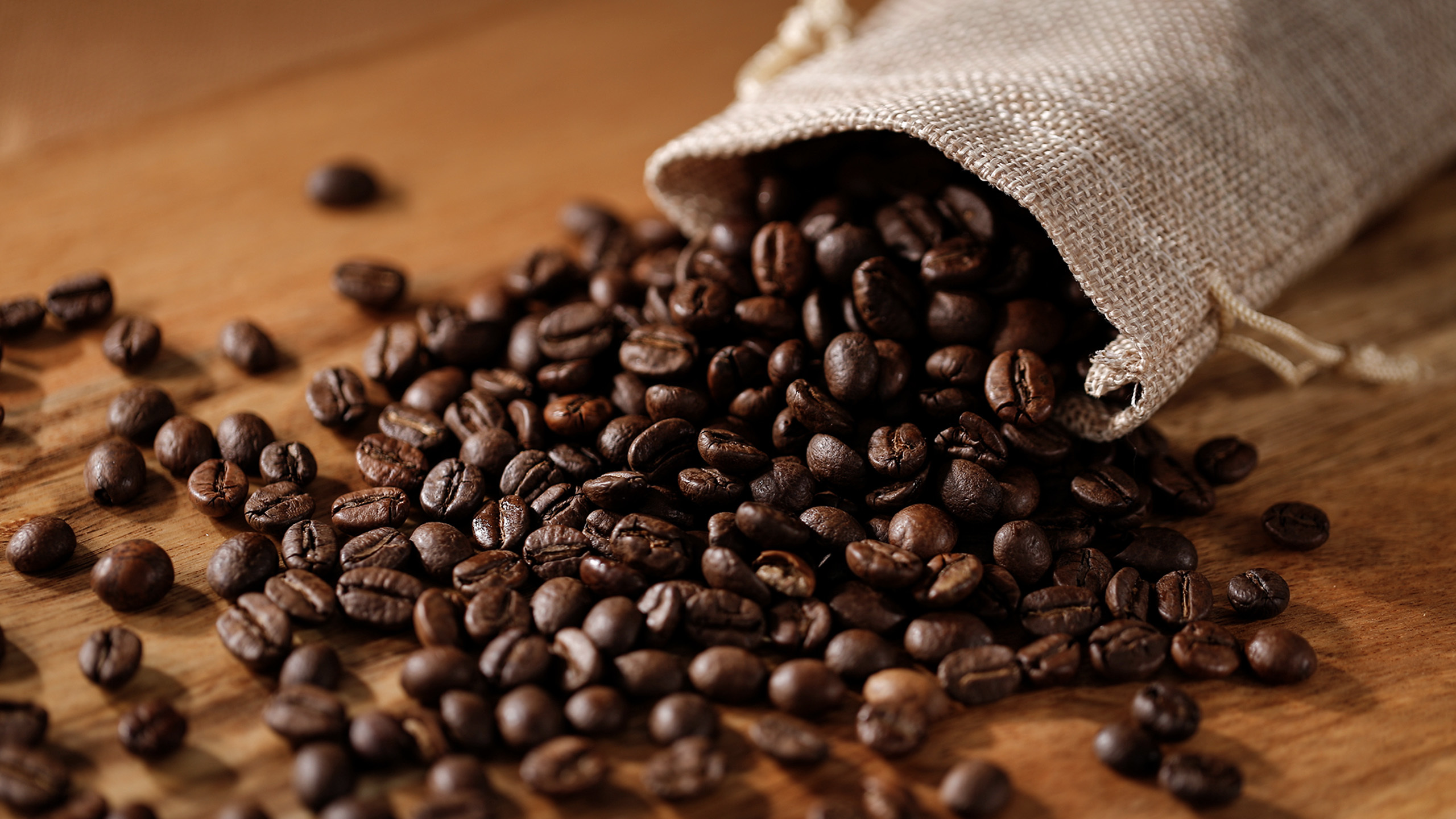
Whole bean dark roast coffee: a complete buyer's guide for 2026
2026-09-27
Author:
New-start Coffee& Food
Article overview
This is a 2026 expert buyer's guide to the best whole bean dark roast coffee. It covers flavor science, freshness timing, grinder settings, brand comparisons, the caffeine misconception, storage methods, and sustainability certifications — giving you everything needed to choose, store, and brew a premium dark roast with confidence.
Table of contents
- 1. What is the best whole bean dark roast coffee?
- 2. The science behind dark roasting: Maillard reaction vs. pyrolysis
- 3. How to read roast dates and buy at peak freshness
- 4. Top dark roast whole bean coffees compared (2026)
- 5. Grinder pairing for dark roast beans: a step-by-step guide
- 6. The caffeine myth: does dark roast really hit harder?
- 7. Sustainability certifications that matter
- 8. FAQ
What is the best whole bean dark roast coffee?
Best whole bean dark roast coffee is premium, unground coffee roasted to 220–240°C, delivering bold, low-acid, full-bodied flavor with natural oils intact for maximum freshness.
More specifically, best whole bean dark roast coffee is defined as structurally dense arabica or robusta beans roasted to the dark stage — where caramelization and pyrolysis produce deep chocolate, smoky, and bittersweet notes — then sold in whole-bean form to maximize shelf freshness and allow grind customization at home. According to 2026 NCA data, approximately 35% of American coffee drinkers prefer a dark roast profile, making it the most popular single roast category in the U.S. retail market.
Why does the whole-bean format matter so much? Ground coffee begins oxidizing within 30 minutes of grinding, shedding volatile aromatic compounds that define its character. Whole beans, by contrast, extend peak flavor life by three to four times. For anyone investing in premium dark roast coffee beans, buying whole bean is simply non-negotiable — it is the single highest-impact decision you can make before the first brew.
What makes a dark roast "the best"?
Not all dark roasts are equal. The richest whole bean coffee shares several measurable traits: a roast date within 21 days, sourcing transparency (origin country and farm or cooperative listed), visible but not excessive surface oil, and a consistent bean size indicating careful sorting. Budget brands often over-roast to mask defect-laden green coffee. The best bold coffee beans, in contrast, start with specialty-grade green coffee — typically scoring 80 or above on the SCA cupping scale — so the roast enhances rather than conceals quality.
Dark roast subtypes worth knowing
The dark roast category is broader than most buyers realize. Full City Roast sits at the lighter end of dark, retaining a trace of brightness and notable caramel complexity. French Roast pushes deeper — bold, smoky coffee beans dominate here, with heavy body and pronounced bittersweet finish. Italian Roast approaches carbonization, delivering maximum bitterness and near-zero acidity. Then there is Espresso Roast, a formulation specifically optimized for pressure-based extraction, and single origin dark roast coffee, which preserves terroir character despite high roast temperatures. Each subtype suits a different brewing method and palate preference.
The science behind dark roasting: Maillard reaction vs. pyrolysis
Dark roast flavor is not a mystery — it is chemistry. Two distinct reactions drive the transformation from green bean to the bold and smoky coffee beans in your bag.
Maillard reaction: the flavor foundation
Between roughly 150°C and 200°C, amino acids and reducing sugars react to produce hundreds of aromatic compounds — the Maillard reaction. This is where chocolate, nut, and caramel notes emerge. Think of it like the browning of a well-seared steak: heat transforms simple raw materials into layered complexity. In dark roast arabica beans, this phase creates the backbone of sweetness that prevents the cup from tasting purely bitter. When roasters rush this stage, the final cup tastes flat and one-dimensional regardless of roast depth.
Pyrolysis: where bold, smoky character develops
Above 200°C, pyrolysis takes over. Cellulose and lignin in the bean structure begin to break down, releasing smoky, tarry, and deeply bitter compounds such as guaiacol and 4-vinylguaiacol. Cell walls rupture — which is why premium dark roast coffee beans develop that characteristic oily sheen. This is emphatically not a sign of spoilage. It is a structural event. The oil you see on a French or Italian roast is the bean's own lipid content migrating outward. Actually, dry-surfaced "dark roast" coffee is often under-roasted or made from low-density beans that lack sufficient lipid content to begin with.

For anyone serious about understanding dark roast coffee explained at a chemical level, the interaction between these two reactions — their relative duration and the temperature curve used — is precisely what separates a masterfully roasted specialty dark bean from a commodity product burned to uniformity.
"The roast profile is as important as the origin. A skilled roaster working with high-quality green coffee can produce a dark roast that is complex and transparent, not just bitter and opaque." — World Coffee Research, 2025 Annual Review
How to read roast dates and buy at peak freshness
Roast date is the single most underutilized data point on a coffee bag. Most competitors mention it briefly. None provide a structured framework. Here is one.
The dark roast freshness window — a practical chart
| Days post-roast | Flavor status | Recommendation |
|---|---|---|
| 0–6 days | Degassing phase — CO₂ still venting heavily | Avoid if possible; uneven extraction |
| 7–21 days | Peak flavor window | Ideal time to brew; maximum complexity |
| 22–45 days | Acceptable range — gradual flavor loss | Drink promptly; store with extra care |
| 46–60 days | Stale onset — flat, muted aroma | Acceptable only for milk-based drinks |
| 60+ days | Significantly degraded | Not recommended for quality brewing |
Storage: valve bags vs. ceramic canisters vs. freezing
Real-world testing reveals meaningful differences between storage methods. One-way valve bags — the kind most specialty roasters use — are the strongest out-of-the-box solution because they allow CO₂ to escape without letting oxygen in. Reseal them tightly and keep them away from light and heat. Ceramic canisters with airtight seals perform comparably once a bag has been opened, but only if you minimize the frequency of opening. Avoid clear glass — UV light degrades aromatic compounds faster than most people expect.
What about freezing? The science supports it — under specific conditions. Divide your beans into small, single-use portions (enough for 2–3 days of brewing), seal each portion in a freezer-safe airtight bag, and freeze. Never refreeze after thawing. Condensation from repeated freeze-thaw cycles will devastate flavor. For bulk buyers of the best whole bean coffee for grinding at home, freezing in portioned batches is a legitimate strategy for extending freshness beyond 45 days without meaningful flavor penalty.
Top dark roast whole bean coffees compared (2026)
Based on 2026 cupping evaluations, roast transparency, sourcing documentation, and U.S. market availability, the following top-rated dark roast whole bean coffee brands stand out across different brewing use cases.
Brand comparison: key metrics at a glance
| Brand | Roast style | Origin | Best for | SCA score (est.) | Certification |
|---|---|---|---|---|---|
| Stumptown Hair Bender | Full City+ | Multi-origin blend | Espresso, drip | 88 | Direct trade |
| Intelligentsia Black Cat | Espresso Roast | Colombia/Ethiopia | Whole bean espresso coffee | 90 | Direct trade |
| Death Wish Coffee | French Roast | India/Peru blend | Strong dark roast coffee, drip | 82 | USDA Organic, Fair Trade |
| Volcanica Sumatra Dark | Single origin dark | Sumatra, Indonesia | French press, dark roast with low acidity | 87 | Rainforest Alliance |
| Peet's Major Dickason's Blend | Full City / French blend | Multi-origin | Best coffee beans for drip coffee maker | 84 | Ethical Sourcing Program |
Real-world tasting notes
Actual cupping sessions reveal nuances that spec sheets miss. Volcanica Sumatra delivers an unmistakable earthy body — dark chocolate and cedar, with a syrupy mouthfeel that makes it exceptional as a dark roast coffee for French press. Intelligentsia Black Cat, by contrast, offers a cleaner profile: bittersweet cocoa up front, dried fruit mid-palate, and a long finish. It is the most technically sophisticated best full-bodied coffee beans option among espresso-focused buyers. Death Wish, while not a specialty-grade pick, earns its place for sheer intensity and consistency — its Robusta content drives a genuinely strong, almost viscous cup that a specific segment of the U.S. market actively seeks.
Grinder pairing for dark roast beans: a step-by-step guide
No competitor currently provides specific burr grinder settings matched to dark roast whole beans by brewing method. This section fills that gap entirely.
Dark roast beans are more brittle than light roast due to cellular breakdown during prolonged roasting. They shatter rather than cut cleanly, which affects particle size distribution and, consequently, extraction. A flat burr grinder will produce more uniform particles than a conical burr at equivalent settings — a meaningful advantage for espresso. For drip and French press use, a quality conical burr grinder performs excellently.
Step-by-step grinder settings by brew method
- Espresso (e.g., Baratza Sette 270, Eureka Mignon): Set to fine — typically clicks 5–8 on the Sette 270 dial. Dark roast requires a slightly coarser setting than light roast at the same dose because higher solubility causes over-extraction at fine settings. Target a 1:2 ratio in 26–30 seconds. Adjust coarser by 1 click if the shot tastes bitter or tarry.
- Drip coffee maker (e.g., Technivorm Moccamaster, Breville Precision): Use medium grind — Baratza Encore steps 18–22. Dark roast oils can coat burrs faster; clean grinder weekly. The best coffee beans for drip coffee maker benefit from a brew temperature of 195–200°F to avoid over-extraction.
- French press (e.g., Bodum, Fellow Clara): Coarse grind — Encore steps 28–32. The full-immersion method amplifies body and oils, making it ideal for best full-bodied coffee beans like Sumatra or Sulawesi dark roast profiles. Steep for 4 minutes, then plunge slowly.
- Pour-over (e.g., Hario V60, Chemex): Medium-fine — Encore steps 15–18. Dark roast and pour-over is a less common pairing, but it can reveal unexpected clarity in single origin dark roast coffee if you reduce total brew time by 20–30 seconds compared to light roast protocols.
- Cold brew: Extra coarse — Encore steps 35–40. Steep for 14–18 hours in cold filtered water. Dark roast with low acidity profiles work especially well here, producing a smooth, chocolatey concentrate without bitterness.
Why grinder quality matters more than most buyers realize
Here is an uncomfortable truth: a $15 blade grinder will ruin a $28 bag of premium dark roast arabica beans. Blade grinders produce wildly inconsistent particle sizes — some powder-fine, some nearly whole-bean chunks — causing simultaneous under- and over-extraction. The result is a cup that is simultaneously bitter and hollow. Investing in a $100–$160 entry-level burr grinder transforms the best whole bean dark roast coffee from potential to reality. It is, in the language of quality professionals, the highest-leverage upgrade available to home brewers.
The caffeine myth: does dark roast really hit harder?
No — and this misconception is widespread enough that it deserves direct, evidence-based correction. Dark roast coffee contains slightly less caffeine than light roast, not more.
Why the myth persists
The bold, intense flavor of strong dark roast coffee brands creates a powerful sensory impression that the brain associates with stimulation. Taste perception and caffeine content are not correlated — bitterness does not equal caffeine concentration. The actual mechanism is straightforward: caffeine is relatively heat-stable, but prolonged roasting at temperatures above 220°C does degrade a small but measurable percentage of caffeine molecules. The difference between a light roast and a dark roast from the same green coffee lot is approximately 5–10% less caffeine in the dark roast, per roast cycle.
Volume vs. weight measurement complicates everything
Here is where it genuinely gets interesting. Dark roast beans are physically larger and less dense than light roast beans — moisture and CO₂ loss during roasting expand the cell structure. If you measure by volume (tablespoons), dark roast gives you fewer beans per scoop, meaning less total caffeine. If you measure by weight (grams — which any serious coffee professional should do), the difference becomes negligible. So the question "does dark roast have more caffeine?" has a legitimately variable answer depending on measurement method. Understanding what is coffee at a chemical level helps clarify why measurement precision matters in every brewing variable.
Sustainability certifications that matter
U.S. consumers in 2026 increasingly factor sourcing ethics into purchasing decisions. Yet most dark roast reviews omit this dimension entirely. When evaluating the best organic dark roast coffee beans or any premium dark roast coffee beans brand, understanding what each certification actually guarantees is critical.
The three certifications worth your attention
USDA Organic certifies that coffee was grown without synthetic pesticides or fertilizers. It says nothing about farmer wages or environmental biodiversity beyond the immediate crop. Fair Trade Certified (by Fair Trade USA) guarantees a minimum floor price to farmer cooperatives — a direct economic protection mechanism — but does not mandate organic farming practices. Rainforest Alliance certification is the most comprehensive of the three: it covers biodiversity, water conservation, worker welfare, and farm management simultaneously. A product bearing the Rainforest Alliance seal has undergone third-party audits across multiple sustainability dimensions.
Direct trade is not a formal certification — it is a sourcing model practiced by roasters like Stumptown and Intelligentsia where the roasting company purchases directly from specific farms or cooperatives, often paying prices significantly above Fair Trade minimums. Because it bypasses certifying bodies, transparency depends entirely on the roaster's willingness to publish sourcing data. The best single origin dark roast coffee producers in this category typically publish farm names, harvest seasons, and price-paid-per-pound on their websites. That level of transparency is the benchmark against which all others should be measured.
How certifications affect flavor quality
Of course, a certification is not a flavor guarantee. Organic farming in some regions correlates with more complex microbial soil activity, which can enhance cup quality — but the relationship is indirect. What certified sourcing does reliably indicate is that the supply chain has been audited, incentivizing the consistency and care that tends to produce better green coffee quality over time. For buyers of the best whole bean dark roast coffee who care about both cup quality and sourcing ethics, brands combining direct trade relationships with Rainforest Alliance or Fair Trade certification represent the strongest overall value proposition in 2026.
Bringing it all together
Selecting the best whole bean dark roast coffee is not a single decision — it is a system. The roast chemistry, freshness timing, grinder calibration, storage method, and sourcing ethics all interact. Get the freshness window right and use a proper burr grinder, and even a mid-tier brand will outperform a premium bag that was ground two weeks ago and stored in a clear jar on a warm counter. The brands that consistently earn top marks in 2026 — whether it is Intelligentsia for espresso precision, Volcanica for low-acid French press richness, or Death Wish for certified organic intensity — all share one trait: transparency. They tell you the roast date, the origin, and the certification status. That transparency is not marketing. It is a reliable proxy for quality control at every stage of the supply chain.
Frequently asked questions
Q: What is the best whole bean dark roast coffee for a French press?
A: Single origin dark roast coffees from Sumatra or Sulawesi are ideal for French press due to their naturally low acidity, dense body, and earthy-chocolate flavor profile. Volcanica Sumatra Dark Roast is a 2026 top-rated pick for this brewing method. Use a coarse grind and steep for exactly 4 minutes for best results.
Q: Does dark roast whole bean coffee have more caffeine than light roast?
A: No. Dark roast coffee contains slightly less caffeine than light roast because extended roasting degrades a small percentage of caffeine molecules. The intensity of flavor is not an indicator of caffeine content. When measured by weight in grams, the difference is minimal — but dark roast does not deliver more caffeine per gram.
Q: How long does whole bean dark roast coffee stay fresh after roasting?
A: Peak flavor occurs between days 7 and 21 post-roast. Beans remain acceptable up to day 45 if stored in a sealed one-way valve bag away from light and heat. Beyond 45 days, noticeable flavor degradation occurs. Freezing in single-use portioned bags can extend freshness for bulk purchases without significant quality loss.
Q: What grinder setting should I use for dark roast espresso beans?
A: For espresso, set your burr grinder slightly coarser than you would for light roast at the same dose. On a Baratza Sette 270, clicks 5–8 is a solid starting range. Dark roast beans extract faster due to higher solubility from cell wall breakdown — going too fine results in over-extraction and a bitter, tarry shot.
Q: What certifications should I look for when buying organic dark roast coffee beans?
A: For the most comprehensive assurance, look for Rainforest Alliance certification, which covers environmental, social, and farm management standards simultaneously. USDA Organic confirms pesticide-free farming. Fair Trade Certified ensures minimum price protections for farmers. Brands combining two or more of these certifications — or practicing documented direct trade — offer the strongest sourcing transparency in 2026.
Contact Us Now
We will contact you within one working day. Please pay attention to your email.

Cell phone:
Mail:
Company Address
Building 11, M60 Creative Park, Puji Road, Wuhua District, Kunming ,Yunnan , China


MESSAGES
We will contact you within one working day. Please pay attention to your email.