
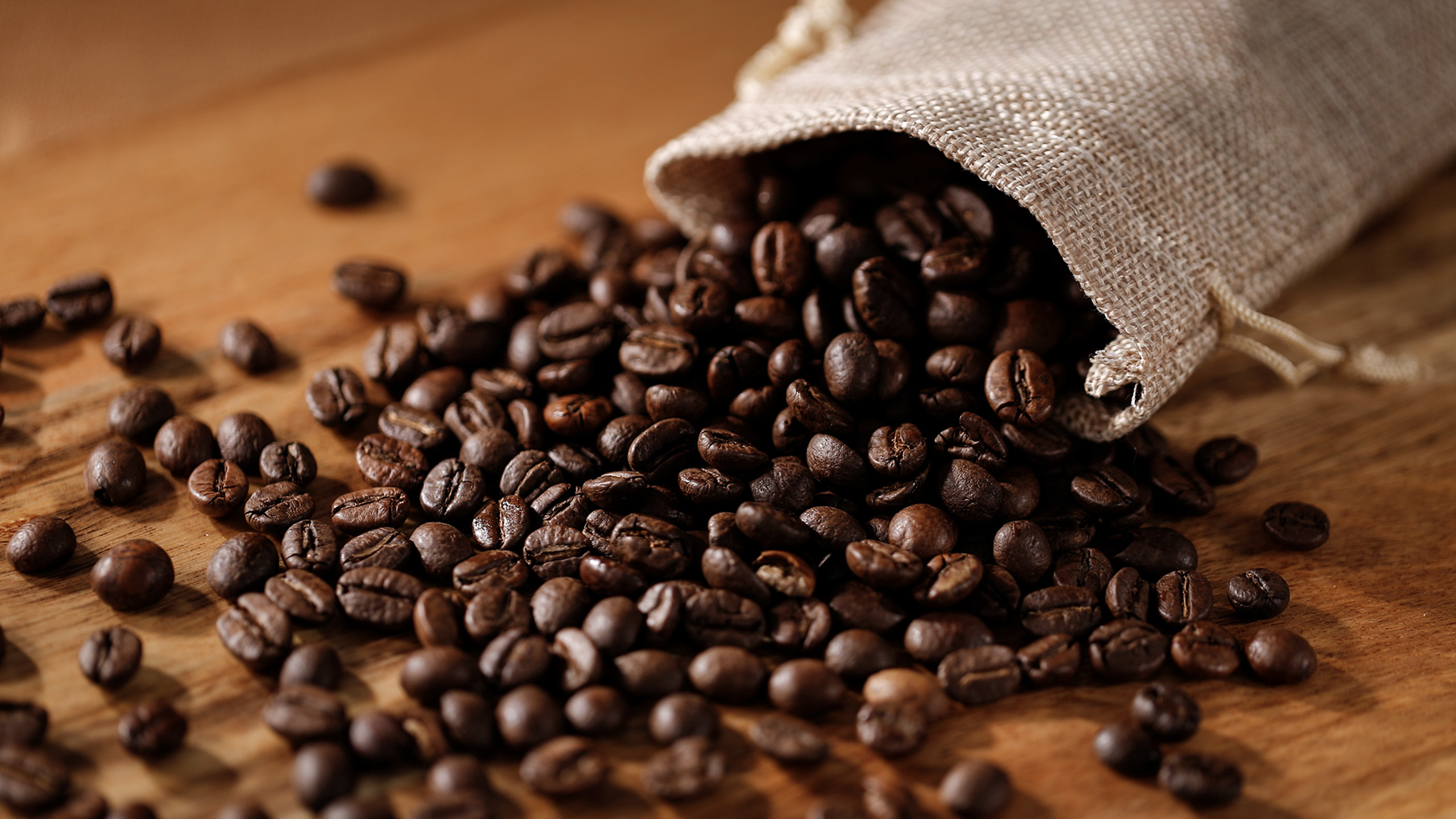
Wholesale green coffee beans importers: how to find reliable suppliers and negotiate bulk deals
2026-09-17
Author:
New-start Coffee& Food
Article overview
This guide covers US import compliance, supplier qualification frameworks, MOQ and pricing comparisons, origin certifications, port logistics, and 2026 sourcing trends — giving coffee roasters and procurement teams a complete toolkit for evaluating wholesale green coffee beans importers.
Table of contents
- 1. What are wholesale green coffee beans importers?
- 2. US import compliance: FDA, HTS codes, and CBP entry requirements
- 3. How to vet and qualify a wholesale green coffee supplier
- 4. Major wholesale green coffee importers in the US: a verified comparison
- 5. MOQs, pricing tiers, and payment terms explained
- 6. Origin certifications and their import implications for US buyers
- 7. Logistics and supply chain: US ports, warehousing, and lead times
- 8. 2026 trends shaping green coffee sourcing
- 9. FAQ
What are wholesale green coffee beans importers?
Wholesale green coffee beans importers are B2B intermediaries or direct-trade operators that purchase unroasted coffee seeds in commercial volumes from producing countries — such as Brazil, Ethiopia, and Colombia — and resell them to roasters, distributors, and food manufacturers at pre-retail pricing. They sit between the origin exporter and the end roaster, managing logistics, compliance, quality control, and currency risk on behalf of the buyer.
Understanding this distinction matters. A supplier grows or mills the coffee. An importer takes legal title, handles US Customs and Border Protection (CBP) entry, and warehouses inventory stateside. Some wholesale importers operate both functions — sourcing directly from farms and fulfilling orders from a domestic warehouse — while others act purely as trading desks executing spot or forward contracts on behalf of clients.
Wholesale green coffee beans importers serve a wide spectrum of buyers: micro-roasters ordering a single 60 kg jute sack, regional chains purchasing full 20-foot container loads, and multinational food companies locking in multi-year supply agreements. For a roaster, choosing the right import partner is arguably more consequential than choosing roasting equipment. The supply chain partner determines cup quality, consistency, compliance exposure, and ultimately margin.
For a broader understanding of what green coffee is at the commodity level, see this green coffee overview on Wikipedia.
The difference between a broker, importer, and direct-trade sourcer
These three roles are routinely conflated, yet they carry meaningfully different risk and cost profiles. A coffee commodity importer holds physical inventory and sells from stock. A wholesale coffee bean broker matches buyers with sellers without taking title — they earn a commission and pass compliance obligations to the trading parties. A direct trade green coffee operator builds proprietary farm relationships, bypassing brokers entirely, which can compress cost but demands significant relationship capital and travel.
Why the importer layer still dominates US sourcing in 2026
Despite the growth of direct trade, the importer model remains dominant. According to coffee trade statistics from the International Coffee Organization, the US imports over 1.5 million metric tons of green coffee annually — a volume that requires industrial-scale logistics infrastructure few roasters can replicate independently. Importers provide credit terms, hedging tools, and regulatory expertise that make the economics of direct farm purchasing prohibitive for anyone outside the top 50 roasters by volume.
US import compliance: FDA, HTS codes, and CBP entry requirements
Getting US import compliance right is non-negotiable — a single documentation error can result in FDA detention, CBP holds, or costly re-export of an entire container. Here is what every buyer sourcing through wholesale green coffee beans importers needs to understand.
FDA prior notice and facility registration
Under the Bioterrorism Act (21 CFR Part 1, Subpart I), any food shipment entering the US — including raw green coffee beans — requires FDA Prior Notice submission before arrival. The notice must include shipper name, country of origin, anticipated port of arrival, and the FDA facility registration number of the foreign manufacturer or exporter. Failure to file, or filing with errors, triggers an automatic "hold" flag at CBP. Most experienced green coffee importers USA handle this filing as a standard service; if a prospective supplier does not mention it, treat that as a red flag.
HTS tariff codes and duty rates
Green coffee beans enter the US under HTS code 0901.11.0000 (non-decaffeinated, not roasted). The Most Favored Nation (MFN) tariff rate is 0% — meaning most green coffee enters duty-free regardless of origin. Decaffeinated green coffee falls under 0901.12.0000 and also carries a 0% MFN rate. However, tariff classification errors — for example, misclassifying roasted blends or flavored beans — can result in back-duties and penalties. Always confirm the HTS code with your customs broker before the first shipment.
CBP entry procedures: a step-by-step overview
- Obtain an importer of record (IOR) number — either your EIN or a CBP-assigned number. First-time importers must apply via CBP Form 5106.
- Engage a licensed customs broker — required for shipments valued above $2,500 entering formally.
- File FDA Prior Notice — via the FDA's Prior Notice System Interface (PNSI) at least 2 hours before arrival for land shipments, 4 hours for air, and 8 hours for ocean.
- Submit CBP Entry Summary (Form 7501) — including commercial invoice, packing list, bill of lading, and certificate of origin.
- USDA APHIS phytosanitary inspection — green coffee beans require a phytosanitary certificate from the exporting country confirming freedom from pests and diseases.
- Release and duty payment — with a 0% MFN tariff, duty payment is $0 for most origins; the merchandise processing fee (MPF) still applies at 0.3464% of cargo value (minimum $31.67).
How to vet and qualify a wholesale green coffee supplier
The supplier qualification process is where most mid-sized roasters make costly mistakes. They either move too fast — placing a full-container order based on a single cupping sample — or they over-index on price and ignore operational red flags. Based on real procurement cases observed across the US specialty market, a structured four-stage vetting process consistently outperforms ad hoc evaluation.
Stage 1: documentation audit
Before requesting a sample, request documentation. A credible bulk green coffee bean supplier should provide, without hesitation: a current export license or equivalent trade registration, SCA-certified Q Grader cupping scores for the specific lot, available third-party certifications (Organic, Fair Trade, Rainforest Alliance), and verifiable references from at least two existing US buyer accounts. If a supplier stalls on any of these, move on. There are too many reputable specialty coffee bean distributors operating in this market to compromise on documentation integrity.
Stage 2: sample evaluation protocol
Request a 200–500g green sample. Evaluate moisture content (target 10–12%), screen size consistency, defect count per SCAA standards, and cup profile across at least three roast levels. Critically, request samples from the specific lot you intend to purchase — not a blended showcase sample. Actual testing reveals whether the supplier's stated SCA score holds up under independent evaluation. Discrepancies of more than 2 points between supplier-stated and independently evaluated scores are common and should trigger renegotiation or disqualification.
Stage 3: operational and compliance verification
Verify FDA facility registration status directly via the FDA's online search tool. Confirm the supplier's logistics partners and whether they have existing relationships with US-licensed customs brokers. Ask explicitly: who files the FDA Prior Notice? Who is the named importer of record? These questions expose whether you are dealing with an experienced green coffee bean procurement operation or a newer entity offloading compliance risk onto the buyer.
Stage 4: pilot order and performance baseline
Run a trial order of one or two bags (60–120 kg) before committing to container-scale volume. Measure lead time accuracy, packaging integrity on arrival, moisture variance from sample, and invoice accuracy. Establish these as your baseline KPIs. Any supplier worth a long-term contract will welcome the pilot structure — it protects both parties.
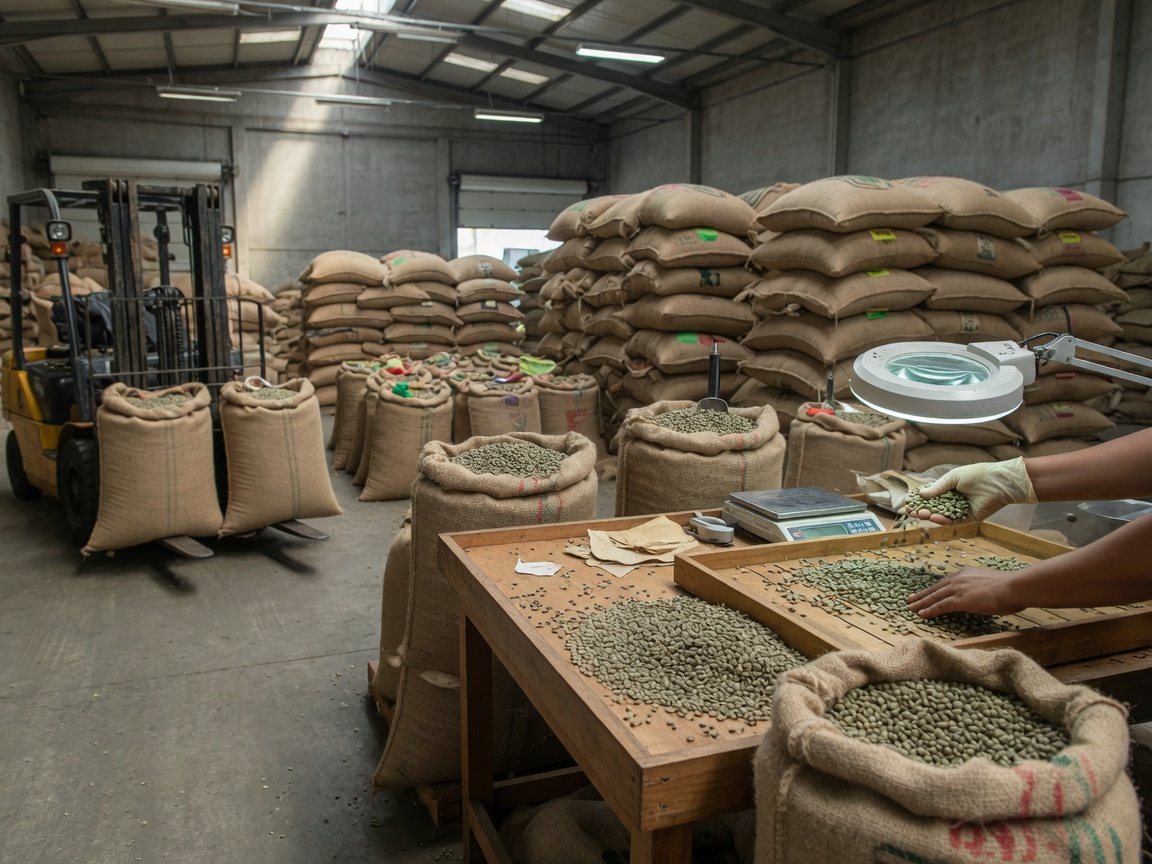
Major wholesale green coffee importers in the US: a verified comparison
The US market for unroasted coffee beans wholesale is served by a relatively concentrated group of established importers. Companies with established specialty green coffee wholesale programs — Cafe Imports, Royal Coffee, Olam Coffee Americas, InterAmerican Coffee, and similar — are well-regarded starting points for US buyers. The table below compares key operational parameters based on 2026 data.
| Importer | MOQ | Specialty focus | Certifications offered | Key origins | Payment terms |
|---|---|---|---|---|---|
| Cafe Imports | 1 bag (60 kg) | Specialty / micro-lot | Organic, Fair Trade, RA | Ethiopia, Colombia, Guatemala | Net 30 (approved accounts) |
| Royal Coffee | 1 bag (60 kg) | Specialty / direct trade | Organic, Fair Trade | Kenya, Yemen, Peru | Net 30 / prepay discount |
| Olam Coffee Americas | Full container (19,000 kg) | Commercial / commodity | UTZ, Rainforest Alliance | Brazil, Vietnam, Indonesia | LC / wire transfer |
| InterAmerican Coffee | 1 pallet (~500 kg) | Specialty + commercial | Organic, Fair Trade | Honduras, Mexico, Brazil | Net 15–30 |
| Sucafina North America | Half container (~9,500 kg) | Commercial / blends | Rainforest Alliance, UTZ | Colombia, Cameroon, India | Wire transfer / LC |
"The relationship between a roaster and their green coffee importer is not a transaction — it is an ongoing quality partnership. Importers who invest in traceability infrastructure today are the ones building durable supply chains for 2030 and beyond." — Industry consensus from the 2026 SCA Expo panel on supply chain resilience
MOQs, pricing tiers, and payment terms explained
Pricing for raw coffee beans bulk buyers is not a fixed catalogue — it is a negotiated outcome shaped by volume, origin, certification, and market timing. Understanding the structure gives buyers meaningful leverage.
Pricing tiers by volume
Green coffee bean prices per pound in 2026 range approximately as follows: single bags (60 kg) of commercial-grade Arabica at $3.20–$4.50/lb; pallet quantities (500–1,000 kg) at $2.80–$3.90/lb; half-container (9,500 kg) at $2.40–$3.50/lb; full container (19,000 kg+) at $2.00–$3.20/lb for commercial grade. Specialty-grade arabica green coffee wholesale commands a premium of $1.50–$4.00/lb above commercial price, depending on SCA score and origin exclusivity. Robusta green coffee beans bulk trades significantly lower, typically $1.20–$2.00/lb at container scale.
Payment terms and negotiation leverage
Most established importers offer Net 30 to approved accounts with a credit application. New buyers typically start on prepayment or 50% deposit / 50% on shipment. Why do payment terms matter so much? Because green coffee has a typical shelf life of 12–18 months post-harvest, and importers managing warehouse carrying costs are incentivized to offer better pricing for faster-paying or higher-volume buyers. Securing Net 30 terms after two or three successful pilot orders is realistic for buyers purchasing at pallet scale or above. Letters of Credit (LC) are standard for direct-import container deals — engage a trade finance bank if this is new territory.
Origin certifications and their import implications for US buyers
Certifications signal compliance with specific environmental, social, or quality standards — but they are not interchangeable, and each carries distinct import documentation requirements. Here is what US buyers need to know about the four most relevant certifications when working with wholesale green coffee beans importers.
USDA Organic
USDA Organic certification requires that the coffee was grown without synthetic pesticides or fertilizers and processed through certified facilities. For import, the shipment must be accompanied by a National Organic Program (NOP) import certificate — a document certifying that the product meets USDA organic standards. Importers must hold a valid NOP certificate from an accredited certifier (e.g., CCOF, Oregon Tilth). Buyers sourcing organic green coffee should confirm the importer's NOP certificate number before placing any order.
Fair Trade USA
Fair Trade certification ensures minimum price guarantees and social premiums paid to farming cooperatives. For US buyers, Fair Trade-certified green coffee must be sourced from a Fair Trade USA–licensed importer and carry a valid transaction certificate for each shipment. The certification does not affect CBP entry procedures directly, but it is a licensing compliance requirement — unauthorized use of the Fair Trade mark is a trademark violation.
Rainforest Alliance
Rainforest Alliance (RA) certification covers environmental and social farm management standards. For sustainable coffee sourcing claims on US retail packaging, buyers must obtain a valid Rainforest Alliance license and ensure each shipment is covered by a verified Chain of Custody (CoC) certificate. RA and UTZ merged in 2020; legacy UTZ certificates have now fully transitioned to the unified RA standard.
A note on "certified vs. quality"
One common industry misconception: organic certification equals higher cup quality. It does not. Certification reflects growing practice, not sensory outcome. A USDA Organic lot can score 76 on the SCA scale, while a non-certified micro-lot from a single estate may score 88. When sourcing single origin green coffee wholesale, always evaluate SCA cupping scores independently of certification status.
Logistics and supply chain: US ports, warehousing, and lead times
Logistics decisions made before a container ships have direct consequences on cost, quality, and compliance timelines. This is an area where experienced coffee bean trading companies add disproportionate value — and where inexperienced buyers routinely absorb preventable costs.
Key US entry ports for green coffee
The Port of New York / New Jersey (Port Newark) handles the largest volume of East Coast coffee imports, with established cold-chain and climate-controlled warehouse infrastructure nearby in New Jersey. The Port of Los Angeles / Long Beach is the primary West Coast gateway, particularly for Pacific-origin coffees from Indonesia, Vietnam, and Papua New Guinea — critical for buyers sourcing robusta green coffee beans bulk. The Port of New Orleans handles significant Brazilian and Central American volume, with direct intermodal rail access to the Midwest. When evaluating an importer, always confirm which port they use as their primary entry point and whether their warehouse is within economic trucking distance of your roastery.
Warehousing, lead times, and realistic planning horizons
Green coffee beans are hygroscopic — they absorb ambient moisture, which can raise water activity and accelerate degradation. Reputable importers warehouse in climate-controlled facilities targeting 60–70% RH and 65–70°F. Beans stored in non-climate-controlled warehouses for more than 60 days post-arrival frequently show measurable flavor deterioration. Ask any prospective importer for their warehouse specification sheet before committing to a forward contract.
Lead times from origin to US warehouse vary: Ethiopian and East African origins typically run 60–90 days ship time plus 10–20 days customs clearance. Brazilian and Colombian origins average 25–45 days ocean transit to East Coast ports. For green coffee bean procurement planning purposes, assume a minimum 90-day procurement cycle from PO to warehouse-ready inventory, regardless of origin. Importers holding domestic stock can fulfil orders in 5–10 business days. The USDA coffee import data portal provides current monthly arrival volumes by port, which is useful for anticipating congestion periods.
2026 trends shaping green coffee sourcing
The landscape for wholesale green coffee beans importers is shifting faster in 2026 than at any point in the past decade. Two macro forces are reshaping procurement strategy: regulatory pressure and the premiumization of supply chains.
EUDR supply chain traceability — a US ripple effect
The EU Deforestation Regulation (EUDR), which came into full enforcement in 2025, requires importers into the EU to provide GPS-level farm polygon data proving coffee was not grown on deforested land. While this is an EU mandate, it has a direct US market implication: major global importers — including those supplying the US — are now building unified digital traceability platforms to serve both markets simultaneously. US buyers who demand traceability documentation today are effectively future-proofing against anticipated US legislation and gaining a marketing differentiation advantage in sustainability-conscious retail channels.
The micro-lot and direct trade acceleration
Specialty coffee demand growth is disproportionately concentrated in micro-lot and single origin green coffee wholesale categories. According to recent SCA research, the specialty segment now represents approximately 35% of total US coffee volume by value — up from 28% in 2022. This is pushing mid-sized importers to build direct farm relationships and offer micro-lot allocations with harvest-specific traceability. For buyers, this creates an opportunity: importers competing for specialty roaster accounts are increasingly willing to offer flexible MOQs, extended payment terms, and exclusive lot reservations to buyers who commit early in the harvest cycle.
Of course, there are situations where direct micro-lot sourcing introduces its own risks — single-harvest dependency, crop failure exposure, and relationship management overhead. For roasters without dedicated green coffee buyers on staff, a hybrid approach — working with two or three established importers across commercial and specialty tiers — remains the most operationally resilient model in 2026.
Frequently asked questions
Q: What is the import duty on green coffee beans entering the US?
A: Most unroasted, non-decaffeinated green coffee enters the US duty-free under HTS code 0901.11.0000 at a 0% MFN tariff rate. A merchandise processing fee (MPF) of 0.3464% of cargo value still applies, subject to a minimum of $31.67 per entry. Confirm classification with a licensed customs broker to avoid misclassification penalties.
Q: What is the minimum order quantity for wholesale green coffee beans importers in the US?
A: MOQs vary significantly. Specialty-focused importers like Cafe Imports and Royal Coffee accept orders from a single 60 kg bag. Mid-tier importers typically require one pallet (approximately 500 kg). Commercial and commodity importers generally require half- or full-container loads of 9,500–19,000 kg. Always confirm current MOQs directly, as they adjust with market conditions.
Q: How do I verify that a wholesale green coffee importer is legitimate?
A: Verify their FDA facility registration number via the FDA's online database, confirm their US business registration, request verifiable buyer references, and check for active third-party certifications. Legitimate importers will also have an established customs broker relationship and can provide recent CBP entry documentation upon request.
Q: What certifications should I look for when sourcing sustainable green coffee?
A: The four most recognized in the US market are USDA Organic (requires NOP import certificate), Fair Trade USA (requires transaction certificate per shipment), Rainforest Alliance (requires Chain of Custody certificate), and Direct Trade (importer-defined, no third-party standard). Each carries distinct documentation requirements — confirm which certifications align with your brand claims before sourcing.
Q: How long does it take to receive green coffee after placing a wholesale order?
A: For importers with US warehouse stock, fulfillment is typically 5–10 business days. For origin-direct orders, plan for 90–120 days total lead time: 25–90 days ocean transit depending on origin, plus 10–20 days for customs clearance and domestic freight. Build buffer into your roasting production schedule accordingly, especially for African origins with longer transit times.
Sourcing through wholesale green coffee beans importers is a strategic decision that compounds over time. The right import partner reduces compliance risk, stabilizes cup quality across seasons, and — when the relationship matures — opens access to exclusive lots and favorable contract terms that purely transactional buyers never see. Invest in the vetting process upfront, run structured pilot orders, and treat importer relationships with the same rigor you apply to your roasting program. The supply chain is where great coffee is either protected or lost.
Previous Page:
Contact Us Now
We will contact you within one working day. Please pay attention to your email.

Cell phone:
Mail:
Company Address
Building 11, M60 Creative Park, Puji Road, Wuhua District, Kunming ,Yunnan , China


MESSAGES
We will contact you within one working day. Please pay attention to your email.