
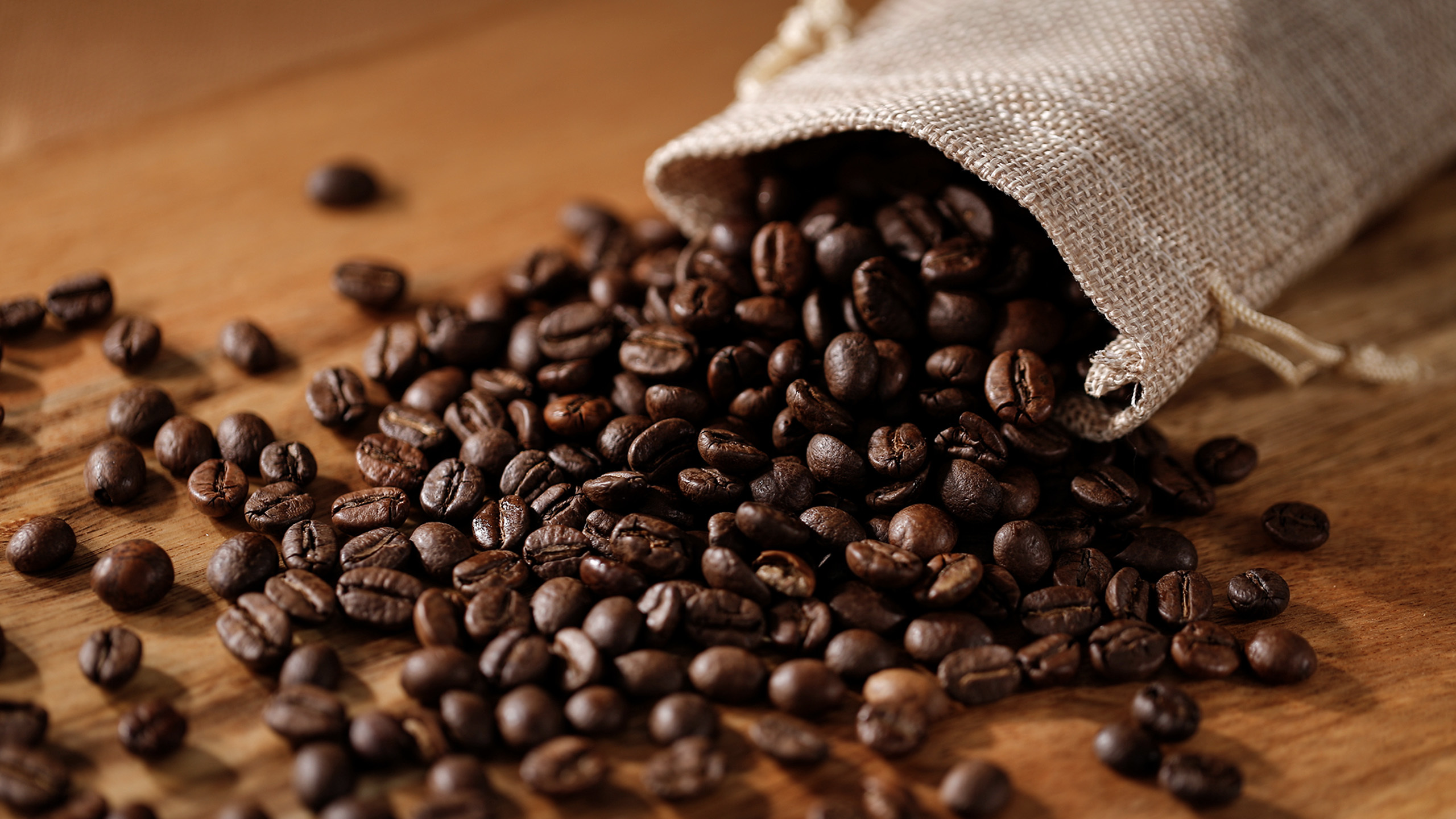
Why some coffee beans cost more — and whether they're worth it
2026-11-16
Author:
New-start Coffee& Food
Article overview
This guide explores why some coffee beans command a premium price and whether the quality difference justifies the cost. We cover origin, processing, roasting, ethical sourcing, and provide a practical cost-per-cup comparison to help UK coffee drinkers make an informed choice.
Table of contents
- 1. What makes coffee beans "premium" in the first place?
- 2. The origin factor: why where beans grow changes everything
- 3. Processing methods and their impact on cost and flavour
- 4. Roasting: artisan craft versus industrial scale
- 5. Ethical sourcing, fair trade, and what you're really paying for
- 6. How to read the value: cost per cup versus bag price
- 7. Are premium coffee beans actually worth it? A honest verdict
- 8. Frequently asked questions
Walk into any supermarket and you'll find coffee beans ranging from £4 to over £20 per 250g. The disparity is striking. Premium coffee beans are whole, freshly roasted beans sourced from high-grade lots — typically scoring 80+ on the Specialty Coffee Association (SCA) scale — selected for exceptional flavour complexity, traceable origin, and careful post-harvest processing. But the price gap between a commodity bag and a speciality roaster's offering isn't arbitrary. It reflects a genuinely different supply chain, a different growing philosophy, and in many cases a meaningfully different experience in the cup. The question is: how much of that difference is real, and how much is marketing? Let's work through it systematically.
What makes coffee beans "premium" in the first place?
The term "premium" in the coffee world has a specific — if imperfectly policed — meaning. At the professional level, it aligns closely with the category of specialty coffee beans, defined by the SCA as beans achieving a cupping score of 80 points or above out of 100. Below that threshold, beans fall into commercial or commodity grade. The distinction matters enormously in practice.
How the SCA scoring system works
Trained Q-graders — certified professional tasters — evaluate beans across ten attributes: fragrance, aroma, flavour, aftertaste, acidity, body, balance, uniformity, cleanliness, and sweetness. Each contributes to the final score. A bean scoring 85 isn't just marginally better than one at 79; the flavour difference is typically unmistakable. The SCA framework creates an objective baseline that separates marketing language from measurable quality. That said, scores are assessed at the green bean stage, and poor roasting can ruin even a 90-point lot — a nuance many buyers overlook.
Why "gourmet" labels don't always mean quality
Here's something the industry rarely advertises: the word "gourmet coffee" carries no regulated definition in the UK. Any roaster can print it on a bag. The same applies to "artisan" and "barista-grade." The only reliable signals of genuine quality are roast date transparency, lot traceability, and an SCA or Cup of Excellence score. If a bag doesn't state when it was roasted, that's often a telling sign. Award-winning coffee beans from competitions like the UK Barista Championship or Cup of Excellence do provide third-party validation — look for these credentials when assessing value.
Practical tip: When assessing any premium claim, ask three questions — Where was it grown? When was it roasted? Who cupped it and what did they score it? If a supplier can't answer all three, the premium label deserves scepticism.
The origin factor: why where beans grow changes everything
Origin is perhaps the single biggest driver of price variation in the specialty segment. Single origin coffee — beans traceable to one farm, cooperative, or defined region — commands a premium because quality and accountability are inherently linked to that specificity.
Altitude, terroir, and coffee bean varieties
Coffee grown above 1,500 metres develops more slowly in cooler temperatures, producing denser beans with higher acidity and greater aromatic complexity. This is precisely why Ethiopian Yirgacheffe, Kenyan AA, and Jamaican Blue Mountain carry a price premium — their geography is irreproducible. For an in-depth look at coffee bean varieties and processing, the variation between Arabica subspecies alone — Geisha, Bourbon, Typica, Heirloom — accounts for significant cost differences even within the same farm.
High-quality arabica beans represent the overwhelming majority of the specialty segment. Robusta, while cheaper and higher in caffeine, lacks the nuanced flavour profile that defines the top of the market. Some espresso blends incorporate a small percentage of high-grade Robusta for crema, but this is an intentional blending decision, not a cost-cutting measure.
The micro-lot premium explained
Micro-lots are small, identifiable parcels of coffee — often from a single producer or even a single day's harvest — that have been separated for their exceptional quality. Because volumes are tiny, competition among roasters to secure them is fierce. This drives prices up. A micro-lot Geisha from Panama's Hacienda La Esmeralda has sold at auction for over $1,000 per pound. That's an extreme case, but it illustrates the economic logic: scarcity plus verified excellence equals elevated cost. For UK buyers, this trickles down into retail prices of £20–£30 per 250g for the most sought-after lots.

Processing methods and their impact on cost and flavour
Once harvested, coffee cherries must be processed to extract the seed — the bean itself. The processing method profoundly affects both flavour and production cost, and it's one of the most underappreciated factors in pricing.
Washed, natural, and honey: a quick comparison
| Processing method | Flavour profile | Labour intensity | Relative cost | Common origins |
|---|---|---|---|---|
| Washed (wet) | Clean, bright, high acidity | High (requires water infrastructure) | Medium–High | Ethiopia, Kenya, Colombia |
| Natural (dry) | Fruity, full-bodied, complex | Medium (long drying time, careful monitoring) | Medium | Ethiopia, Brazil, Yemen |
| Honey | Balanced sweetness, medium acidity | Very high (requires constant attention) | High | Costa Rica, El Salvador |
| Anaerobic / experimental | Intense, fermented, distinctive | Very high (controlled fermentation tanks) | Very high | Various, competition lots |
Why processing adds to the price — and whether the flavour justifies it
Honey and anaerobic processing require skilled operators monitoring fermentation temperatures and drying rates over days or weeks. A processing error at this stage can ruin an entire batch. That risk — and the labour involved — is built into the cost you pay. According to research on coffee bean research and quality, post-harvest processing is now recognised as one of the primary contributors to cup quality variance, sometimes accounting for more flavour differentiation than origin alone. For the curious drinker willing to pay the premium, the flavour reward from an expertly processed natural Ethiopian or a honey-processed Costa Rican is genuinely distinct — not a subtle difference, but a dramatic one.
Roasting: artisan craft versus industrial scale
Even the finest green beans can be ruined by careless roasting — or, more commonly, by being roasted months before they reach your grinder. Roast date is arguably the most overlooked variable in everyday coffee buying.
What small batch roasted coffee actually means
Industrial roasters process tonnes of beans per hour, applying standardised profiles designed for shelf stability rather than peak flavour. Small batch roasted coffee — typically batches of 5–15kg — allows the roaster to monitor each stage of the Maillard reaction and caramelisation with far greater precision. The result is a more consistent development of the bean's inherent flavour characteristics. Artisan roasted coffee isn't just a lifestyle label; it describes a genuinely different process with measurable quality outcomes. That said, batch size alone doesn't guarantee quality — a skilled industrial roaster can outperform a sloppy artisan operation on any given day.
The roast date problem: freshness as a quality indicator
Freshly roasted coffee undergoes a degassing period — typically 24 to 72 hours after roasting for filter, slightly longer for espresso — during which CO₂ escapes and flavours settle. The optimal brewing window for most whole bean coffee is between 7 and 30 days post-roast. Beyond six weeks, noticeable staling occurs. Most supermarket bags carry a "best before" date 12–18 months from roasting. That's not a freshness signal; it's a food safety one. When you buy from a UK speciality roaster — whether direct or via a coffee subscription UK service — you typically receive beans roasted within the past week. That difference alone explains a significant portion of the price gap.
"Freshness in roasted coffee is not a luxury — it's the baseline condition for the product to perform as intended. Without a roast date, a consumer cannot meaningfully evaluate what they're buying." — James Hoffmann, The World Atlas of Coffee (widely cited industry reference)
Ethical sourcing, fair trade, and what you're really paying for
Price in the coffee world is not just a reflection of flavour. It's also a signal of who gets paid, and how much. This is an area where the conversation around premium pricing becomes genuinely complex.
Fair trade versus direct trade: understanding the difference
Fair trade coffee beans carry third-party certification guaranteeing a minimum price floor to producers — currently set at $1.80/lb for washed Arabica through Fairtrade International. This provides a safety net but doesn't necessarily reflect quality. Direct trade, by contrast, involves roasters purchasing directly from producers at negotiated prices — often significantly above fair trade minimums — in exchange for quality commitments and long-term partnerships. Many UK speciality roasters operate on direct trade models, with farm-gate prices of $3–$6/lb or more. According to a global coffee production overview from the International Coffee Organisation, farm-gate price transparency remains one of the most pressing challenges in the global coffee supply chain.
Does ethically sourced coffee always cost more?
Largely, yes — but the relationship isn't perfectly linear. Some ethically sourced coffee programmes subsidise producer costs through volume, meaning a well-structured cooperative can deliver certified beans at competitive prices. The honest answer, however, is that paying a living wage at origin, investing in sustainable farming practices, and maintaining traceability all add cost to the supply chain. When you pay £16 for a 250g bag from a reputable UK roaster versus £5 from a supermarket, a meaningful portion of that difference flows back to the producer. Whether that matters to your purchasing decision is a values question as much as a quality one.
How to read the value: cost per cup versus bag price
Sticker shock at the bag price is understandable. But the meaningful number is cost per cup — and once you calculate it, the premium often looks far more reasonable.
A step-by-step cost-per-cup calculation
- Identify your brew dose. A standard filter recipe uses 15g per 250ml cup; espresso uses 18–20g per double shot.
- Note the bag weight — typically 250g or 1kg.
- Divide the bag weight by your dose: a 250g bag yields approximately 16–17 filter cups or 12–13 espresso doubles.
- Divide the bag price by the number of cups. Example: £18 ÷ 16 cups = £1.12 per cup.
- Compare against your alternatives — a mid-range café flat white in London averages £4.50–£5.50 in 2026.
Real cost comparison: supermarket versus speciality
| Product type | Bag price (250g) | Roast date transparency | SCA score (est.) | Cost per filter cup |
|---|---|---|---|---|
| Supermarket own-brand whole bean | £4.00–£6.00 | No (BBE only) | <75 | £0.25–£0.37 |
| Premium supermarket range | £8.00–£11.00 | Rarely | 75–79 | £0.50–£0.69 |
| UK speciality roaster (single origin) | £13.00–£18.00 | Yes (roasted to order) | 82–87 | £0.81–£1.13 |
| Competition-grade / micro-lot | £20.00–£35.00+ | Yes (lot traceable) | 88+ | £1.25–£2.19 |
*Estimated costs based on 2026 UK retail pricing. SCA scores are indicative and vary by lot.
Put another way: upgrading from a £5 supermarket bag to a £16 speciality roaster bag adds roughly 70p per cup. For most people drinking one or two cups a day at home, that's a modest daily increase for a meaningfully better experience — and still less than a third of a café purchase.
Are premium coffee beans actually worth it? A honest verdict
Here's the direct answer: for most coffee drinkers who brew at home and care about flavour, yes — premium coffee beans from a UK speciality roaster deliver a genuinely better cup than commodity supermarket alternatives. But the word "premium" does a lot of work, and not every expensive bag earns its price tag.
When the premium is fully justified
The upgrade is most clearly worth it when: the roast date is printed and recent (within 2–3 weeks of purchase); the origin is specific and traceable to farm or cooperative level; the roaster has a credible quality benchmark such as an SCA score or competition placement; and the price reflects genuine supply chain transparency rather than packaging spend. In these cases, you're not just buying a nicer bag — you're buying a fundamentally different product.
Just like a bottle of wine, the relationship between price and quality is real but non-linear. The jump from a £5 to a £15 bag delivers dramatic, noticeable improvement. The jump from £20 to £35 delivers refinement that enthusiasts will appreciate but casual drinkers may not detect. This isn't a criticism of expensive coffee — it's just an honest account of diminishing returns.
When you might be overpaying
Of course, there are situations where the premium is not earned. A heavily branded bag with no roast date, vague "single estate" language with no farm name, or marketing-heavy packaging with no quality certification — these are warning signs. Some products in the £10–£14 range occupy an awkward middle ground: too expensive to be a commodity, not transparent enough to be true specialty. If you're brewing with a budget-level grinder on coarse settings, the nuance of a £25 micro-lot will also be largely lost — your equipment is the bottleneck, not the beans.
Practical recommendations for UK buyers in 2026
- Prioritise roast date over all other label information. A £10 bag roasted last week will outperform a £20 bag roasted four months ago.
- Start with established UK speciality roasters — look for transparency about farm-level sourcing and SCA or competition credentials.
- Consider a coffee subscription UK service to ensure consistent freshness delivery rather than buying from a shelf with unknown rotation times.
- Upgrade your grinder before you upgrade your beans. A burr grinder at £80–£150 will unlock more flavour from a £10 bag than a blade grinder from a £30 bag.
- If budget is a constraint, buy a 1kg bag from a reputable roaster — the per-gram cost drops significantly, and freshness is maintained if you store in an airtight container away from heat and light.
Premium coffee beans, at their best, represent a genuine craft product with a traceable supply chain, measurable quality standards, and a flavour experience that supermarket alternatives simply cannot replicate. The price premium is real — but so is the difference in the cup. The key is knowing what signals separate a justified premium from a marketing surcharge.
Frequently asked questions
Q: What is the difference between specialty coffee beans and regular coffee beans?
A: Specialty coffee beans score 80 or above on the Specialty Coffee Association's 100-point cupping scale, indicating superior flavour, aroma, and cleanliness. Regular or commodity coffee falls below this threshold and is typically blended, older at time of sale, and grown to yield rather than quality targets. The practical difference in the cup — clarity, complexity, and sweetness — is usually immediately detectable.
Q: Are premium coffee beans worth the extra cost for home brewing?
A: For home brewers with a decent burr grinder and an interest in flavour, yes. The cost per cup increase is modest — typically 60–80p more than supermarket alternatives — and the improvement in taste is substantial, particularly in freshness and complexity. The value case weakens if your grinder or brewing technique is limiting quality before the bean's character can express itself.
Q: What should I look for on a coffee bag to identify genuine quality?
A: Look for a printed roast date (not just a best-before date), specific farm or cooperative name, country and region of origin, processing method, and variety. SCA cupping scores or competition awards add further credibility. Absence of a roast date is a significant red flag regardless of price point or branding.
Q: Is fair trade coffee the same as high-quality coffee?
A: Not necessarily. Fair trade certification addresses pricing and labour conditions for producers, but not cup quality. You can have fair trade certified commodity-grade coffee and direct-trade specialty coffee without fair trade certification. The best outcome — ethically sourced and high quality — often comes from direct-trade relationships where roasters pay premium prices specifically for exceptional lots.
Q: How do I store premium coffee beans to maintain freshness?
A: Store whole bean coffee in an airtight, opaque container at room temperature, away from direct sunlight and heat sources. Avoid the fridge or freezer for beans you're currently using — repeated temperature changes introduce moisture. Grind only what you need immediately before brewing. Properly stored whole beans remain at peak quality for 3–4 weeks post-roast; pre-ground coffee degrades significantly within days.
Contact Us Now
We will contact you within one working day. Please pay attention to your email.

Cell phone:
Mail:
Company Address
Building 11, M60 Creative Park, Puji Road, Wuhua District, Kunming ,Yunnan , China


MESSAGES
We will contact you within one working day. Please pay attention to your email.