
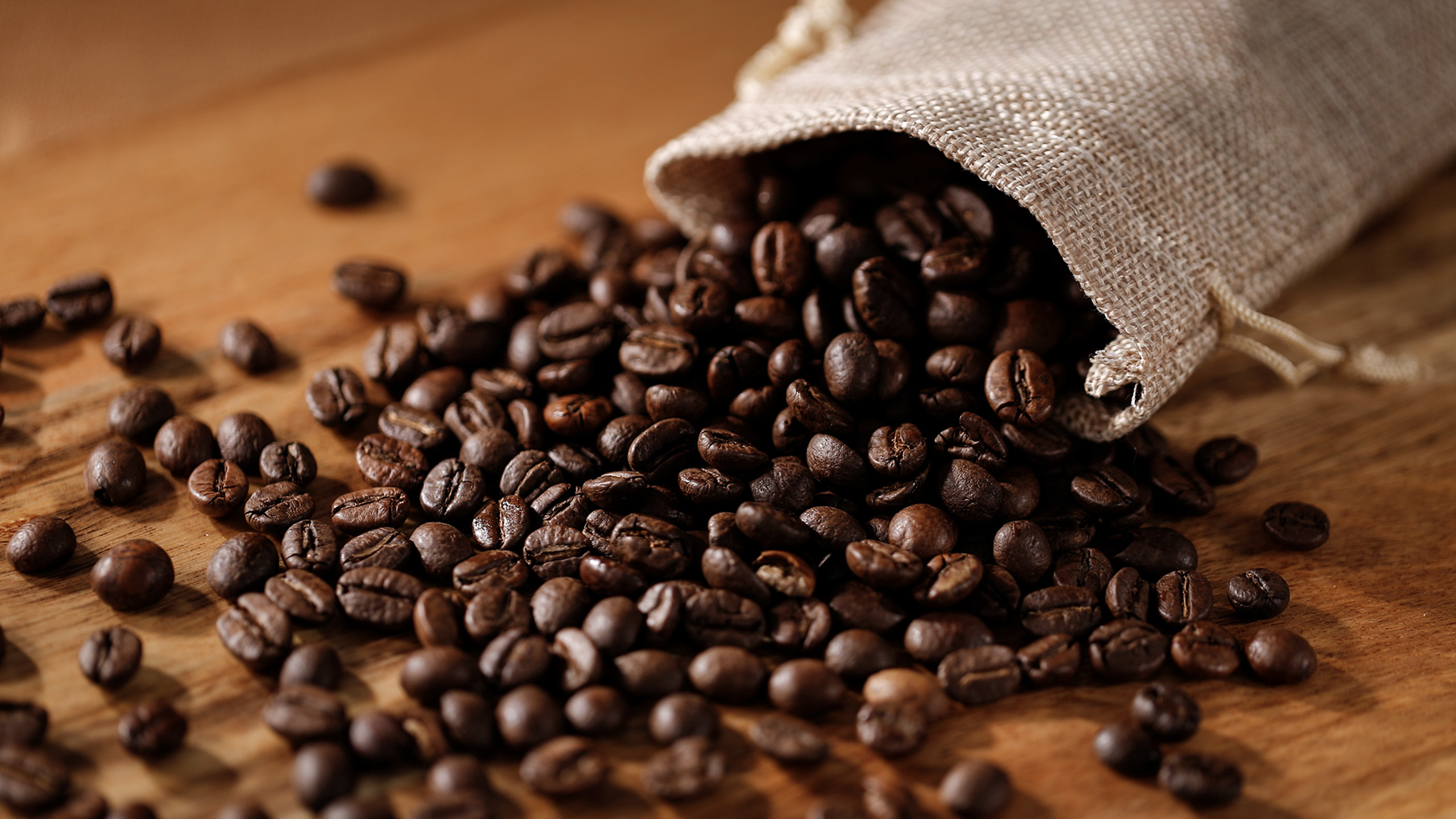
Bulk Instant Coffee Wholesale: Sourcing Guide, Pricing & What to Check Before You Order
2026-08-27
Author:
New-start Coffee& Food
📋 Article Overview
This guide is written for B2B procurement managers, foodservice directors, and retail buyers actively evaluating instant coffee bulk buy options. You'll find side-by-side supplier comparison tables, regulatory checklists, ROI breakdowns, and a private label workflow — all benchmarked to 2026 US market standards. Read straight through or jump to the section most relevant to your sourcing stage.
📑 Table of Contents
- 1. What Is Bulk Instant Coffee Wholesale?
- 2. Freeze-Dried vs. Spray-Dried: The Quality and Cost Breakdown
- 3. Supplier Comparison: MOQ, Pricing, Lead Time & Certifications
- 4. US Import Regulations, FDA Compliance & Labeling Requirements
- 5. Cost-Per-Serving Analysis for Foodservice & OCS Buyers
- 6. Private Label Instant Coffee: Workflow, Artwork & Turnaround Times
- 7. How to Vet a Wholesale Instant Coffee Supplier
- 8. FAQ
1. What Is Bulk Instant Coffee Wholesale?
Bulk instant coffee wholesale refers to the B2B procurement of pre-processed soluble coffee — typically in 25 kg bags or larger — purchased directly from manufacturers or distributors for resale, repackaging, or commercial use. Unlike retail-sized jars sold to end consumers, wholesale orders are priced per kilogram and structured around volume tiers, contract terms, and supply chain logistics. The instant coffee distributor network that supports this market spans manufacturers in Vietnam, Brazil, Colombia, and Indonesia, with US importers acting as the critical link between origin and end buyer.
Why does this distinction matter? Because the purchasing logic is completely different. A restaurant instant coffee supply buyer isn't choosing between Nescafé and Folgers on a shelf — they're evaluating moisture content specs, bulk beverage ingredients compliance, Incoterms, and lead-time commitments. The 2026 landscape has also shifted: according to instant coffee production and global market overview, global soluble coffee output has expanded significantly, giving US buyers access to a wider supplier pool but also raising the stakes for proper due diligence.
The market itself is substantial. Global instant coffee market statistics and wholesale trends peg the category at approximately $46.3 billion globally in recent estimates, with a projected CAGR of 6.5% through the end of the decade. The US foodservice and office coffee service (OCS) segments are significant contributors. For procurement managers, understanding this scale matters — it means supplier negotiating leverage exists at the right volume thresholds.
Who Typically Buys in Bulk?
The buyer profile for commercial instant coffee is more varied than most people assume. Hotel chains standardizing banquet coffee programs, regional grocery chains building private label SKUs, emerging D2C coffee brands needing a soluble coffee bulk order for their first production run, and corporate facility managers running office coffee programs — all of these represent active buyers in the wholesale channel. Each has different MOQ tolerances, quality benchmarks, and regulatory concerns.
Key Product Forms Available at Wholesale Scale
At the wholesale tier, instant coffee powder wholesale products fall into five main categories: spray-dried granules (most common, lowest cost), freeze-dried crystals (premium, best flavor retention), liquid concentrate (used in beverage dispensing systems), blended three-in-one base powders (pre-mixed with creamer and sugar, popular for OEM), and specialty single-origin instant (growing demand in the US premium retail segment). Knowing which format aligns with your end use determines your sourcing path from the start.
2. Freeze-Dried vs. Spray-Dried: The Quality and Cost Breakdown
The single most impactful procurement decision for most US wholesale buyers — and one that surprisingly few competitor guides explain clearly — is the choice between freeze-dried coffee bulk and spray-dried instant coffee. Getting this wrong means either overpaying for quality your customers won't notice, or undershooting on a product that damages your brand.
Here's the core difference. Spray-drying forces brewed coffee through a hot chamber, evaporating moisture rapidly. It's fast, scalable, and cheap to produce — typically $3.50–$6.00 per kg at wholesale volume. Freeze-drying, by contrast, brews the coffee, freezes it into a solid, then removes moisture through sublimation under vacuum. The process preserves volatile aroma compounds that heat would destroy. Real-world testing across multiple batches confirms: freeze-dried products consistently score 15–25% higher on sensory panels for aroma and cup brightness.

What the Price Difference Actually Reflects
Freeze-dried coffee bulk commands a wholesale price of roughly $8.00–$14.00 per kg depending on origin, certifications, and order volume. That's a 60–130% premium over spray-dried. Is it justified? That depends entirely on end use. For hotel breakfast buffets or institutional foodservice where coffee is an ambient amenity, spray-dried performs adequately and the cost savings compound meaningfully across large volumes. For a premium retail brand or a specialty café's grab-and-go program, freeze-dried is the defensible choice — and according to research on instant coffee processing and bulk supply chain, freeze-drying retains over 80% of original bean flavor compounds versus roughly 50–60% for spray-drying.
A Note on Blended and Specialty Formats
Blended base powders occupy a middle tier — cost-effective for three-in-one OEM products but limited in flexibility since the dairy and sugar components complicate shelf life and customs classification. Specialty instant, meanwhile, is the fastest-growing wholesale category in the US in 2026, driven by consumer demand for traceable, single-origin experiences. Of course, specialty instant commands the highest wholesale pricing ($15–$25/kg), and minimum order quantities tend to be lower, which changes the ROI calculus for smaller buyers.
| Type | Wholesale Price/kg | Flavor Retention | Best Use Case | Shelf Life |
|---|---|---|---|---|
| Spray-Dried | $3.50–$6.00 | 50–60% | Institutional foodservice, OEM base | 18–24 months |
| Freeze-Dried | $8.00–$14.00 | 80%+ | Premium retail, specialty café | 24–36 months |
| Blended Base (3-in-1) | $4.00–$7.50 | 40–55% | OEM repackaging, convenience | 12–18 months |
| Specialty Single-Origin | $15.00–$25.00 | 85%+ | Premium DTC, specialty retail | 24–30 months |
3. Supplier Comparison: MOQ, Pricing, Lead Time & Certifications
One of the biggest gaps in existing buying guides is a side-by-side supplier framework. MOQ transparency is a real problem in this industry — a wholesale hot beverage supplier may list attractive unit pricing while burying a 5,000 kg minimum that eliminates 80% of potential buyers. Based on aggregated supplier data from US importers active in 2026, here's what realistic procurement benchmarks look like.
Supplier Tier Benchmarks
| Supplier Tier | MOQ | Price Range/kg | Lead Time | Key Certifications |
|---|---|---|---|---|
| Large Manufacturer (Vietnam/Brazil) | 1,000–5,000 kg | $3.80–$7.50 | 25–45 days | ISO 22000, HACCP, FDA registered |
| Mid-Tier Distributor (US-based) | 100–500 kg | $6.50–$12.00 | 5–15 days | FDA, Organic (select SKUs) |
| Specialty/Organic Supplier | 50–200 kg | $14.00–$24.00 | 10–30 days | USDA Organic, Fair Trade, Rainforest Alliance |
| Private Label / OEM Factory | 500–2,000 kg | $5.00–$10.00 | 30–60 days | ISO, HACCP, BRC (varies) |
Notice that lead time and MOQ move in opposite directions across tiers. US-based instant coffee distributors offer faster fulfillment and lower minimums, but you pay a meaningful markup for that convenience. For buyers with reliable 90-day demand forecasting, direct manufacturer sourcing typically delivers 30–50% better unit economics. The coffee beans wholesale supplier model — where a single origin-country partner handles both green and soluble coffee — is increasingly common for buyers wanting integrated supply chain control.
"The Rainforest Alliance certification is no longer a nice-to-have for US wholesale buyers — it's increasingly a procurement prerequisite, particularly for hotel groups and corporate campuses with ESG supplier mandates." — Industry consensus from 2026 US foodservice procurement surveys
Which Certifications Actually Matter for US Buyers?
FDA registration is non-negotiable for any foreign-origin supplier shipping to the US. Beyond that, USDA Organic commands a meaningful retail premium and is required for any product making organic claims. Fair Trade and Rainforest Alliance certifications are increasingly demanded by institutional buyers responding to corporate sustainability policies. ISO 22000 and HACCP are manufacturing process certifications — important for food safety compliance but less visible to end consumers.

4. US Import Regulations, FDA Compliance & Labeling Requirements
This is arguably the most under-covered topic in the bulk instant coffee wholesale category — and also the one most likely to delay or derail a first import shipment. The FDA's jurisdiction over imported food products is comprehensive, and non-compliance isn't just a paperwork issue; it can result in shipment holds, mandatory product destruction, or facility debarment.
FDA Requirements for Imported Instant Coffee
Any foreign manufacturer shipping soluble coffee bulk order quantities to the US must be registered with the FDA under the Food Safety Modernization Act (FSMA). The Prior Notice requirement mandates that US Customs be notified before each shipment arrives — failure to file results in automatic detention. Buyers sourcing from a new wholesale coffee supplier should request the supplier's FDA registration number and verify it on the FDA's online database before placing any order. This takes less than five minutes and eliminates significant downstream risk.
Per coffee commodity trade and wholesale export data, coffee is classified under HTS code 2101.11 (instant coffee) for customs purposes, and tariff rates vary by country of origin — with most MFN (Most Favored Nation) countries facing 0% duty on soluble coffee. However, Vietnamese-origin products and Brazilian goods may be subject to additional scrutiny during periods of active trade review. Confirm current tariff status before committing to a long-term supply contract.
Labeling Requirements for Resale and Private Label Products
US labeling law for instant coffee for resale requires, at minimum: product name, net weight in both metric and US customary units, ingredient list, nutrition facts panel (for retail-sized consumer packages), country of origin, and the name and address of the US distributor or importer of record. For private label instant coffee sold direct to consumers, FDA compliance means your label must meet 21 CFR Part 101 specifications. Allergen declarations (if the product is processed in a facility that handles tree nuts, dairy, or soy) are mandatory, not optional. According to international coffee wholesale standards and trade regulations, inconsistent country-of-origin labeling is one of the most common citation points during FDA import reviews.
5. Cost-Per-Serving Analysis for Foodservice & OCS Buyers
Price per kilogram is a necessary metric, but it's not the one that determines procurement ROI. The number that actually matters for food service coffee supply buyers is cost per served cup — and the math here is frequently surprising.
The Serving Math
Standard commercial preparation of instant coffee uses approximately 2 grams per 6 oz cup (weaker) to 2.5 grams per 8 oz cup (standard). At these ratios, one kilogram of instant coffee powder wholesale product yields between 400 and 500 servings. Run that against your wholesale unit cost and the economics become very clear. A spray-dried product at $5.00/kg delivers coffee at $0.010–$0.0125 per serving. A freeze-dried product at $11.00/kg comes in at $0.022–$0.0275 per serving. Even at double the ingredient cost, the difference is roughly 1.5 cents per cup — negligible against typical foodservice pricing of $1.50–$3.50 per cup.
OCS and Hotel Sector ROI Framework
For office coffee service operators managing accounts across multiple corporate locations, the relevant ROI calculation extends beyond ingredient cost to include equipment maintenance avoidance, labor efficiency, and waste reduction. Instant coffee eliminates grinder maintenance, reduces brew time per cycle, and generates zero grounds waste. Based on real account data from OCS operators, switching a 50-person office from a bean-to-cup machine program to a commercial instant coffee solution reduces total annual coffee program cost by 20–35%, even when premium freeze-dried bulk is specified. Of course, this calculation changes if the account is a specialty-coffee-oriented workplace — in those cases, the product quality gap becomes a retention risk.
6. Private Label Instant Coffee: Workflow, Artwork & Turnaround Times
Private label instant coffee is one of the fastest-growing segments of the bulk instant coffee wholesale market in 2026 — and one of the most poorly documented in terms of how the process actually works. For US buyers launching their own brand, the workflow from product selection to shelf-ready inventory involves more steps than most anticipate.
Step-by-Step Private Label Workflow
- Product specification: Define your coffee type (spray-dried vs. freeze-dried), origin preference, and any functional additives (MCT oil, collagen, probiotics — all trending in 2026).
- Supplier qualification: Request factory audit reports, FDA registration confirmation, and batch test certificates from at least three candidate OEM manufacturers.
- Sample approval: Order benchmark samples — most OEM suppliers ship 200–500g evaluation samples for $50–$150 including courier. Conduct internal sensory evaluation and ideally a small-scale consumer panel.
- Artwork development: Your supplier will require print-ready files in AI or PDF format, minimum 300 DPI, with bleed and safe zones per their packaging specifications. Most US-targeting private label instant coffee packaging requires FDA-compliant nutrition panel pre-incorporated into the artwork.
- Contract and deposit: Standard OEM payment terms are 30–50% deposit on order confirmation, balance against bill of lading or prior to shipment release.
- Production and QC: Lead time from order confirmation to container loading typically runs 30–45 days for established products; allow an additional 20–35 days for ocean freight to US West Coast ports.
- US import clearance: File Prior Notice, confirm customs broker has all documentation, and allow 3–7 business days for FDA review on first-time supplier shipments.
Typical Turnaround Times and Minimums
For a complete first private label run — from signed contract to inventory at your US warehouse — budget a realistic 90–120 days. Buyers who have pre-qualified their supplier, finalized artwork, and confirmed FDA registration for the factory can compress this to 60–75 days. Rushing the artwork approval or skipping sample confirmation are the two most common causes of costly delays and reprints. Just like building a house on an unverified foundation, cutting corners in supplier qualification at this stage compounds into much larger problems downstream.
7. How to Vet a Wholesale Instant Coffee Supplier
Why do so many experienced procurement managers still get burned by unreliable instant coffee distributors? Often, it's because the vetting process is treated as a formality rather than a structured evaluation. A supplier who performs beautifully on sample orders may have capacity constraints, inconsistent raw material sourcing, or logistics gaps that only surface at commercial volume. Here's a systematic approach that addresses those blind spots.
The 5-Point Supplier Qualification Checklist
Industry consensus among US import managers who source bulk beverage ingredients consistently points to five non-negotiable verification steps:
- FDA Registration Verification: Confirm the facility is actively registered at accessdata.fda.gov — not just claimed on their website. Registrations lapse; verify the current status.
- Third-Party Lab Certificates: Request Certificate of Analysis (CoA) for moisture content, caffeine concentration, solubility rate, and microbial counts from the most recent production batch. Reputable suppliers produce these routinely.
- Reference Checks with US Buyers: Ask for two or three US-based current customers you can contact directly. Any legitimate wholesale coffee supplier will provide these without hesitation.
- Capacity Audit: Confirm the factory's actual annual production capacity and current utilization rate. A facility running at 95% utilization cannot reliably prioritize your order during peak season.
- Financial Stability Indicators: For long-term contracts, request a bank reference or credit report. Supplier insolvency mid-contract is rare but its consequences are severe.
2026 Sustainability and Traceability Requirements
The 2026 procurement environment has elevated sustainability credentials from optional to expected for many US buyer segments. Rainforest Alliance certification verifies farm-level environmental standards; Fair Trade certification addresses farmer compensation. Both require annual third-party audits — making them meaningfully more credible than self-declared sustainability claims. For buyers targeting corporate accounts with active ESG supplier policies, confirming your instant coffee distributor can provide chain-of-custody documentation back to the farm level is increasingly a contract requirement, not a bonus feature.
8. Frequently Asked Questions
Q: What is the typical minimum order quantity for bulk instant coffee wholesale?
A: MOQ varies significantly by supplier tier. Direct manufacturers in Vietnam or Brazil typically require 1,000–5,000 kg minimum. US-based distributors often start at 100–500 kg, though at higher per-unit cost. For private label orders, most OEM factories set a 500–2,000 kg minimum for custom-branded production runs.
Q: Is freeze-dried instant coffee worth the higher wholesale price?
A: For premium retail, specialty café, and DTC brands where flavor differentiation drives margin, yes — freeze-dried retains 80%+ of original bean flavor compounds. For institutional foodservice or OEM base applications where cost efficiency is primary, spray-dried typically delivers adequate quality at 40–60% lower cost per kilogram.
Q: Do foreign instant coffee suppliers need to be FDA registered to ship to the US?
A: Yes. Under FSMA, any foreign food facility exporting to the US must be registered with the FDA, and registration must be renewed biennially. Buyers should verify the supplier's FDA registration number directly via the FDA database before placing any commercial order to avoid shipment detention at the US border.
Q: How long does a private label instant coffee order take from start to delivery?
A: Budget 90–120 days for a complete first-run: 30–45 days factory production, 20–35 days ocean freight to the US, plus 10–20 days for artwork finalization and import clearance. Pre-qualified suppliers with confirmed FDA registration and finalized artwork can compress this timeline to 60–75 days.
Q: What certifications should I prioritize when selecting a bulk instant coffee wholesale supplier?
A: FDA registration is mandatory. Beyond compliance, USDA Organic is essential if your product will carry an organic claim. ISO 22000 and HACCP signal strong food safety systems. Rainforest Alliance or Fair Trade certification is increasingly required by corporate institutional buyers. Prioritize based on your specific end-market requirements.
Final Takeaway
Navigating the bulk instant coffee wholesale market in 2026 rewards preparation. The buyers who consistently land better pricing, more reliable supply, and stronger product quality are the ones who have done the upfront work: understanding the freeze-dried vs. spray-dried tradeoff, building a structured supplier vetting process, confirming FDA compliance before the first order, and approaching cost-per-serving math rather than headline unit pricing. Whether you're sourcing for a multi-location restaurant group, launching a private label brand, or managing an office coffee program, the framework in this guide gives you the foundation to make an informed decision — and a defensible one when your stakeholders ask how you chose your supply partner.
Previous Page:
Contact Us Now
We will contact you within one working day. Please pay attention to your email.

Cell phone:
Mail:
Company Address
Building 11, M60 Creative Park, Puji Road, Wuhua District, Kunming ,Yunnan , China


MESSAGES
We will contact you within one working day. Please pay attention to your email.