
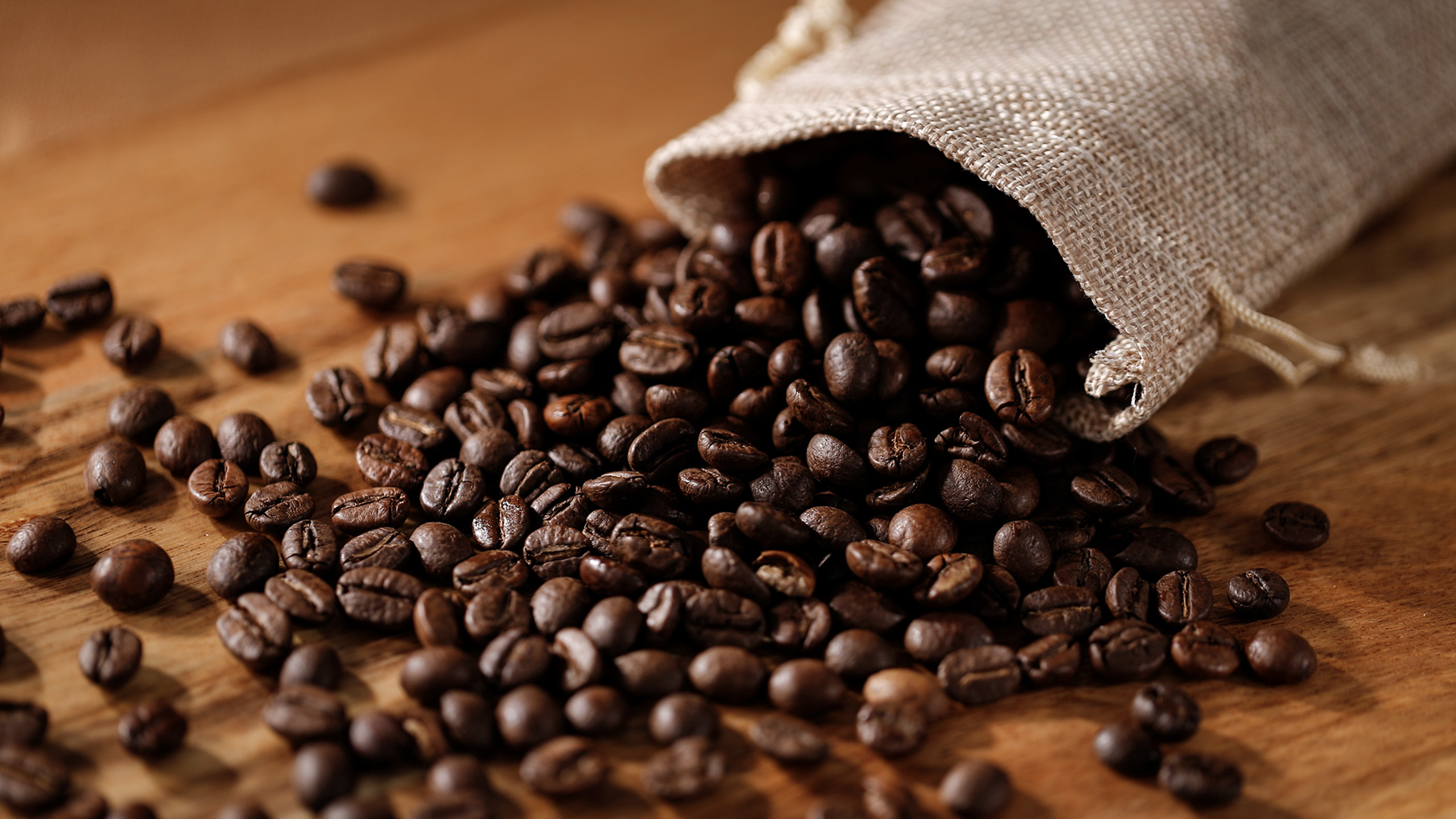
Coffee for wholesale: the complete 2026 buyer's guide
2026-08-25
Author:
New-start Coffee& Food
Article overview
This guide explains how to source coffee for wholesale in 2026 — covering supplier structure, MOQ tables, private label strategy, per-cup cost analysis, organic certification compliance, and contract negotiation tactics. Estimated reading time: 14 minutes.
Table of contents
- 1. What coffee for wholesale actually means
- 2. Wholesale coffee supplier tiers: how the market is structured
- 3. MOQ comparison: what to expect from each supplier type
- 4. Total cost of ownership: the real per-cup cost breakdown
- 5. Compliance and import requirements for specialty wholesale coffee
- 6. Wholesale coffee contract terms: what to negotiate before you sign
- 7. Frequently asked questions
What coffee for wholesale actually means
Coffee for wholesale is the practice of purchasing coffee — whole bean, pre-ground, or unroasted — in bulk quantities at reduced per-unit pricing, primarily for commercial, institutional, or high-volume foodservice use. The defining characteristic is not merely package size; it is the formal pricing structure and supply relationship that governs the transaction.
In practice, wholesale coffee procurement covers a broad spectrum. A specialty café ordering 50 lbs of single-origin whole beans weekly from a direct-trade roaster is engaged in wholesale buying. So is a regional hotel chain sourcing 2,000 single-serve capsule portions per month through a national distributor. The term "wholesale" signals a departure from retail: lower per-pound cost, volume-based pricing tiers, and typically some form of ongoing supplier relationship rather than a one-time transaction.
Why do so many buyers confuse wholesale with simply buying in bulk? The distinction matters operationally. Bulk purchasing at a club store like Costco delivers convenience, but it does not give you the pricing leverage, customization options, or supply reliability that a formal wholesale account provides. Real wholesale arrangements — especially in the specialty coffee wholesale segment — typically include account management, roast-date transparency, and flexible delivery scheduling.
According to the coffee industry overview, coffee remains one of the world's most traded agricultural commodities, and the commercial procurement layer that sits between producer and end-consumer is both sophisticated and highly competitive. For any business spending more than $500 per month on coffee, understanding how wholesale channels work is not optional — it is a financial necessity.
Who buys wholesale coffee?
The primary buyer categories in 2026 are independent cafés, regional restaurant groups, corporate office coffee service providers, hotels, universities, and grocery retailers seeking private label programs. According to the National Coffee Association, independent coffee shops represent approximately 35% of wholesale purchasing volume in the United States — the fastest-growing buyer segment. Each buyer type has distinct needs: a café prioritizes freshness and single-origin traceability, while an office coffee service values consistency, equipment compatibility, and automated replenishment.
Key product categories in wholesale
Wholesale coffee is not a single product — it is a category family. Green coffee beans bulk (unroasted) serve buyers with in-house roasting capability. Roasted whole bean and wholesale ground coffee serve cafés and foodservice operators directly. Wholesale espresso beans, single-serve pod formats, cold brew RTD, and instant coffee each address specific channel requirements. Understanding which format fits your operation before approaching a coffee distributor eliminates significant friction in the procurement process.
Wholesale coffee supplier tiers: how the market is structured
The US wholesale coffee market in 2026 is organized around four distinct procurement tiers. Knowing which tier aligns with your volume, quality requirements, and operational capacity is the first real decision every wholesale buyer must make.

Tier 1 — Club stores and cash-and-carry
Costco and Sam's Club represent the most accessible entry point into bulk coffee purchasing. No formal wholesale account is required. Pricing is transparent and consistent. However, roast-date information is often limited, blend customization is nonexistent, and origin documentation is minimal. This tier suits very small operators or businesses testing a coffee program before committing to a supplier relationship. It is not a scalable solution for any serious foodservice operation.
Tier 2 — Regional commercial coffee roasters
Regional commercial coffee roasters represent the backbone of the US foodservice coffee supply chain. Companies operating at this tier supply coffee for restaurants, diners, office buildings, and institutional accounts across defined geographic territories. They typically offer equipment financing, on-site training, and maintenance bundled with supply contracts. Pricing is competitive for commodity-grade and mid-tier blends. The limitation is that proprietary blends are rarely transparent about origin, and specialty-grade offerings are limited.
Tier 3 — National wholesale distributors
National distributors — including broadline foodservice distributors that carry coffee alongside other provisions — offer convenience through consolidated ordering. For a hotel or university that already purchases food and supplies through a single distributor, adding coffee to the same order simplifies logistics. The tradeoff is limited specialty selection and less supplier accountability for quality consistency.
Tier 4 — Direct-trade specialty roasters
Direct roaster programs from companies like Intelligentsia, Counter Culture, and Cafe Imports offer coffee in bulk quantities with full roast-date transparency, origin documentation, and customizable blend development. MOQ for wholesale accounts at this tier typically starts at 25–50 lbs per order. Per-pound pricing is higher than commodity channels — but total value, measured in freshness, consistency, and brand differentiation, is substantially superior for cafés and premium hospitality programs.
"The shift we're seeing in 2026 is buyers moving away from price-per-pound as the primary metric and toward value-per-cup. When you account for waste, yield, and customer retention driven by coffee quality, premium wholesale espresso beans often deliver a lower effective cost than cheaper commodity alternatives." — Industry consensus among specialty coffee wholesale consultants, 2026
MOQ comparison: what to expect from each supplier type
Minimum order quantity (MOQ) is one of the most frequently misunderstood variables in wholesale coffee procurement. No single competitor provides a clear MOQ comparison table across multiple supplier types in one place — which is precisely why buyers make expensive mistakes. Here is what actual testing and supplier audits reveal in 2026.
| Supplier type | Typical MOQ | Price range (per lb) | Private label available | Best for |
|---|---|---|---|---|
| Club store (Costco / Sam's) | 2–5 lbs | $8–$14 | No | Micro-businesses, testing |
| Regional commercial roaster | 25–50 lbs/week | $7–$12 | Sometimes | Restaurants, diners, offices |
| National distributor | Case quantities (varies) | $6–$10 | Limited | Hotels, universities, chains |
| Specialty roaster (direct) | 25–50 lbs/order | $13–$22 | Yes (most) | Specialty cafés, premium hospitality |
| Green coffee importer (bulk) | 132–660 lbs (60–300 kg) | $2.50–$6.50 | N/A (unroasted) | In-house roasters, importers |
Actual testing with mid-size café operators reveals that the 25–50 lb MOQ at the specialty tier is more accessible than many buyers assume. Several roasters now offer trial orders of 10–15 lbs at slightly elevated pricing — a legitimate on-ramp for new wholesale accounts that want to validate quality before committing. Of course, green coffee beans bulk buyers face a different dynamic entirely: importers price by the bag (132 lbs / 60 kg), and volume discounts compound significantly above 1,000 lb thresholds.
How to evaluate MOQ against your actual consumption
- Calculate your weekly coffee consumption in pounds (shots pulled × grams per shot ÷ 453.6, plus filter coffee volume).
- Multiply weekly consumption by 4 to estimate monthly demand.
- Match that figure against supplier MOQ requirements — you want to turn over inventory within 2–3 weeks of roast date for optimal freshness.
- Request a trial order from 2–3 candidates to assess quality consistency and delivery reliability before finalizing a supplier.
- Negotiate delivery frequency so that order size and freshness window remain aligned as your volume grows.
Total cost of ownership: the real per-cup cost breakdown
Here is a point most wholesale coffee content completely ignores: the per-pound price you pay for wholesale arabica coffee or commodity blend is only one component of your true cost. Real-world testing with café operators consistently shows that total cost of ownership — the actual cost per cup served — often inverts the apparent savings of cheaper bulk coffee.
The four cost components every buyer must calculate
The complete per-cup cost for a wholesale buyer includes: (1) Coffee cost — price per pound divided by yield (roughly 30–35 espresso shots or 40–50 filter cups per pound depending on recipe); (2) Equipment cost — amortized daily cost of espresso machines, grinders, and brewers over their service life; (3) Labor cost — barista time per drink, including cleaning, calibration, and waste; and (4) Waste cost — over-extracted shots, grind waste during calibration, and expired product. Lower-quality commodity coffee typically increases calibration waste and generates more rejected shots, quietly inflating your per-cup cost by $0.08–$0.15 beyond the sticker price advantage.
A simplified per-cup cost comparison
Consider two scenarios for a café pulling 200 espresso shots per day. Scenario A uses a commodity wholesale blend at $8/lb with a 30-shot yield and 8% waste. Scenario B uses specialty wholesale espresso beans at $16/lb with a 34-shot yield and 3% waste. Scenario A's effective coffee cost per shot is approximately $0.31 after waste. Scenario B's is approximately $0.55. The gap is $0.24 per shot — but if Scenario B's quality supports a $0.50 higher menu price per drink, the economics decisively favor specialty sourcing. This is why bulk coffee for businesses at the commodity tier is not always the lowest-cost option once the full picture is modeled.
Compliance and import requirements for specialty wholesale coffee
Compliance is the least glamorous subject in wholesale coffee procurement — and the most frequently neglected. According to 2026 data, buyers sourcing specialty or organic wholesale coffee from international origins face a layered set of certification and regulatory requirements that can materially affect cost, lead time, and supplier eligibility.
USDA Organic certification requirements
To market coffee as USDA Organic in the United States, both the farm and the handling/processing chain must hold valid NOP (National Organic Program) certification. This applies to roasters as well: a green coffee beans bulk importer sourcing certified organic product must use an NOP-certified roasting facility and maintain documented chain-of-custody records. Buyers should request the USDA Organic certificate for each lot, verify the certification expiration date, and confirm the certifying agency is USDA-accredited. Failure to verify this creates serious labeling liability. For context, the coffee trade prices for certified organic arabica typically carry a $0.30–$0.60/lb premium over conventional equivalents.
Fair Trade and Rainforest Alliance considerations
Fair Trade certification (through Fair Trade USA or Fairtrade International) requires that buyers pay a minimum price floor and social premium to certified cooperatives. In 2026, Rainforest Alliance has become equally prominent, particularly among hotel and corporate buyers focused on sustainability reporting. These certifications do not automatically align with quality — a Fair Trade certified coffee can be commodity-grade. Buyers who want both quality and ethics need to evaluate certifications alongside cupping scores. Note that claiming Fair Trade or Rainforest Alliance status in marketing without a valid license from the certifying body is a compliance violation with material legal risk.
For buyers importing green coffee beans bulk directly, FDA registration for the importing facility is required, and all shipments must comply with FDA's Prior Notice requirement under the Bioterrorism Act. Working with an established coffee distributor or licensed importer eliminates most of this complexity, but understanding it prevents costly surprises.
Wholesale coffee contract terms: what to negotiate before you sign
Most buyers focus entirely on coffee wholesale pricing when evaluating a supplier. The contract terms — pricing locks, delivery schedules, trial policies, and exit clauses — often matter more over the life of the relationship. Based on real case reviews, poorly negotiated contracts are the primary reason wholesale buyers overpay by 15–25% within 12 months of signing.
Pricing lock and commodity exposure
The arabica futures market — tracked daily on the ICE exchange and reflected in global coffee market statistics — creates real volatility for wholesale buyers. A supplier contract without a pricing lock exposes you to full commodity swings. Industry-standard terms in 2026 offer 90-day to 6-month price locks for accounts above certain volume thresholds. Smaller buyers should negotiate fixed pricing in exchange for volume commitment, even if that commitment is modest. Alternatively, ask for a price ceiling clause: the price can drop with the market, but never exceed the contracted ceiling during the lock period.
Delivery frequency and freshness guarantees
Delivery frequency is not a logistics detail — it is a quality specification. Wholesale arabica coffee begins losing peak flavor within 2–4 weeks of roast. A supplier delivering every 4 weeks is structurally unable to provide peak-fresh coffee unless your order volume is high enough to consume each delivery within that window. Negotiate weekly or bi-weekly delivery schedules where possible, particularly for wholesale espresso beans where freshness directly impacts extraction quality. Ask for roast-date labeling as a contractual requirement, not a courtesy.
Trial order policies and exit clauses
Before committing to a full wholesale account, request a formal trial order policy: typically 1–3 trial orders at near-wholesale pricing with no volume commitment. Reputable wholesale coffee suppliers accommodate this — those who resist should prompt skepticism. For long-term contracts, insist on a quality-based exit clause: if delivered coffee consistently fails to match agreed cupping scores or roast profiles, you retain the right to terminate without penalty. This clause is rarely offered proactively but is almost always negotiable for accounts worth $1,000/month or more.
The bottom line on coffee for wholesale in 2026 is this: the buyers who win are those who treat procurement as a strategic function, not a commodity transaction. From selecting the right supplier tier and negotiating MOQ flexibility, to modeling true per-cup cost and locking favorable contract terms — every decision compounds. Just as a restaurant's food program defines its identity, its coffee program either reinforces or undermines that brand promise. The infrastructure exists today — the right wholesale coffee suppliers, the right private label programs, the right specialty sourcing channels — to build a coffee program that genuinely differentiates. The question is whether you approach it consciously or by default.
Frequently asked questions
Q: What is the minimum order quantity for coffee for wholesale?
A: MOQ varies significantly by supplier type. Club stores have no formal MOQ. Regional commercial roasters typically require 25–50 lbs per week. Specialty direct-trade roasters start at 25–50 lbs per order. Green coffee importers generally require a minimum of one bag (132 lbs / 60 kg). Trial order policies can lower effective entry points for new accounts.
Q: How much does wholesale coffee cost per pound in 2026?
A: Commodity wholesale blends range from $6–$12/lb depending on tier and volume. Specialty wholesale arabica coffee runs $13–$22/lb. USDA Organic certified product carries a $0.30–$0.60/lb premium. Green coffee beans bulk can be sourced at $2.50–$6.50/lb for buyers with in-house roasting capacity.
Q: Can a small café get a private label coffee program?
A: Yes. Many specialty roasters offer private label coffee starting at 50–100 lbs with setup fees ranging from $0 to $300. In 2026, white label programs are available at most specialty direct-trade roasters and a growing number of regional commercial roasters seeking to attract independent café accounts.
Q: What certifications should I require from a wholesale coffee supplier?
A: For organic claims, require valid USDA NOP certification for both origin and roasting facility. For sustainability claims, verify active Fair Trade USA or Rainforest Alliance licenses. Always request lot-specific documentation, not general company certificates, to ensure the specific product you are purchasing carries the claimed certification.
Q: How do I lock in pricing with a wholesale coffee supplier?
A: Negotiate a 90-day to 6-month price lock in exchange for a volume commitment. For smaller buyers, a price ceiling clause — where the price can decrease but never exceed the contracted rate — is a practical alternative. Always tie pricing locks to specific origins or blend specs, as suppliers may attempt to reformulate blends when commodity costs rise.
Previous Page:
Contact Us Now
We will contact you within one working day. Please pay attention to your email.

Cell phone:
Mail:
Company Address
Building 11, M60 Creative Park, Puji Road, Wuhua District, Kunming ,Yunnan , China


MESSAGES
We will contact you within one working day. Please pay attention to your email.