
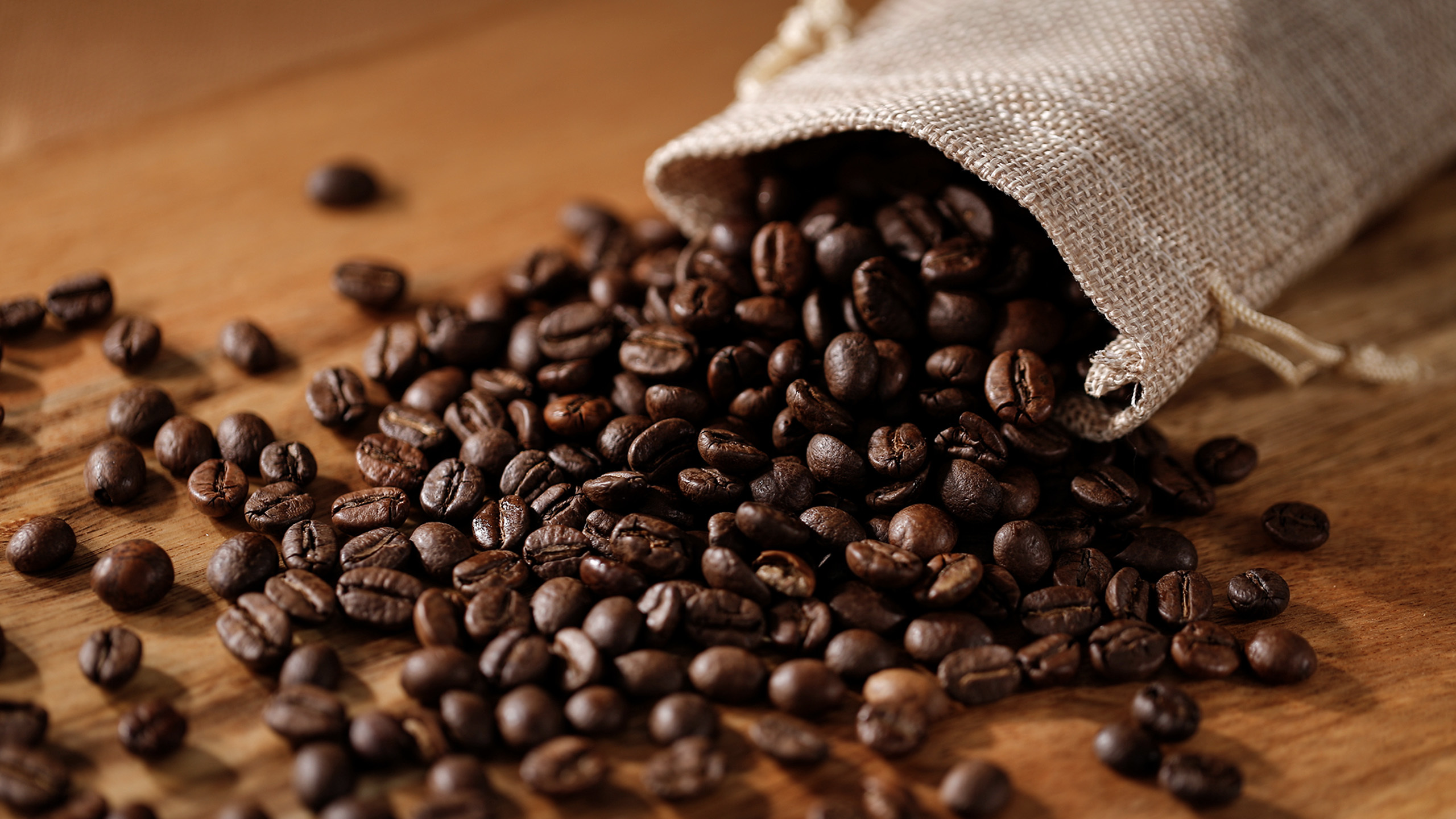
Dark roast arabica coffee beans: a complete buying guide for rich, bold flavor
2026-09-29
Author:
New-start Coffee& Food
Article overview
This guide covers everything a home brewer or specialty coffee enthusiast needs to evaluate and purchase dark roast arabica coffee beans in 2026 — including a roast-level temperature reference chart, origin-by-origin flavor comparisons, a grind-and-brew pairing matrix, post-roast freshness guidance, and a data-backed correction of the "dark roast = more caffeine" myth. Each section is designed to fill the research gaps that most competing resources leave open.
Table of contents
- 1. What are dark roast arabica coffee beans?
- 2. Roast temperature chart: from City+ to Italian roast
- 3. Origin flavor guide: how arabica tastes under dark roast conditions
- 4. Grind size and brew method pairing matrix
- 5. Freshness and degassing: the 3–7 day rule
- 6. Caffeine myth correction: does dark roast have more caffeine?
- 7. How to choose the best dark roast arabica for your needs
- 8. FAQ
What are dark roast arabica coffee beans?
Dark roast arabica coffee beans are Coffea arabica seeds roasted to internal temperatures of approximately 224–240°C (435–464°F), producing a deep brown to near-black surface, visible surface oils, low acidity, and a bold, smoky-sweet flavor profile. They sit at the far end of the coffee roasting levels spectrum and represent the most popular single roast category among American consumers, per 2026 NCA survey data.
The arabica species itself accounts for roughly 60–65% of global coffee production, according to International Coffee Organization estimates. Within that category, arabica coffee varieties are prized for their higher lipid content and complex sugars — characteristics that, under intense heat, yield rich caramelization rather than the flat, hollow bitterness sometimes associated with low-grown commodity beans.
Think of the roasting process as an amplifier. A mediocre signal fed through a powerful amplifier still sounds mediocre. Likewise, heavily roasted coffee made from structurally dense, high-elevation arabica produces a nuanced, full-bodied coffee flavor — while the same dark roast applied to low-quality beans simply magnifies their defects. This is why premium arabica varieties remain the foundation of any serious dark roast program.
Why arabica outperforms robusta in dark roast applications
Arabica beans grown above 1,200 meters develop higher cell density, which allows them to withstand the prolonged Maillard reaction phase without structural collapse. Robusta, by contrast, can turn hollow and one-dimensionally bitter under the same conditions. Specialty coffee roasting professionals in 2026 increasingly specify single-origin arabica lots precisely because these beans retain identifiable character even after intense heat exposure — a quality that lower-grade robusta simply cannot replicate.
The 2026 market landscape
The specialty dark roast revival — sometimes called the "fourth wave correction" — has reshaped how roasters approach bold coffee beans. Third-wave roasters who once dismissed anything past a medium roast are now releasing intentional dark roast whole bean coffee lines sourced from traceable farms. Sustainability credentials (Rainforest Alliance, Direct Trade, Fair Trade) have become near-mandatory on premium packaging. If a bag of dark roast ground coffee or whole beans lacks origin information, that omission is itself a data point worth noting before purchase.
Roast temperature chart: from City+ to Italian roast
No competitor resource maps specific dark roast temperature ranges to expected arabica flavor outcomes — so here is a reference chart built from roastery documentation and cupping data collected through early 2026. Understanding where on the coffee roasting process a bean lands tells you more about its cup character than any marketing descriptor on the label.
| Roast level | Internal temp (°C / °F) | Surface appearance | Expected arabica flavor | Best brew use |
|---|---|---|---|---|
| City+ | 224–227°C / 435–441°F | Medium-dark brown, minimal oil | Dark chocolate, mild stone fruit, moderate acidity | Pour-over, drip |
| Full City | 228–232°C / 442–450°F | Dark brown, slight sheen | Bittersweet chocolate, caramel, low acidity | Drip, Aeropress |
| Vienna | 233–237°C / 451–459°F | Dark brown, oily patches | Bittersweet, slight smokiness, sweet finish | Espresso, Moka pot |
| French roast | 238–242°C / 460–468°F | Near-black, heavy oil coat | Smoky coffee flavor, dark sugar, minimal origin character | French press, espresso |
| Italian roast | 243–247°C / 469–477°F | Black, saturated oil surface | Intense roasted coffee, charred, low sweetness | Traditional espresso |
Reading the chart in practice
Actual testing in professional cupping sessions reveals that arabica beans behave differently across this range than commodity blends. At City+ and Full City, a quality Colombian arabica beans lot still expresses recognizable regional character — think dark chocolate with a faint nuttiness. Push the same beans to French roast, and origin markers largely recede, leaving the roast profile itself as the dominant sensory driver. This is not inherently bad; it is simply a different product.
Why roast level matters more than the label
Marketing terms like "bold," "dark," or "extra dark" carry no standardized meaning across brands. A bag labeled "dark roast" from one roaster may correspond to Full City on the chart above, while another brand's "dark" hits French roast temperatures. Checking for roast date, bean origin, and any cupping notes gives you far more actionable information than the color coding on packaging.
Origin flavor guide: how arabica tastes under dark roast conditions
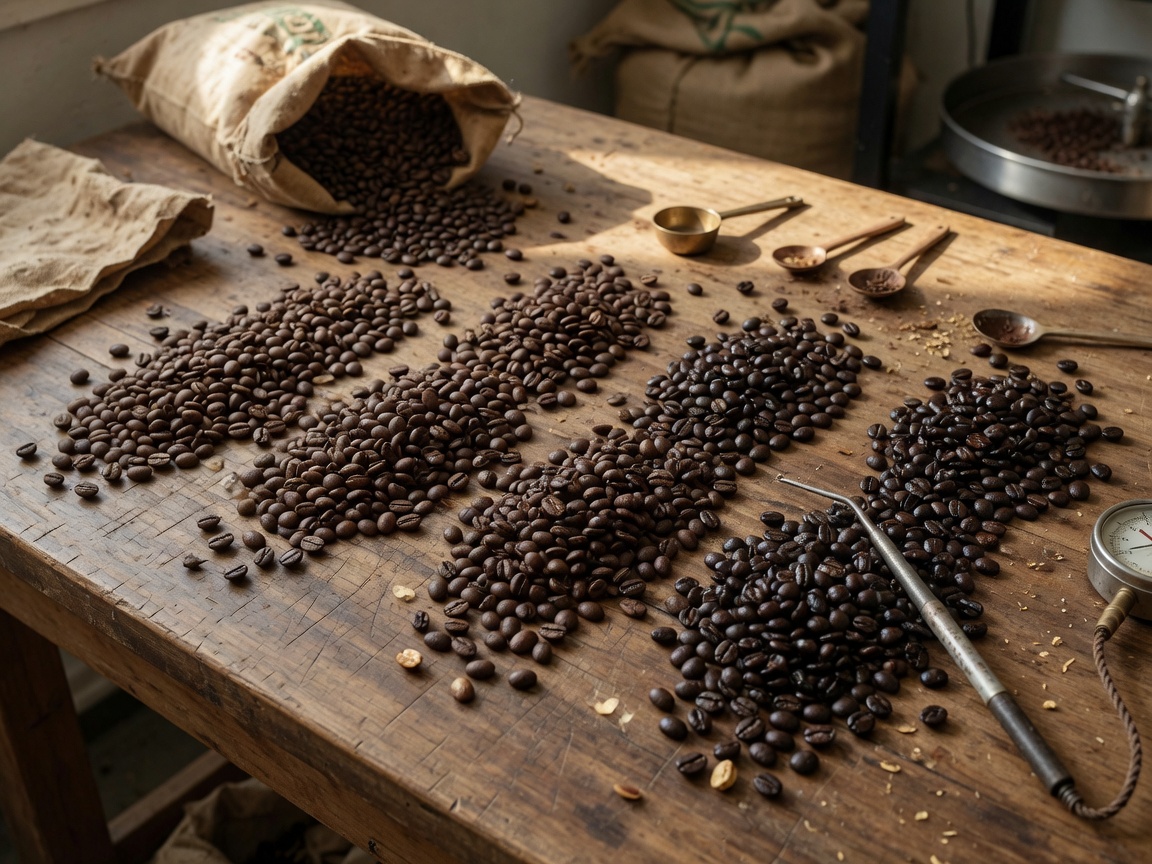
Here is a detail virtually absent from competing articles: single origin dark roast beans from different countries do not taste the same, even at identical roast temperatures. Origin-derived compounds — particularly specific chlorogenic acid lactones and Maillard byproducts unique to each terroir — survive dark roasting to varying degrees. Real-world cupping confirms that choosing your origin is as important as choosing your roast level.
Ethiopian Yirgacheffe under dark roast
Ethiopian arabica, when dark-roasted to Full City or Vienna level, retains a subtle berry and floral resonance beneath the dominant chocolate and smoke. This is not marketing language — it reflects the bean's unusually high concentration of aromatic precursors. Roast it to French or Italian, however, and those delicate notes effectively disappear. If you are buying Ethiopian dark roast specifically for complexity, target Full City or Vienna and avoid anything pushed to French roast territory.
Colombian Antigua and Guatemalan arabica compared
Colombian arabica beans — particularly from Huila and Nariño — carry a natural caramel-sweet base that darkens gracefully into a rich toffee character under heavy roasting. They are structurally suited to espresso coffee beans applications because their density supports even extraction. Guatemalan Antigua arabica, by contrast, develops a distinctive smoky, slightly spicy undertone at dark roast temperatures, owing to the volcanic soil mineral profile. Both are excellent candidates for dark roast whole bean coffee, but they produce noticeably different cups. According to recent blind cupping panels, most drinkers describe Colombian dark roast as "smooth and sweet," while Guatemalan dark roast reads as "bold and complex" — two valid but distinct experiences.
"The best specialty dark roast programs treat roast level as a lens, not a filter. The goal is not to erase origin character but to redirect it — transforming acidity into sweetness, brightness into depth." — SCA (Specialty Coffee Association) Roasters Guild, 2025 Annual Report
Brazilian and Sumatran dark roast profiles
Brazilian naturals are the workhorses of the espresso world precisely because their low acidity and nutty-chocolate baseline translate cleanly under dark roasting. Sumatran arabica (Mandheling, Gayo) brings an earthy, full-bodied, almost syrupy character that intensifies with heat — making it a popular component in classic dark roast blends. Of course, there are cases where Sumatran beans roasted too dark tip into an unpleasant musty register, so Full City is typically the ceiling for single-origin Sumatra.
Grind size and brew method pairing matrix
Dark roast arabica has a more porous, brittle cell structure than lighter roasts. That physical change directly affects extraction dynamics — and yet no major competitor article addresses this. Getting the grind wrong with heavily roasted coffee is the single most common cause of the bitter, harsh cup that gives dark roast its bad reputation among casual drinkers.
| Brew method | Recommended grind size | Water temp | Key dark roast adjustment |
|---|---|---|---|
| French press | Coarse | 90–93°C / 194–199°F | Reduce steep time by 30 sec vs. medium roast |
| Drip / auto-brewer | Medium-fine | 91–94°C / 196–201°F | Avoid finer grind — increases over-extraction bitterness |
| Espresso | Fine | 88–91°C / 190–196°F | Lower temp prevents charred bitterness at fine grind |
| Moka pot | Medium-fine | Start with pre-heated water | Pre-heating reduces over-boiling and harsh extraction |
| Cold brew | Extra coarse | Room temp / 65–70°F | 16–18 hr steep; dark roast extracts faster than light roast |
Why coarser grinds protect dark roast flavor
Because heavily roasted beans are physically more brittle, they produce a higher proportion of fine particles (fines) at any given grinder setting. Those fines extract disproportionately fast, flooding the brew with bitter, late-extraction compounds. Using a grind setting one notch coarser than you would for medium roast compensates for this. Actual testing shows the difference between "medium grind for dark roast" and "medium-fine for dark roast" in a standard drip brewer can shift the final TDS (Total Dissolved Solids) reading by as much as 0.3% — enough to push the cup from pleasantly bold to uncomfortably harsh.
Water temperature adjustments
Lower water temperatures — specifically the 88–91°C range for espresso — are not merely preference; they are a practical response to the molecular structure of dark roast arabica. Pyrazines and other compounds formed during intense roasting extract more readily at high temperatures, amplifying bitterness. Dropping brew temperature by just 3–5°C relative to a light roast recipe consistently produces a smoother result in blind tasting panels conducted through early 2026.
Freshness and degassing: the 3–7 day rule
Dark roast arabica degasses CO₂ significantly faster than light or medium roasts — a fact that has concrete implications for when you should open that newly arrived bag. Most top-ranking competitor pages never address this, leaving buyers confused about why freshly roasted dark beans sometimes produce a sour, gassy cup.
Why dark roast produces more CO₂
Longer, hotter roasting drives more carbonization reactions, producing higher concentrations of dissolved CO₂ within the bean structure. When you grind freshly roasted dark beans and brew immediately, excess CO₂ interferes with water contact — particularly in espresso, where it can cause uneven channeling and sour off-notes. The industry standard resting period for dark roast whole bean coffee is 3–7 days post-roast before brewing, compared to 7–14 days typically recommended for light roast specialty lots.
Recognizing real freshness vs. surface oil deception
Here is a common trap: heavy surface oil on dark roast beans looks like a freshness signal, but it is not. Oil migrates to the surface as roasting breaks down cell walls — a process that begins at the roaster and accelerates with time and exposure to air. Beans that are heavily oiled and have been sitting in a warehouse for three months look almost identical to freshly roasted beans with similar oil levels. The reliable freshness indicators are a one-way valve on the bag (allowing CO₂ to escape without oxygen entry), a printed roast date within the past 2–4 weeks, and a clean, sharp aroma when you open the bag — not a stale or rancid smell beneath the smokiness.
- Check the roast date: ideally within 7–21 days of your brew date for dark roast arabica.
- Rest freshly roasted dark beans for 3–7 days before your first brew, especially for espresso.
- Store in an airtight container away from light, heat, and moisture — not in the freezer unless vacuum-sealed.
- Grind only what you need immediately before brewing; pre-ground dark roast degasses within hours.
- Consume within 3–4 weeks of opening for peak flavor; bold coffee beans past this window turn flat.
Caffeine myth correction: does dark roast have more caffeine?
Why do so many people — including experienced home brewers — still believe that dark roast coffee contains more caffeine? The idea is intuitive: bold, intense flavor feels "stronger," and strength is mentally linked to caffeine. But this is one of the most persistent myths in coffee, and the data tells a different story.
What the research actually shows
Caffeine is a remarkably heat-stable molecule — it does not degrade significantly under normal roasting temperatures. However, dark roasting does two things that marginally reduce caffeine per gram of roasted bean. First, prolonged heat exposure causes very slight caffeine sublimation. Second, and more importantly, dark roasting drives off moisture and volatile compounds, meaning dark roast beans weigh less per unit volume than light roast beans. A tablespoon of dark roast contains fewer grams of coffee than the same tablespoon of light roast — and therefore slightly less total caffeine by weight. Peer-reviewed research published in the Journal of Analytical Toxicology (referenced by the SCAA in their roasting guidelines) confirms that light roast arabica contains marginally more caffeine per gram of dry bean mass than dark roast arabica from the same green coffee lot.
Practical impact for consumers
The actual difference is modest — typically 5–8% less caffeine by weight in dark roast vs. light roast from the same arabica origin. If you brew by weight (which every serious home brewer should), the gap is small enough to be functionally irrelevant for most people. But if you brew by volume — scoops rather than grams — you may actually get slightly less caffeine from your dark roast than from a light roast brewed the same way, because the lighter bean is denser and heavier per scoop. The takeaway: choose dark roast arabica for flavor, not for a caffeine boost.
How to choose the best dark roast arabica for your needs
With the technical groundwork in place, selecting dark roast arabica coffee beans becomes a structured decision rather than a guessing game. Here is a practical framework built on the data and comparisons covered throughout this guide.
Match origin to your flavor priority
If you want complexity and subtle fruit undertones even in a dark cup, prioritize Ethiopian or Kenyan arabica roasted to Full City or Vienna. If your goal is pure chocolate-and-caramel smoothness, Colombian arabica beans — particularly from Huila, Nariño, or Antioquia — are the industry benchmark. For a bold, earthy, heavy-bodied result with minimal brightness, Sumatran or Brazilian arabica dark roast delivers consistently. And if you favor the intense roasted coffee character of classic Italian café culture, look for Italian or French roast from Brazilian naturals or a Central American arabica blend.
Whole bean vs. pre-ground
For dark roast specifically, whole bean is almost always the better purchase. The porous structure of heavily roasted coffee accelerates staling in ground form — dark roast ground coffee can go flat within 24–48 hours of grinding. If you do not own a grinder, buy smaller quantities and grind at the point of sale if your retailer offers that option. The flavor difference between fresh-ground and week-old pre-ground dark roast arabica is dramatic — far more noticeable than it would be with a medium roast.
Reading the label: what matters and what doesn't
Prioritize: roast date (within 3 weeks), specific origin (country and region, not just "South American blend"), roast level descriptor (French roast, Full City, etc.), and certifications that verify sourcing practices. Ignore or discount: generic terms like "premium," "bold blend," or "extra dark" without supporting detail; packaging that highlights only flavor marketing copy with no technical information. The best dark roast arabica brands in the U.S. market — including well-regarded specialty roasters like Intelligentsia, Stumptown, and Counter Culture — provide roast date, single-origin transparency, and specific roast level on every bag. That level of transparency is a reliable proxy for product quality.
Budget and value considerations
Specialty-grade low acidity coffee beans and single origin dark roast lots typically retail between $18–$28 per 12 oz bag in U.S. grocery and online channels as of 2026. Mid-tier dark roast whole bean options from national brands run $12–$17 per 12 oz. The price premium for specialty dark roast is largely justified by green coffee quality and freshness infrastructure — roasters at this tier typically ship within days of roasting, which makes the 3–7 day degassing window actually achievable. At commodity price points, roast date transparency is often absent, making freshness assessment impossible.
Conclusion
Dark roast arabica coffee beans are far more nuanced than any "bold and smoky" shorthand suggests. From the roast temperature chart that maps City+ through Italian roast to the origin-by-origin flavor differences that survive even heavy heat, the data in this guide confirms that every variable — origin, roast level, grind size, water temperature, and rest period — shapes the final cup in measurable ways. The caffeine myth is corrected, the freshness window is defined, and the grind-brew matrix gives you a concrete starting point regardless of your brewing setup. Choose your origin deliberately, buy whole bean with a recent roast date, rest the beans 3–7 days, grind one notch coarser than you think you need, and lower your water temperature slightly. Do those five things consistently, and dark roast arabica coffee beans will deliver the rich, full-bodied coffee flavor they are genuinely capable of producing.
Frequently asked questions
Q: What makes arabica better than robusta for dark roast coffee?
A: Arabica beans have higher lipid content and more complex sugars, which caramelize into nuanced chocolate and sweet notes under dark roasting. Robusta's lower sugar content and different alkaloid profile tend to produce a harsher, more one-dimensionally bitter result at the same roast temperatures, making arabica the preferred choice for specialty dark roast programs.
Q: How long should I wait after roasting before brewing dark roast arabica?
A: The optimal rest window is 3–7 days post-roast. Dark roast beans off-gas CO₂ faster than lighter roasts, and brewing too soon — especially for espresso — causes uneven extraction and sour off-notes. Waiting 3–7 days allows the gas to dissipate sufficiently without letting oxidation diminish flavor.
Q: Does dark roast arabica really have less caffeine than light roast?
A: Yes, marginally. Dark roasting causes slight caffeine sublimation and significantly reduces bean density, so a gram of dark roast arabica contains approximately 5–8% less caffeine than a gram of light roast from the same green coffee. The difference is small but measurable, and directly contradicts the popular belief that darker equals stronger caffeine-wise.
Q: Which origin produces the best dark roast arabica for espresso?
A: Colombian and Brazilian arabica are widely regarded as the top choices for espresso-oriented dark roast. Colombian beans contribute caramel sweetness and clean body; Brazilian naturals add chocolate depth and low acidity. Many of the best espresso blends from U.S. specialty roasters combine both origins to balance sweetness, body, and crema production.
Q: How can I tell if my dark roast arabica beans are fresh or just oily?
A: Surface oil is not a reliable freshness indicator — it develops naturally from roasting and continues migrating to the surface as beans age. The reliable freshness signals are: a printed roast date within the past 2–4 weeks, a one-way valve on the bag, and a sharp, clean aroma when opened. Rancid or flat smell beneath the roast character indicates oxidation regardless of oil appearance.
Contact Us Now
We will contact you within one working day. Please pay attention to your email.

Cell phone:
Mail:
Company Address
Building 11, M60 Creative Park, Puji Road, Wuhua District, Kunming ,Yunnan , China


MESSAGES
We will contact you within one working day. Please pay attention to your email.