
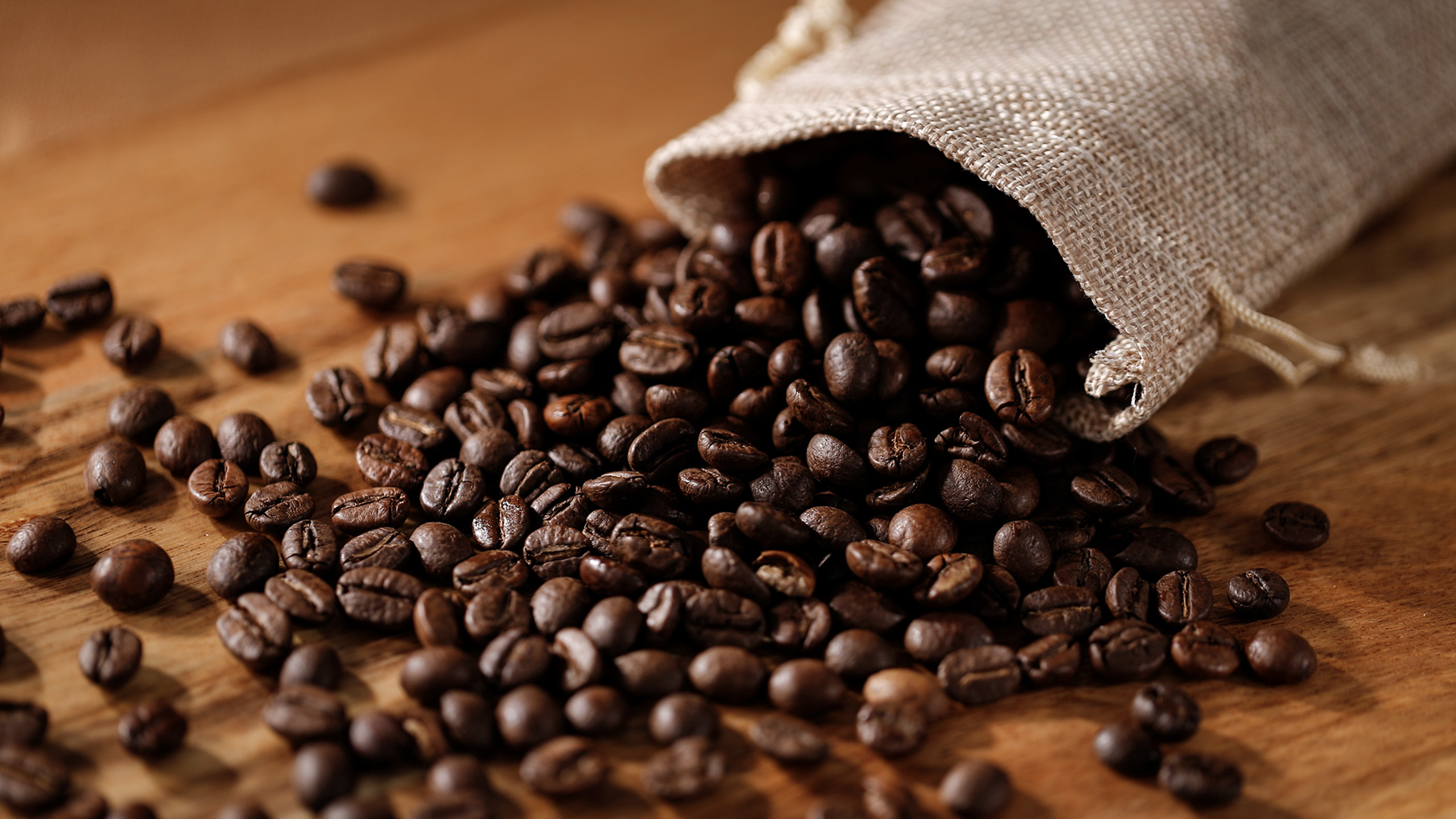
Green coffee beans wholesale: sourcing guide, pricing tips & what to look for in a supplier
2026-08-18
Author:
New-start Coffee& Food
Article overview
This guide is written for US-based roasters and procurement buyers researching green coffee beans wholesale in 2026. It covers wholesale pricing structures, FDA import compliance, crop-year freshness standards, supplier vetting frameworks, and emerging niche demand segments — content areas where most competing resources fall short. Reading time: approximately 14 minutes.
Table of contents
- 1. What is green coffee beans wholesale?
- 2. Wholesale pricing tiers: what you actually pay per pound
- 3. US import regulations every first-time buyer must know
- 4. Freshness, crop years, and moisture content explained
- 5. How to vet and audit a wholesale green coffee supplier
- 6. Niche segments redefining the US wholesale market in 2026
- 7. Top bean varieties and origins: arabica vs. robusta and beyond
- 8. FAQ
What is green coffee beans wholesale?
Green coffee beans wholesale is the bulk purchasing of unroasted coffee beans directly from suppliers, importers, or distributors — typically in quantities starting at 25 lbs and scaling to full 132 lb (60 kg) jute sacks or container-load volumes. The term encompasses both commercial-grade commodity lots and specialty-grade micro-lots purchased by independent roasters who want control over the roast profile from the very beginning of the supply chain.
Understanding this market requires separating two distinct buyer types. The first is the commercial coffee bean supplier relationship: large-volume buyers working with established importers to lock in forward contracts on commodity arabica green coffee beans or robusta green coffee beans, often priced against ICE futures. The second is the specialty end of the spectrum — roasters sourcing single origin green coffee from specific farms, cooperatives, or regions, where traceability and cupping scores drive the purchase decision far more than spot price.
Why does this distinction matter? Because the sourcing strategy, MOQ expectations, pricing logic, and quality verification process are almost entirely different for each. Treating them as the same market is a mistake that costs buyers time and money. The guidance below applies to both segments, and we'll flag where the approach diverges.
For a foundational understanding of coffee bean varieties and processing, the taxonomy of species, cultivars, and post-harvest methods is worth reviewing before you engage any supplier — it directly affects what questions you should ask and what specifications you should request.
Who actually buys green coffee in bulk?
The buyer universe for bulk green coffee beans in the US is broader than most people assume. It includes independent micro-roasters sourcing 25–100 lb trial lots, regional wholesale coffee roaster supply operations buying full sacks on rolling purchase orders, private-label brands building proprietary blends, food manufacturers using unprocessed coffee beans as an ingredient, and increasingly, home roasting coffee beans enthusiasts ordering 5–10 lb lots from green bean distributors who have lowered their entry thresholds. Each of these segments has different MOQ tolerances, freshness priorities, and certification requirements.
The role of importers and distributors in the US market
Most US roasters do not import directly from origin — at least not initially. The standard chain runs: producing-country exporter → US licensed importer → domestic distributor or coffee bean distributor USA → end roaster. Each layer adds margin but also provides value: importers handle FDA compliance, customs clearance, and warehousing; distributors offer smaller lot sizes and credit terms. Direct trade relationships — where roasters contract directly with farms — have grown significantly in 2026, driven by transparency demand and margin pressure from rising arabica futures, but they require volume, legal infrastructure, and logistical capability that smaller buyers often lack.
Wholesale pricing tiers: what you actually pay per pound
Pricing for unroasted coffee beans wholesale is tiered by volume, and the per-pound cost difference between buying a 5 lb sample bag and a full 132 lb sack can be substantial. Most wholesale coffee suppliers in the US structure their pricing across four or five quantity breaks. Here is what those tiers look like in practice based on 2026 market data across both commodity and specialty grades.
| Purchase quantity | Commodity arabica ($/lb) | Specialty arabica ($/lb) | Robusta commercial ($/lb) | Typical MOQ |
|---|---|---|---|---|
| 5 lb (sample/trial) | $4.50 – $6.00 | $7.00 – $12.00 | $2.80 – $3.80 | No formal MOQ |
| 25 lb | $3.80 – $5.20 | $6.00 – $10.50 | $2.40 – $3.20 | 25 lb |
| 100 lb | $3.20 – $4.50 | $5.20 – $9.00 | $2.10 – $2.90 | 100 lb |
| Full sack (132 lb / 60 kg) | $2.90 – $4.10 | $4.80 – $8.50 | $1.90 – $2.70 | 1 full sack |
| Container (FCL, ~37,500 lb) | $2.50 – $3.60 | Negotiated | $1.60 – $2.40 | Full container |
A few important caveats apply to these figures. Arabica futures prices have been exceptionally volatile — having briefly surpassed $3.00/lb on ICE in late 2024, they directly set the floor for all commercial-grade pricing. The numbers above reflect prevailing 2026 market conditions but will shift with futures movements. Always request a current price sheet rather than relying on any published guide, including this one.
What drives price variation within the same tier?
Two roasters buying the same 100 lb quantity of Colombian arabica green coffee beans can pay very different prices. Origin, altitude, processing method, screen size, and SCA score all create price differentiation. A washed Colombian SCA-82 lot at 1,800 meters will command $2.00–$3.00/lb more than a commodity-grade natural-processed blend from the same country. Certification premiums — organic, Fair Trade, Rainforest Alliance — add another $0.30–$0.80/lb depending on the certifying body and audit complexity. When comparing quotes from multiple wholesale coffee suppliers, always normalize by specification, not just by quantity.
Green coffee beans bulk buy: negotiating better terms
Experienced buyers know that price is only one lever. Payment terms (net-30 vs. prepayment), storage flexibility, freight inclusion (FOB vs. CIF vs. delivered), and sample policy all affect total cost of procurement. Asking a commercial coffee bean supplier for consignment storage — where they hold inventory and you draw down against it monthly — can significantly reduce your cash exposure without sacrificing the per-unit cost benefits of large-volume pricing.

US import regulations every first-time buyer must know
Importing green coffee beans wholesale into the United States involves several overlapping regulatory requirements — and most sourcing guides skip this section entirely. That omission creates real risk for first-time importers. Here is what you need to know before placing an international order.
FDA prior notice and facility registration
Under the Bioterrorism Act and the Food Safety Modernization Act (FSMA), all food shipments entering the US — including raw coffee beans — require FDA Prior Notice submission before the shipment arrives at the US port. This notice must be submitted electronically through the FDA's Prior Notice System Interface (PNSI) or through US Customs' Automated Broker Interface. The notice must include the identity of the article, manufacturer, shipper, country of origin, and anticipated arrival details. Failure to file results in shipment refusal and potential re-export at the importer's cost. Most licensed customs brokers handle this routinely, but verifying it is your responsibility as the importer of record.
Additionally, any foreign food facility supplying green coffee beans to the US must be registered with the FDA. When vetting a raw coffee beans supplier, request their FDA registration number. Any supplier unfamiliar with this requirement is a red flag for US export readiness.
Customs duties and the Harmonized Tariff Schedule
Unroasted, unprocessed coffee beans (HTS code 0901.11.00 for non-decaffeinated; 0901.12.00 for decaffeinated) are generally imported duty-free into the US from most origins under the normal trade relations framework. However, import duties can apply depending on origin country trade status — and tariff schedules have shifted repeatedly in recent years. According to USDA coffee commodity data, the US is among the world's largest green coffee importers, which means customs processing infrastructure is well-established, but compliance requirements are strictly enforced. Always work with a licensed customs broker (CHB) for any shipment exceeding $2,500 in value.
The global coffee trade overview from the International Coffee Organization provides useful context on the producing-country export documentation — phytosanitary certificates, certificates of origin, and ICO certificates of origin — that your supplier should be providing as standard with every commercial shipment.
USDA and agricultural inspection considerations
Green coffee beans are an agricultural commodity subject to USDA Animal and Plant Health Inspection Service (APHIS) oversight when live plant material or soil contamination is a concern. In practice, properly processed and bagged green coffee rarely triggers APHIS holds — but improperly hulled or contaminated lots can. Requesting a phytosanitary certificate from the exporting country's agricultural authority is standard practice and should be included in your purchase contract as a delivery requirement.
Freshness, crop years, and moisture content explained
Here is a point that surprises many new buyers: freshness in green coffee is not simply "newer is better." The relationship between crop year, moisture content, and roastability is considerably more nuanced — and understanding it is the difference between sourcing beans that perform consistently and ones that produce unpredictable results in the drum.
New crop vs. past crop: what these terms actually mean
New crop refers to coffee harvested and processed within the current or most recent harvest season — typically within 3–9 months of purchase. Past crop indicates beans from a prior harvest year. The distinction matters because new crop beans often carry elevated moisture content (sometimes 12.5–13.5%), which can cause uneven roasting, scorching, and grassy or "bright" flavor notes that many roasters find undesirable. Past crop beans, when stored correctly, often stabilize in the 10.5–12% moisture range and roast more predictably. Think of it like fresh lumber versus kiln-dried: the kiln-dried product is more dimensionally stable, even if it isn't technically "newer."
Always ask your wholesale coffee supplier to specify the harvest year (or "crop year") and the current moisture content reading at time of shipment. Reputable suppliers measure moisture with a calibrated grain moisture meter and can provide documentation. Any supplier who cannot or will not provide this data is selling you incomplete product information.
How long do green coffee beans stay viable?
Properly stored green coffee — in breathable grain-pro bags or jute sacks, at 60–70°F and 50–60% relative humidity — remains roastable for 12–18 months from the crop date without significant quality degradation. Beyond 24 months, even well-stored lots show flavor fading, increased woodiness, and reduced origin character. Specialty-grade lots with complex aromatics degrade faster than commodity-grade beans. When buying green coffee beans for roasting in bulk quantities, always calculate your consumption rate before ordering: buying 6 months of supply is sound inventory management; buying 18 months of supply at once creates freshness risk unless you have climate-controlled storage and are working with proven commodity-grade lots.
"Moisture content is the single most important physical specification in green coffee procurement. An SCA score tells you about flavor potential; moisture content tells you whether that potential can actually be realized in the roaster." — Industry consensus among SCA-certified Q Graders and professional coffee importers, 2026.
Reading a green coffee specification sheet
A complete spec sheet from a reputable raw coffee beans supplier should include: crop year, country and region of origin, farm or cooperative name, processing method, screen size (e.g., 15+ or 17/18), moisture content (%), water activity (Aw), defect count per 300g sample, and SCA cupping score (if specialty grade). Missing any of these fields is not a minor omission — it reflects either the supplier's inability to access this data or unwillingness to be transparent about it.
How to vet and audit a wholesale green coffee supplier
Finding a supplier is easy. Finding a supplier you can trust with your roastery's reputation — and your cash — requires a structured vetting process. Most buyers skip straight to price negotiation. That sequencing error is why so many first-time wholesale buyers end up with off-spec coffee, delayed shipments, or supply relationships that collapse after the first season.
Step-by-step supplier vetting framework
- Request documentation first, not samples. Before anything arrives in a bag, ask for their FDA facility registration number, export license, and any active certifications (organic, Fair Trade, Rainforest Alliance, UTZ). If they hesitate or these documents don't exist, move on.
- Verify certifications independently. Cross-check organic certification numbers against the USDA National Organic Program (NOP) database. Rainforest Alliance certification IDs can be verified on the Rainforest Alliance public certificate search. Unverified "certified" claims are widespread and consequential.
- Request a full specification sheet and cupping report. For specialty green coffee wholesale purchases, request the SCA cupping score with the name of the Q Grader who conducted the evaluation. A score without an evaluator name is unverifiable.
- Order a sample lot before committing to volume. This sounds obvious, but many buyers skip it under time pressure. Actual testing reveals moisture issues, off-flavors, and inconsistencies that no specification sheet captures. Roast a 200g development sample before approving a purchase order.
- Evaluate response time and communication quality. A supplier who takes five days to answer a basic spec question will not perform better when a container is held at customs. Communication speed and accuracy under pressure is a proxy for operational competence.
- Ask for references from existing US buyer accounts. Legitimate commercial coffee bean suppliers operating in the US market can provide references. Call them. Ask specifically about consistency across seasons, defect rate, and responsiveness when something goes wrong.
- Negotiate a contract that includes quality guarantees. Any purchase order for more than one full sack should include written specification tolerances, rejection rights for off-spec delivery, and a clear process for dispute resolution.
Third-party lab testing: when is it worth it?
For large-volume buyers or those sourcing from new suppliers, third-party lab testing adds a meaningful layer of assurance. Labs like Eurofins or SGS can test for mycotoxins (specifically ochratoxin A, a concern with improperly dried coffee), pesticide residues, and heavy metals. This is particularly relevant for buyers sourcing organic-certified green beans for private label, where your brand's integrity is directly tied to the accuracy of the claims on the bag. Testing cost runs $150–$400 per lot depending on the analyte panel, which is modest insurance against a recall or customer complaint at scale.
Niche segments redefining the US wholesale market in 2026
The US green coffee wholesale market is not monolithic. Several niche segments are growing faster than the broader commodity market — and buyers who understand them gain a competitive advantage, whether in positioning, margin, or supply security.
Organic-certified green beans for private label roasters
Demand for USDA-certified organic unroasted coffee beans has accelerated steadily. Private label roasters — those building retailer-specific or DTC-branded coffee lines — increasingly require organic certification as a baseline, not a premium. Sourcing organic green coffee beans in bulk adds complexity: the supply chain must maintain organic integrity from farm through your own roastery (requiring NOP handler certification), and pricing carries a $0.40–$0.80/lb premium over conventional equivalents. The margin recovery on organic-labeled finished product, however, typically justifies the cost differential for retail-facing brands.
Specialty-grade decaf green beans wholesale
Decaf is often treated as an afterthought in green coffee sourcing discussions. That's a missed opportunity. The US decaf market is growing — driven by health-conscious consumers who refuse to compromise on cup quality — and specialty-grade decaffeinated green beans (SCA 80+, processed via Swiss Water or CO₂ methods) are genuinely scarce relative to demand. Most conventional importers offer limited specialty decaf inventory, which means buyers willing to establish direct relationships with suppliers capable of supplying high-quality decaf green coffee beans can lock in supply advantages. When sourcing decaf, always specify the decaffeination process: solvent-based (ethyl acetate or methylene chloride) lots may not qualify for organic certification and carry different flavor implications than non-solvent methods.
Shade-grown and regenerative-agriculture sourced options
Beyond organic and Fair Trade, a newer tier of certification and sourcing narrative is gaining traction in 2026: shade-grown, bird-friendly (Smithsonian certified), and regenerative-agriculture coffee. These attributes resonate strongly with environmentally conscious US consumers and are increasingly requested by specialty café accounts sourcing wholesale coffee roaster supply. Premiums range from $0.50 to $1.50/lb above conventional specialty pricing. Supply is limited, and few distributors carry inventory specifically designated with these attributes — making direct producer relationships essentially the only reliable sourcing path for buyers who want verified claims.
Of course, there are cases where niche certifications add cost without proportional commercial benefit — that is true for roasters selling primarily through price-sensitive foodservice channels, where the certification premium cannot be passed through to the buyer. Know your end market before building your sourcing spec around attributes your customers won't pay for.
Yunnan single origin: a growing US niche
Chinese Yunnan coffee has quietly built a following among US specialty buyers in 2026. Grown in partial subtropical highland conditions, Yunnan primarily produces Catimor and Bourbon varietals processed via washed, natural, honey, and experimental anaerobic methods. Suppliers in this region offer grade-differentiated lots (Grade B, A, AA) with specialty processing options including sun-dried natural with wine notes and anaerobic fermentation profiles. With Rainforest Alliance and UTZ-equivalent certifications increasingly available from Yunnan operations, this origin has moved from curiosity to viable single origin green coffee option for buyers seeking supply diversification and competitive pricing on quality lots. Actual testing by roasters working with Yunnan beans has found clean, consistent cup profiles that compete credibly with Central American specialty grades at lower price points.
For buyers evaluating new origins, the key principle is the same regardless of where the coffee comes from: specification transparency, verifiable certification, and sample evaluation before volume commitment. No origin reputation — positive or negative — substitutes for physical verification of the lot in front of you.
As the industry's understanding of green coffee beans wholesale continues to deepen, the buyers who build systematic sourcing processes will consistently outperform those relying on relationship intuition or price alone. The 2026 market rewards documentation, diversification, and direct supply chain engagement — and penalizes buyers who treat green coffee procurement as a commodity transaction without regard for quality infrastructure.
Frequently asked questions
Q: What is the minimum order quantity for green coffee beans wholesale in the US?
A: MOQ varies by supplier tier. Sample lots start at 5 lb with no formal minimum. Most domestic importers set 25–50 lb as their entry point for wholesale pricing. Full sack pricing (132 lb) requires one-sack minimums. Container-level (FCL) pricing applies at approximately 37,500 lb. Many specialty green coffee wholesale distributors now offer flexible 25–100 lb increments specifically to serve smaller roasters.
Q: How do I verify that a green coffee supplier's organic certification is legitimate?
A: Request the NOP certificate number and the certifying agency name, then cross-reference it directly in the USDA's organic integrity database at ams.usda.gov. For international suppliers, verify through the certifying body's own certificate lookup tool. Never rely on a logo on a bag or website alone — fraudulent organic claims are an ongoing issue in the bulk green coffee beans market.
Q: What moisture content should green coffee beans have before roasting?
A: The SCA recommends green coffee moisture content between 10% and 12.5% for optimal roastability. Beans above 13% risk uneven development and grassy flavor. Beans below 9% are overdried and may roast faster than expected, increasing the risk of scorching. Always request a moisture spec in writing before accepting any wholesale lot of unroasted coffee beans.
Q: Do I need an import license to buy green coffee beans directly from overseas suppliers?
A: The US does not require a specific import license for coffee. However, you must be the registered importer of record, file FDA Prior Notice for each shipment, work with a licensed customs broker for commercial shipments over $2,500, and ensure the exporting supplier holds FDA facility registration. Failing any of these steps can result in shipment detention or refusal at the port of entry.
Q: What is the difference between commodity-grade and specialty-grade green coffee for wholesale buyers?
A: Commodity-grade green coffee meets basic export standards but is priced against futures markets with minimal traceability. Specialty-grade (SCA 80+ on a 100-point cupping scale) requires documented origin, low defect counts, and evaluator-verified flavor quality. For roasters building a brand, specialty green coffee wholesale offers differentiation potential. For high-volume or commercial roasting operations, commodity-grade provides cost efficiency. Many roasters use both, blending by application.
Contact Us Now
We will contact you within one working day. Please pay attention to your email.

Cell phone:
Mail:
Company Address
Building 11, M60 Creative Park, Puji Road, Wuhua District, Kunming ,Yunnan , China


MESSAGES
We will contact you within one working day. Please pay attention to your email.