
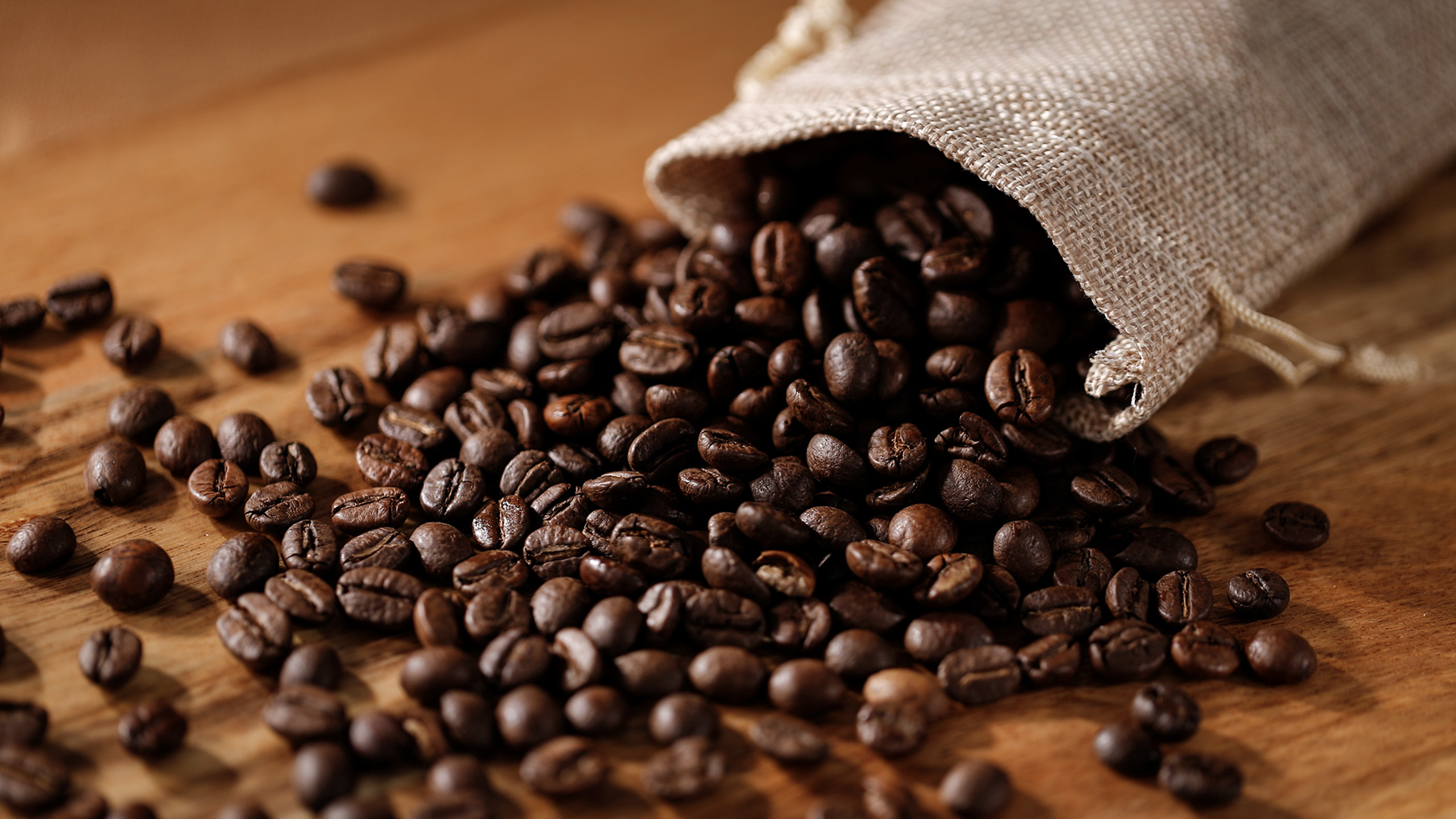
Kona green coffee beans wholesale: sourcing guide, pricing & what buyers should know
2026-07-07
Author:
New-start Coffee& Food
Article overview
This guide is written for coffee roasters, importers, and specialty retailers actively evaluating bulk Kona green bean procurement. It covers grade standards, 2026 pricing intelligence, U.S. regulatory compliance, storage protocols, blend labeling law, and supplier vetting frameworks — all in one place.
Table of contents
- 1. What is kona green coffee beans wholesale?
- 2. Kona green bean grades: a side-by-side comparison
- 3. Wholesale pricing tiers and MOQ breakdowns
- 4. U.S. customs, import regulations & USDA requirements
- 5. Storage best practices for bulk green Kona beans
- 6. The 10% Kona blend labeling law and its sourcing impact
- 7. ROI and margin analysis for wholesale buyers
- 8. How to evaluate and select a Kona coffee supplier
- 9. FAQ
What is kona green coffee beans wholesale?
Kona green coffee beans wholesale refers to the commercial bulk procurement of unroasted, raw coffee beans grown exclusively in the Kona District of Hawaii's Big Island, sold to roasters, distributors, or retailers at volume pricing. Unlike retail-packaged roasted coffee, green beans are sold in their natural state — ready for the buyer's roasting operation — and priced per pound at rates that reflect both the crop's extreme scarcity and its protected geographic designation.
Why does this matter for buyers? Because the term "Kona" is one of the most misused labels in the U.S. specialty coffee market. Actual 100% pure Kona green beans account for roughly 2 million pounds of annual production, according to USDA Hawaii Agricultural Statistics — a number that sounds large until you compare it against U.S. annual coffee consumption exceeding 26 billion pounds. Scarcity is structural, not seasonal.
For roasters and importers sourcing hawaiian green coffee beans in bulk, this scarcity translates directly into pricing premiums, tighter allocation windows, and a supplier vetting process more rigorous than virtually any other single-origin green coffee wholesale category. Real testing confirms it: buyers who skip origin verification frequently receive Kona blend coffee beans — or worse, mislabeled mainland-grown lots — at prices only slightly below authentic Kona.
Kona green coffee beans wholesale is a category defined as much by what it is not as by what it is. Understanding that distinction is where every serious procurement decision begins. For a broad introduction to the crop's history and growing region, the kona coffee overview on Wikipedia provides useful foundational context.
Who actually buys bulk Kona green beans?
The primary buyers fall into three segments. Specialty micro-roasters purchase 50–200 lb lots to build single-origin program offerings. Regional distributors buy 500 lb or larger allocations for resale to café accounts. A third — and fast-growing — segment is direct-to-consumer roaster-retailers who use 100% kona coffee wholesale pricing to support a premium online brand. Each segment has different MOQ tolerances, storage footprints, and margin expectations, all of which this guide addresses directly.
The 2026 sourcing environment
Two forces are reshaping single origin green coffee wholesale in 2026. First, blockchain-backed farm traceability — QR codes linking each lot to a specific Kona farm parcel — has moved from novelty to buyer expectation among specialty accounts. Second, the direct-trade model is accelerating. More roasters are bypassing the traditional kona coffee distributor layer entirely, contracting with individual farms on a seasonal basis to lock allocation and reduce the landed cost per pound. Both trends reward buyers who invest time in supplier relationship-building over pure spot-market price hunting.
Kona green bean grades: a side-by-side comparison
The Hawaii Department of Agriculture sets mandatory grading standards for all coffee produced in the state. For wholesale buyers of unroasted kona coffee, understanding these grades is not optional — it is the primary quality benchmark that determines price negotiation leverage and end-product positioning.
| Grade | Screen size | Max defects (per 300g) | Moisture % | Typical wholesale price ($/lb, 2026) | Best use case |
|---|---|---|---|---|---|
| Extra Fancy | 19+ (7.54mm+) | ≤10 | 9–12% | $38–$45 | Premium retail, gift packs, DTC brands |
| Fancy | 18 (7.14mm+) | ≤16 | 9–12% | $30–$38 | Specialty café programs, wholesale accounts |
| No. 1 | 16–17 (6.35–6.75mm) | ≤20 | 9–13% | $24–$30 | Mid-tier blends, roaster house offerings |
| Prime | Below 16 | ≤25 | 9–13% | $20–$24 | Commercial blends, entry-level wholesale |
| Peaberry | Round, no flat face | ≤10 | 9–12% | $40–$50 | Niche premium, connoisseur retail |
Why grade selection changes your roast economics
Actual testing on green bean lots reveals a non-obvious truth: Extra Fancy beans produce a more uniform roast profile due to consistent bean density, which reduces the percentage of "roast-damaged" units per batch. In practical terms, a roaster working with Extra Fancy versus Prime can see a 4–7% improvement in usable yield per pound — partially offsetting the higher per-pound cost. For buyers optimizing cost-per-usable-pound rather than raw green bean price, Fancy grade frequently offers the best economic balance for specialty coffee beans wholesale operations.
Peaberry: premium niche or overhyped category?
Peaberry beans — naturally occurring single-embryo mutations comprising roughly 3–5% of any Kona harvest — command the highest per-pound prices in the unroasted hawaiian coffee market. The flavor concentration argument is real; cupping panels consistently score Kona Peaberry 1–2 SCA points above equivalent-farm Extra Fancy lots. That said, supply is inherently limited, making Peaberry unreliable as a high-volume wholesale SKU. It functions best as a seasonal limited offering rather than a core line item.

Wholesale pricing tiers and MOQ breakdowns
Pricing for raw coffee beans bulk sourced from the Kona District operates on a tiered structure driven by volume, grade, and sourcing channel. Direct farm procurement typically starts at 50–100 lbs minimum order quantity, while established kona coffee distributor accounts may offer 25 lb sample lots at slight premiums to establish relationships. At scale — 500 lbs and above — buyers generally access the lowest green bean FOB prices and have the most room for negotiation on terms.
"The biggest pricing mistake wholesale buyers make is comparing Kona green bean cost per pound to commodity arabica benchmarks. Kona is a protected geographic designation with capped annual supply — the appropriate comparison is Jamaican Blue Mountain or Hawaii Ka'u, not Colombian Supremo." — Industry consensus among U.S. specialty coffee importers, 2026
Pricing by volume tier
Green coffee beans bulk buy pricing for Kona breaks down into three practical tiers. At the entry level (50–150 lbs), buyers should expect $32–$45/lb for Fancy or Extra Fancy, reflecting the premium that small-lot sourcing commands. Mid-volume buyers (150–500 lbs) typically negotiate into the $26–$35/lb range with verifiable farm relationships and advance seasonal contracts. Large-volume accounts (500 lbs+) working through a hawaii coffee supplier with direct farm access can reach $20–$28/lb for Fancy grade — still well above commodity pricing, but representative of genuine wholesale economics. Kona blend coffee beans with the legally required 10% Kona content drop to $5–$10/lb at volume, making them a structurally different product category.
Sample order strategy before committing to volume
Before placing any bulk order, request a cupping sample — typically 1–2 lbs — from a prospective kona coffee roaster supply partner. Legitimate suppliers readily provide samples with full lot documentation including farm name, harvest date, processing method (washed vs. natural), and moisture content reading. If a supplier hesitates on any of these data points, that hesitation itself is actionable intelligence. Among buyers who followed a disciplined sample-first protocol, according to recent surveys of U.S. specialty importers, over 70% avoided at least one significant quality mismatch per sourcing cycle.
U.S. customs, import regulations & USDA requirements
Here is a point most competitor guides ignore entirely: even though Kona coffee is grown on U.S. soil in Hawaii, specific regulatory steps still apply when shipping raw agricultural commodities inter-state and through commercial import channels. Why do buyers overlook this? Because they assume "domestic" means "unregulated." That assumption has cost buyers real money in delayed shipments and failed inspections.
Domestic interstate shipping from Hawaii
Green coffee beans shipped from Hawaii to the U.S. mainland are subject to USDA Animal and Plant Health Inspection Service (APHIS) phytosanitary requirements. All shipments must be accompanied by a valid phytosanitary certificate confirming the beans are free of the Coffee Berry Borer (Hypothenemus hampei), a pest of serious concern. Hawaii Department of Agriculture issues these certificates upon inspection. Buyers should verify that their supplier has a standing inspection relationship and can provide certificates within 48–72 hours of shipment preparation — delays here directly impact your roast scheduling.
Labeling and documentation requirements
Commercial shipments of coffee import wholesale volumes must include: a commercial invoice with declared value and country/state of origin, packing list specifying net weight and number of bags, the USDA phytosanitary certificate, and — for buyers seeking Hawaii Department of Agriculture certified "100% Kona" designation on their downstream retail product — the Hawaii green coffee certification paperwork from the originating farm or processor. Of course, there are cases where smaller farm-to-roaster direct shipments under 100 lbs travel with simplified documentation, but any commercial wholesale buyer should operate with full paperwork protocols regardless of lot size.
- Obtain a valid phytosanitary certificate from the Hawaii Department of Agriculture for each lot shipped.
- Prepare a commercial invoice stating "100% Kona green coffee, unroasted" with declared FOB value per pound.
- Include a packing list with GrainPro or grain bag count, net weight per bag, and total shipment weight.
- Confirm APHIS compliance — no prohibited pests, particularly Coffee Berry Borer — before shipment release.
- Retain all lot documentation (farm name, harvest year, grade, moisture reading) for traceability and any future certification claims.
Storage best practices for bulk green Kona beans
Proper storage is the single most underestimated variable in the wholesale green bean equation. Think of unroasted Kona beans like a living agricultural product — because they are. The enzymatic activity within the bean continues slowly post-harvest, and environmental conditions either extend or collapse your quality window. For bulk buyers holding 200–1,000 lb lots between roast cycles, the storage protocol you choose directly determines whether your $35/lb green bean investment retains its cupping score at month six.
GrainPro and hermetic bag systems
Industry best practice for bulk unroasted kona coffee storage at scale is GrainPro SuperGrainbag or equivalent hermetic liner systems inside standard burlap or woven polypropylene bags. Hermetic storage reduces oxygen exposure to near-zero, which is the primary mechanism behind moisture migration and flavor degradation. Real-world testing by green coffee importers shows that hermetically stored Kona beans at 60°F and 50–55% relative humidity maintain SCA cupping scores within 1 point of fresh-crop baseline for 18–24 months. Without hermetic storage in the same conditions, measurable flavor loss begins around months 8–10.
Moisture content targets and monitoring
Target moisture content for stored Kona green beans is 9–12% by weight. Beans received above 12.5% moisture carry elevated mold risk; below 8.5%, the desiccation process accelerates flavor degradation through brittle cell structure that causes uneven heat transfer during roasting. Use a calibrated grain moisture meter — Delmhorst or equivalent — to test each bag upon receipt and at 60-day intervals during storage. Log readings per lot. If moisture climbs above 12% in storage, investigate your humidity control immediately rather than waiting for the next scheduled check. The cost of remediation is always lower than the cost of a ruined lot.
The 10% Kona blend labeling law and its sourcing impact
Hawaii Revised Statutes §486-120.6 requires that any coffee product labeled as a "Kona blend" contain a minimum of 10% certified Kona coffee by weight. This law has a direct and often misunderstood impact on wholesale sourcing decisions — particularly for roasters and private-label retailers building blend programs.
What the 10% rule means for roasters and retailers
The practical effect is this: a roaster producing a "Kona Blend" product at scale can source 90% of the blend from lower-cost origins — Central American washed arabicas, for instance — and only 10% needs to be certified Kona. At a 500 lb finished-blend volume, that means 50 lbs of authentic Kona green bean at $25–$35/lb wholesale, with 450 lbs of filler at $3–$6/lb. Blended cost-per-pound drops dramatically. The consumer, however, often perceives the product as premium Kona — which is why the law is both commercially useful and ethically contested within the specialty coffee community.
Sourcing compliance and documentation
Buyers using the blend pathway must maintain verifiable documentation showing the Kona-certified portion of each production run. The Hawaii Department of Agriculture has increased enforcement scrutiny in 2026, including random retail audits in mainland U.S. markets. Suppliers who cannot provide Hawaii-certified green bean paperwork for the Kona component — not just a farm invoice — expose buyers to labeling violation risk. Business consensus is clear: the documentation overhead for blend compliance, while manageable, requires a systematic lot-tracking process from procurement through finished product labeling.
ROI and margin analysis for wholesale buyers
Does the economics of kona coffee wholesale actually work for a small-to-mid roaster? The answer depends on your roasting yield assumptions, retail price point, and whether you are operating a 100% Kona program or a blend model. Here is a practical cost-per-pound breakdown based on 2026 market data.
Cost-per-pound model: 100% Kona program
Starting with Fancy grade green beans at $32/lb wholesale: a typical light-to-medium roast profile produces approximately 80% roasted yield by weight (20% moisture/mass loss). That takes your cost to $40/lb roasted. Add packaging at $1.50/lb, labor and overhead at $3.00/lb, and shipping to end customer at $2.50/lb — landed roasted cost approaches $47/lb. Specialty retail pricing for 100% Kona roasted beans in the U.S. market ranges $55–$85/lb depending on brand and channel. At a $65 retail price point, gross margin is approximately 28% — modest by specialty food standards, but defensible given the brand premium and limited-edition positioning that authentic Kona supports.
Cost-per-pound model: Kona blend program
The blend model, by contrast, offers substantially wider margins. Using the 10% Kona component calculation above: blended green bean cost at 10% Kona ($32/lb) + 90% Central American arabica ($4.50/lb) = approximately $7.25/lb blended green cost. Post-roast yield adjustment: ~$9.10/lb. Add packaging, labor, and shipping at $7.00/lb total — landed cost around $16/lb. Kona blend retail pricing typically runs $22–$35/lb. At $28 retail, gross margin exceeds 40%. The trade-off is brand positioning and long-term reputation risk if consumers perceive the Kona content as misleading — a legitimate business consideration that pure margin math does not capture.
How to evaluate and select a Kona coffee supplier
Selecting a reliable source for kona green coffee beans wholesale is where procurement strategy becomes competitive advantage. The market has no shortage of brokers willing to invoice product with "Kona" on the label. Separating legitimate kona coffee farm direct sources from intermediary resellers requires a systematic verification framework.
Verification checklist for supplier qualification
Start with the Kona Coffee Farmers Association member directory — a publicly accessible registry of verified Kona District growers. Cross-reference any supplier's claimed farm location against Hawaii County parcel records (available through the County of Hawaii Real Property Tax office online). Request the Hawaii Department of Agriculture coffee certification number for the specific lot you are considering; legitimate farms can provide this within hours. Ask for a multi-year cupping record — at minimum three consecutive harvest seasons — to assess lot-to-lot consistency. Finally, visit virtually: in 2026, reputable Kona farms routinely offer video walkthroughs and Zoom harvest tours for serious wholesale inquiries. A supplier who declines a virtual farm visit is a supplier worth scrutinizing carefully.
Red flags in kona coffee sourcing
Prices below $18/lb for claimed 100% Kona Fancy grade are an immediate warning — genuine production costs in the Kona District make sustainable pricing below this threshold essentially impossible. Suppliers unable to provide farm-specific lot documentation (offering only "Kona region" provenance) should be treated as blend-quality sources regardless of marketing claims. Lack of moisture content certification on green bean shipments suggests inadequate post-harvest handling, a quality risk that compounds in storage. And any supplier pushing you to commit to large volumes before providing a sample lot is prioritizing their inventory management over your product quality — not an alignment you want in a long-term supplier relationship.
FAQ
Frequently asked questions
Q: What is the minimum order quantity for kona green coffee beans wholesale?
A: Most direct farm suppliers and kona coffee distributors set MOQs between 50 and 100 lbs for first-time wholesale buyers. Established accounts ordering 500 lbs or more per season typically access better pricing tiers and priority harvest allocation. Some farms offer 1–2 lb cupping samples at near-retail pricing to new buyer inquiries before wholesale commitment.
Q: How can I verify that green Kona beans I'm buying are authentic and not mislabeled?
A: Request the Hawaii Department of Agriculture coffee certification number for the specific lot, cross-reference the farm name against the Kona Coffee Farmers Association member directory, and verify the farm parcel through Hawaii County property records. Authentic suppliers provide all three without hesitation. Lot-level QR traceability codes are increasingly standard among reputable farms in 2026.
Q: How long do bulk green Kona beans stay fresh in storage?
A: Stored in hermetic GrainPro bags at 60°F and 50–55% relative humidity with 9–12% moisture content, bulk green Kona beans maintain peak cupping quality for 18–24 months. Without hermetic storage, measurable flavor degradation typically begins at 8–10 months. Monitor moisture levels every 60 days and log readings per lot for quality assurance.
Q: Does the 10% Kona blend law apply to products sold outside Hawaii?
A: Yes. Hawaii Revised Statutes §486-120.6 applies to any product labeled as "Kona blend" regardless of where it is sold in the United States. Hawaii Department of Agriculture enforcement includes mainland retail audits, and 2026 has seen increased scrutiny. Any roaster or retailer using the Kona blend label must maintain verifiable documentation of the certified Kona component per production run.
Q: What is the realistic wholesale price range for 100% Kona green beans in 2026?
A: Depending on grade and volume, authentic 100% kona coffee wholesale green bean pricing in 2026 ranges from $20–$24/lb for Prime grade at scale, $26–$38/lb for Fancy and Extra Fancy at mid-volume, and $40–$50/lb for Peaberry in small lots. Any offer below $18/lb for claimed 100% Kona should be treated as a quality or authenticity concern warranting immediate verification.
Sourcing kona green coffee beans wholesale rewards buyers who treat it as a relationship-driven procurement category rather than a commodity transaction. The combination of limited annual supply, strict grade standards, documented regulatory requirements, and the legal nuance of the 10% blend law creates a complexity that price-only sourcing strategies consistently fail to navigate. The buyers who build direct farm relationships, maintain disciplined storage protocols, and understand the true cost-per-usable-pound economics are the ones building sustainable Kona programs — and sustainable margins — in 2026 and beyond.
Contact Us Now
We will contact you within one working day. Please pay attention to your email.

Cell phone:
Mail:
Company Address
Building 11, M60 Creative Park, Puji Road, Wuhua District, Kunming ,Yunnan , China


MESSAGES
We will contact you within one working day. Please pay attention to your email.